Learning
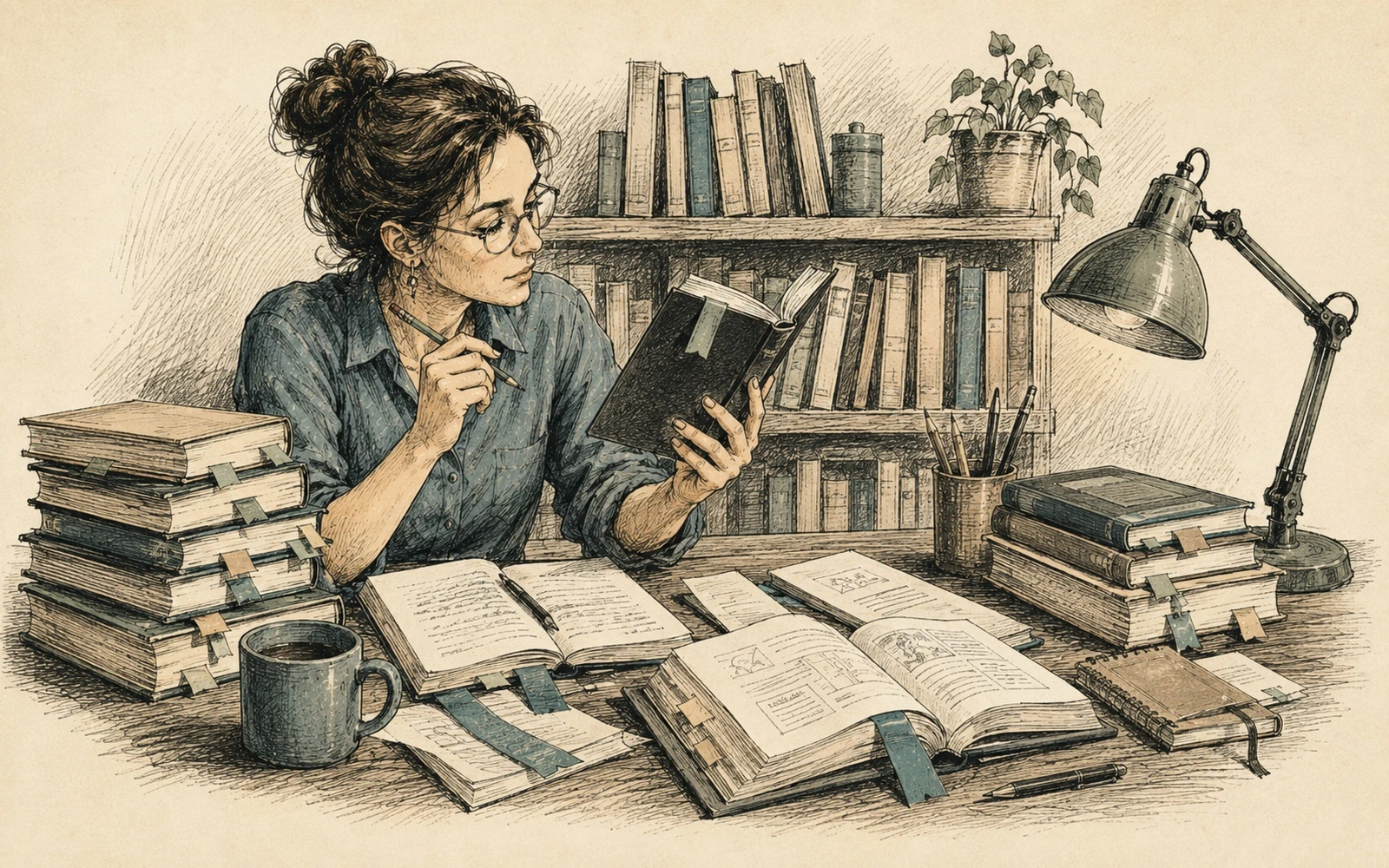
A useful reading list is no longer a shelf of classics. Compare actively maintained Microsoft, Google, GitHub and IBM guidance, use Diátaxis to test content structure, and turn each reading session into a concrete documentation exercise.
Profession
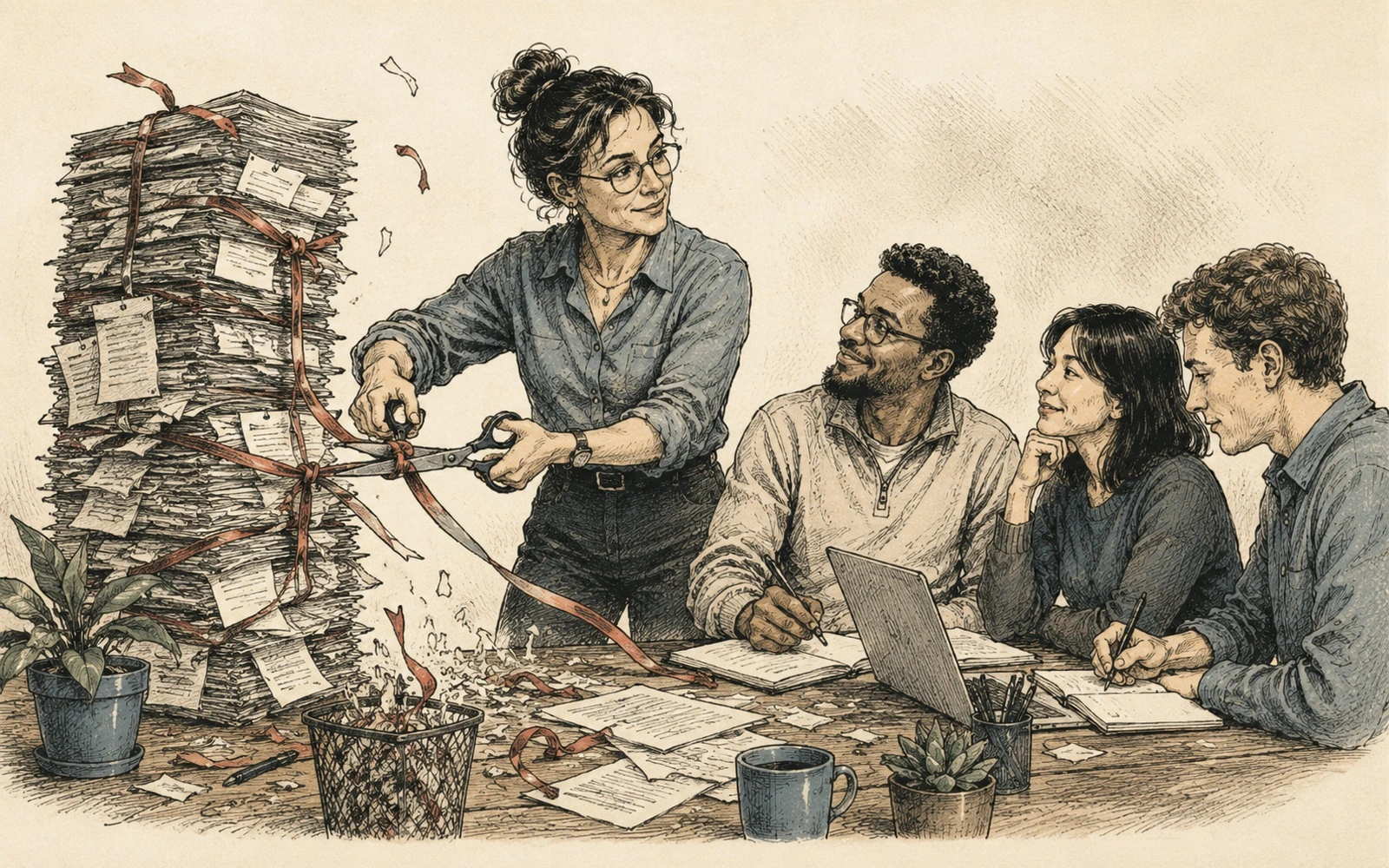
A documentation lead should reduce uncertainty, not create another approval layer. Define ownership, standards and escalation paths while keeping routine publishing fast and close to the people who know the product. When documentation grows across several teams, somebody eventually asks for central control.
Profession
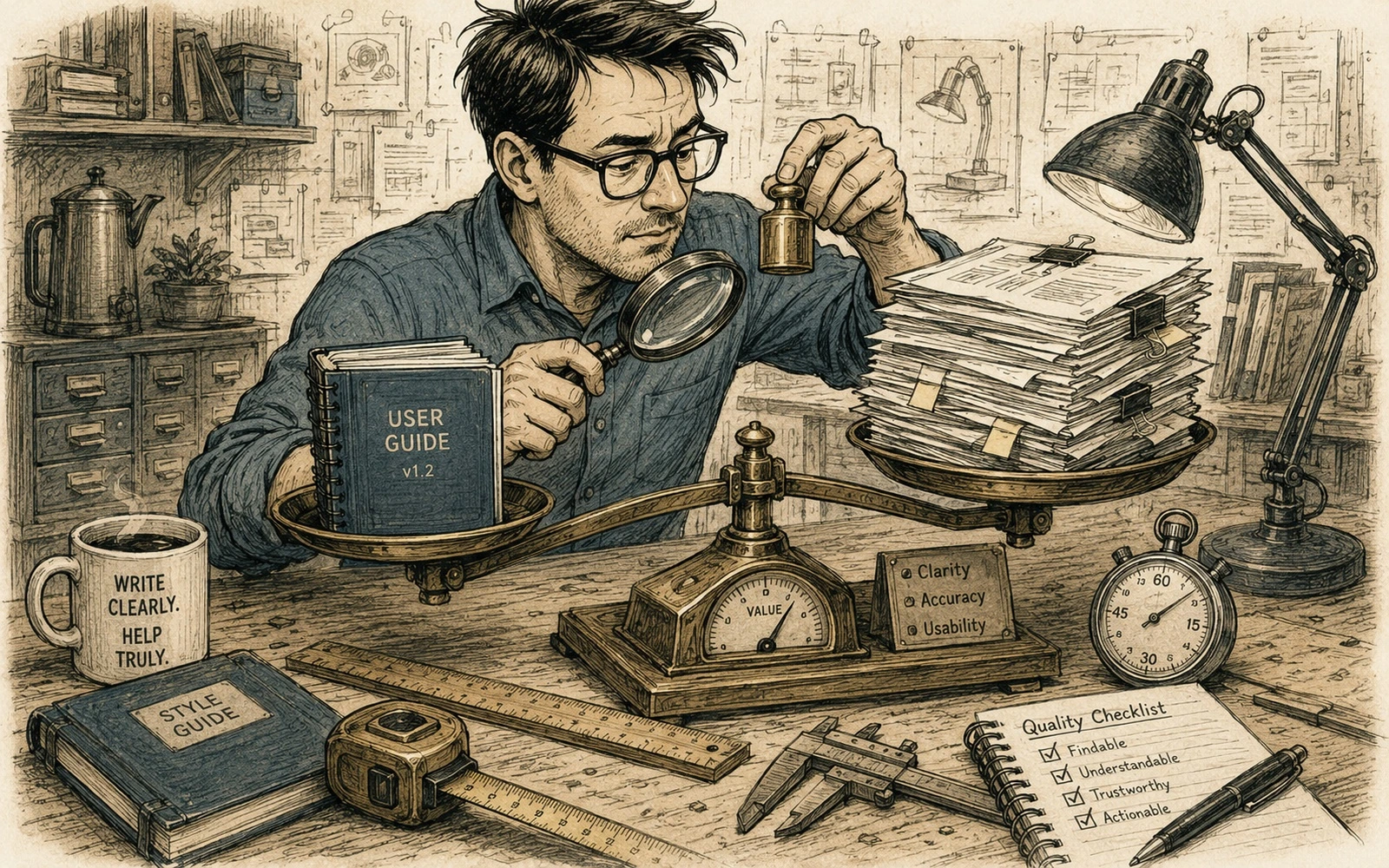
Measure whether documentation helps users complete work and helps teams maintain knowledge, not merely how often pages were opened. Traffic is context, not success; a popular page can be popular because it is confusing.
Profession
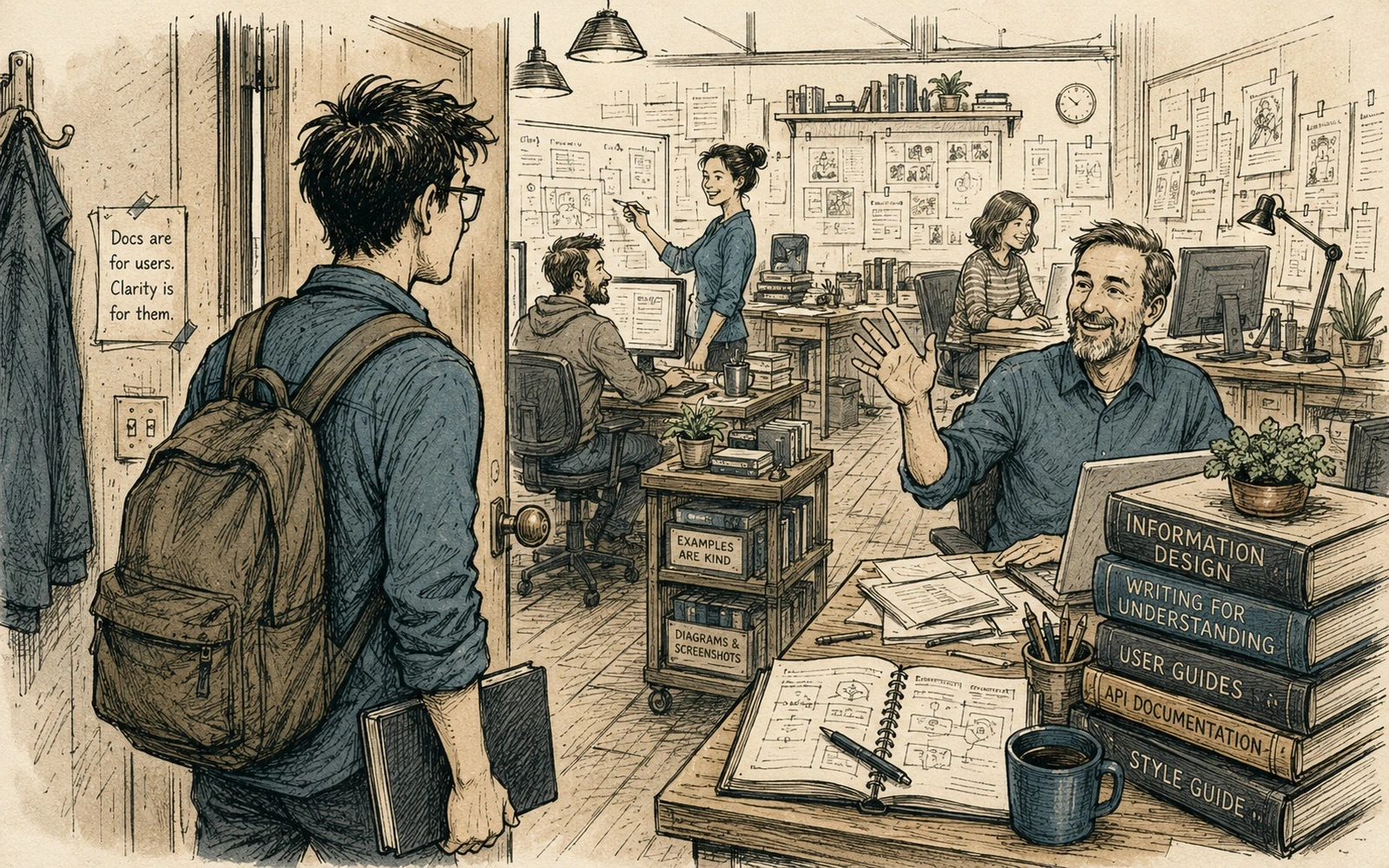
Three years ago, a beginner could enter the field by writing clearly, learning a few tools, and building a portfolio. In 2026 the entry bar is higher: AI drafts the easy material, teams are leaner, and new technical writers are increasingly expected to verify facts, work with docs-as-code and APIs, and own documentation as a system.
Learning
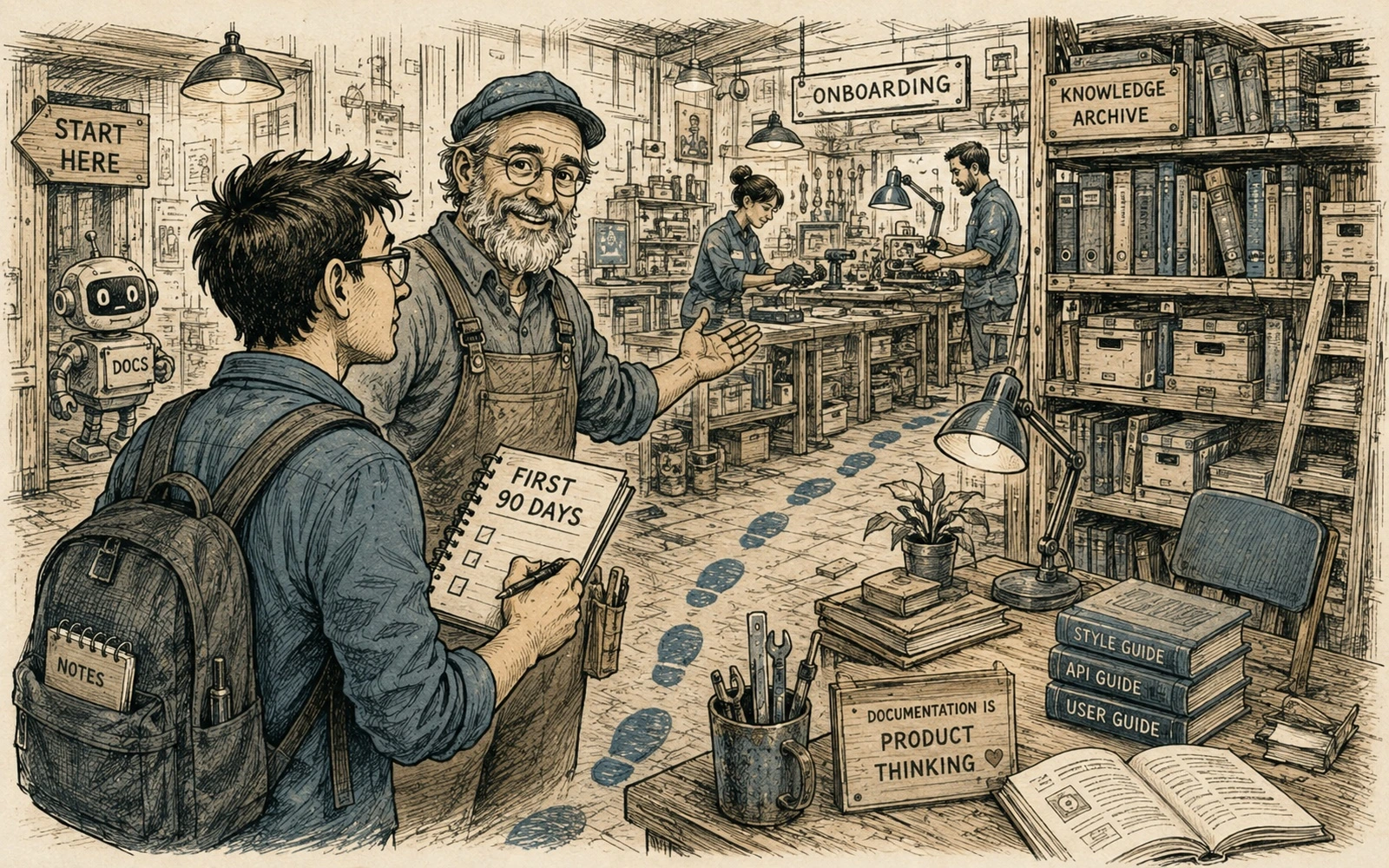
A new technical writer learns faster by mapping the product, users, publishing system and decision makers before trying to rewrite everything. First month: map product areas, audiences, source repositories, build, reviewers and release flow.
Archive
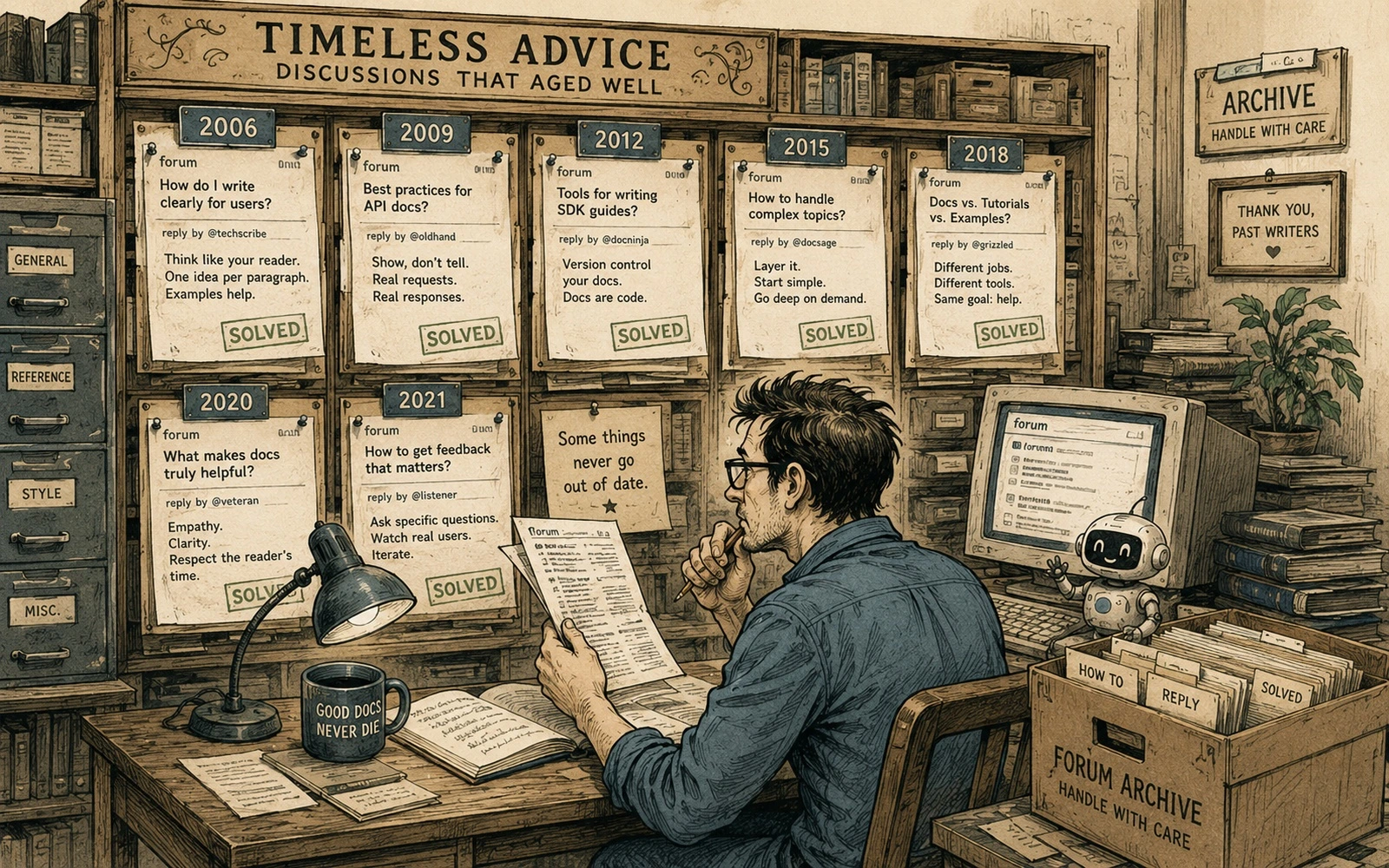
Tool names change faster than editorial problems. Questions about terminology, ownership, screenshots, reuse and review still appear in documentation teams because they are symptoms of deeper system design choices. The tooling answer changed from shared folders to repositories and ownership files, but the organizational question did not.
Profession
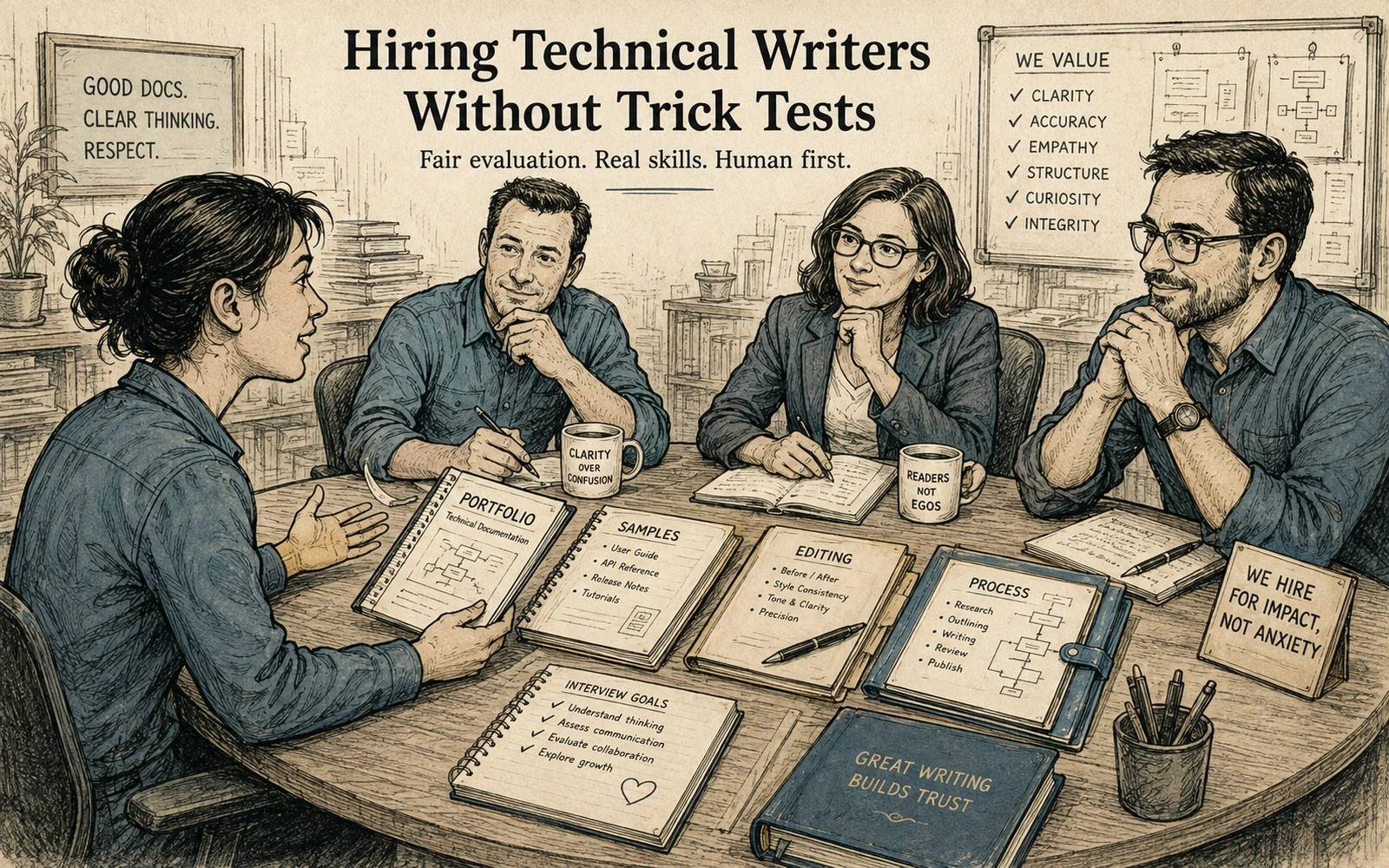
A practical hiring process should reveal how a writer understands users, verifies facts and improves information — not reward unpaid marathon assignments. Test the work the role actually requires instead of grammar puzzles and obscure trivia.
Learning
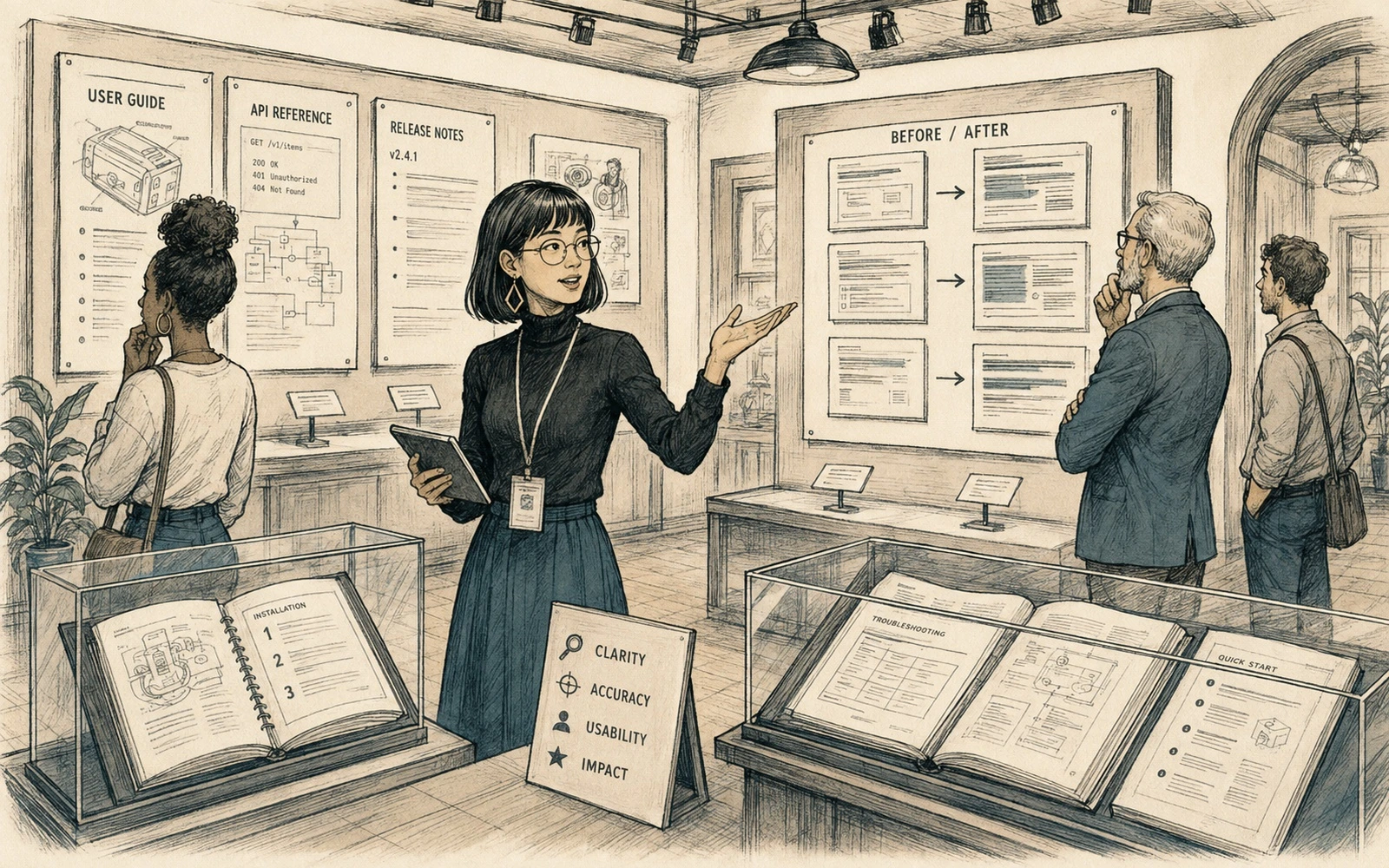
Hiring teams need evidence of how you investigate, structure and verify documentation. A strong portfolio explains the problem, constraints, process and result instead of displaying isolated polished screenshots. A polished article shows that you can produce polished text.
Archive
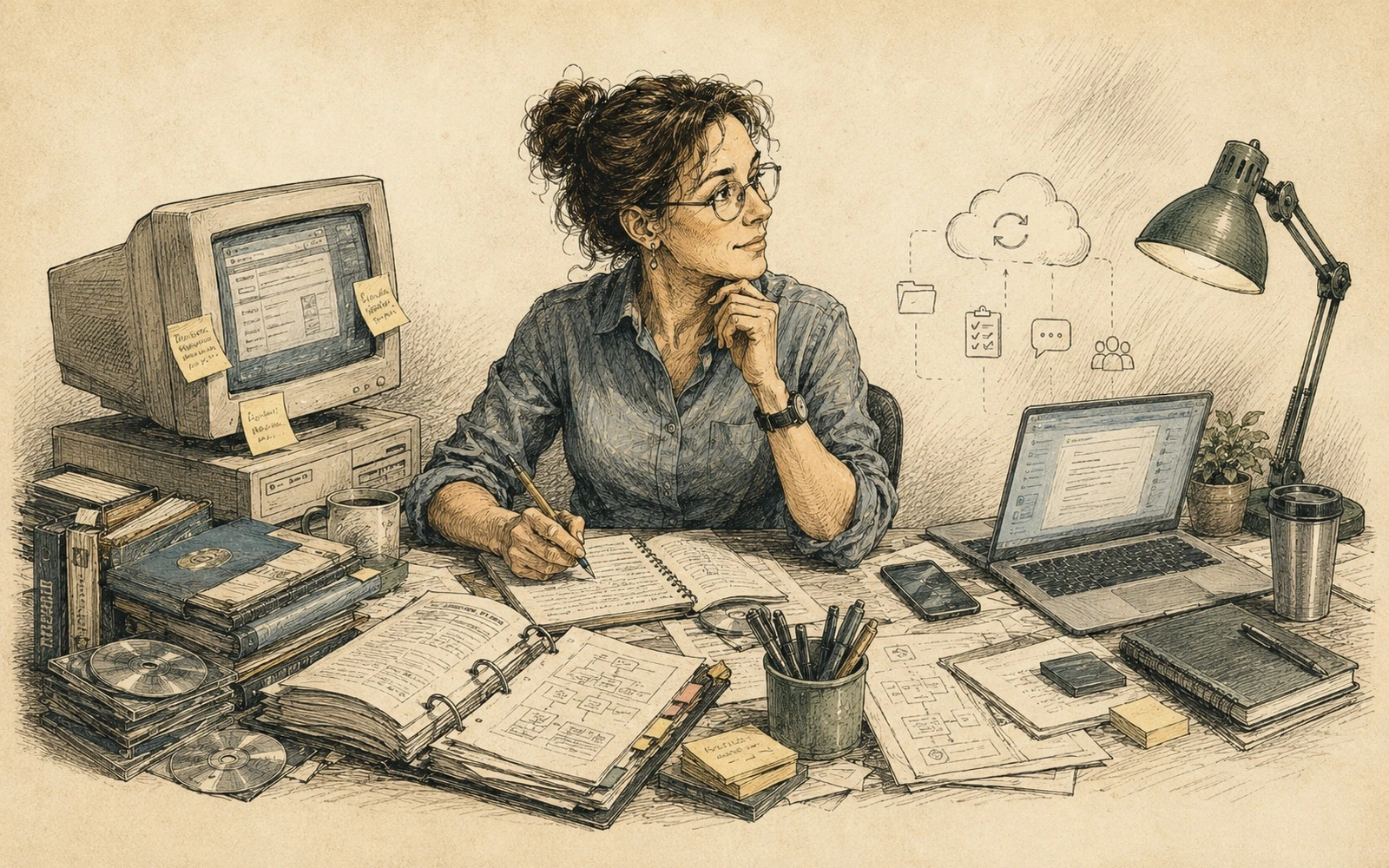
Tools changed radically, but the durable core of technical writing is surprisingly recognizable: audience, evidence, structure, terminology and responsibility. In 2006 a technical writer could spend much more time in desktop publishing tools, office formats and manually maintained help systems.
Profession
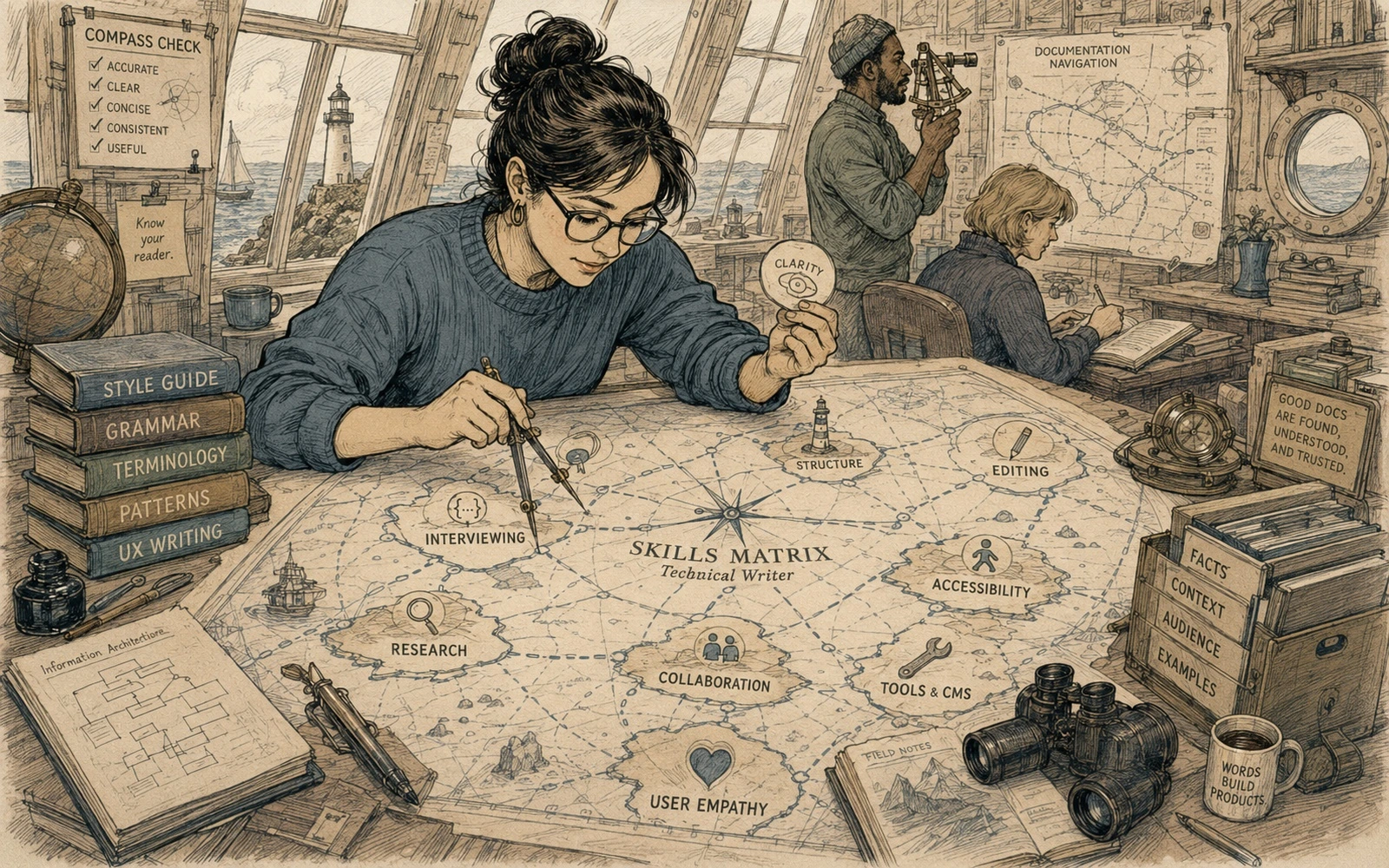
A good matrix helps people grow and teams hire. A bad one turns vague personality traits into fake precision. Measure observable documentation capabilities and the complexity of problems a writer can own. Teams often build a skills matrix when hiring becomes inconsistent or promotion conversations become subjective.
Profession
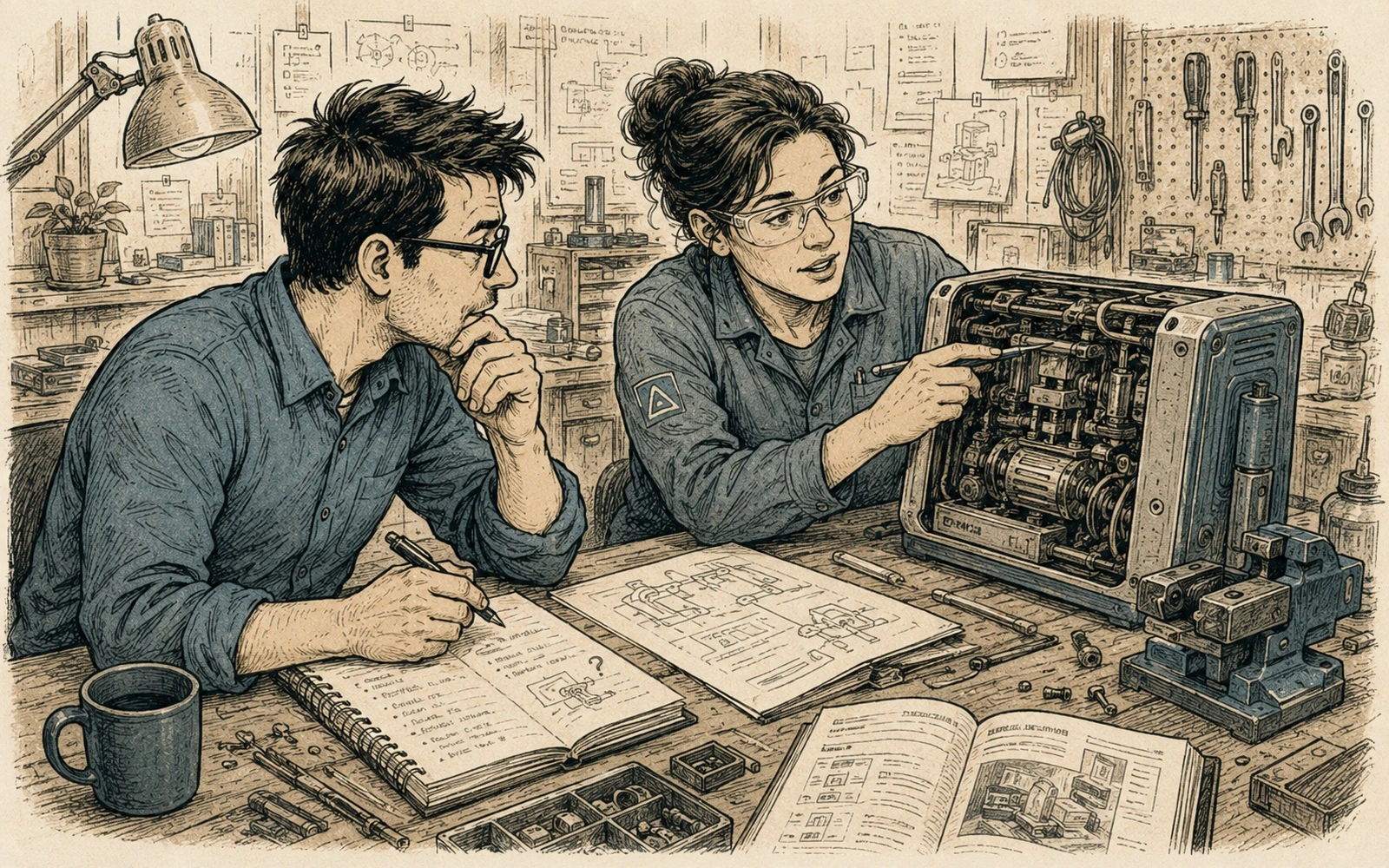
A review model that gets accurate answers from experts while protecting their time and keeping editorial responsibility with the writer. Ask experts for decisions and verification, not an undefined request for feedback.