A very different toolset
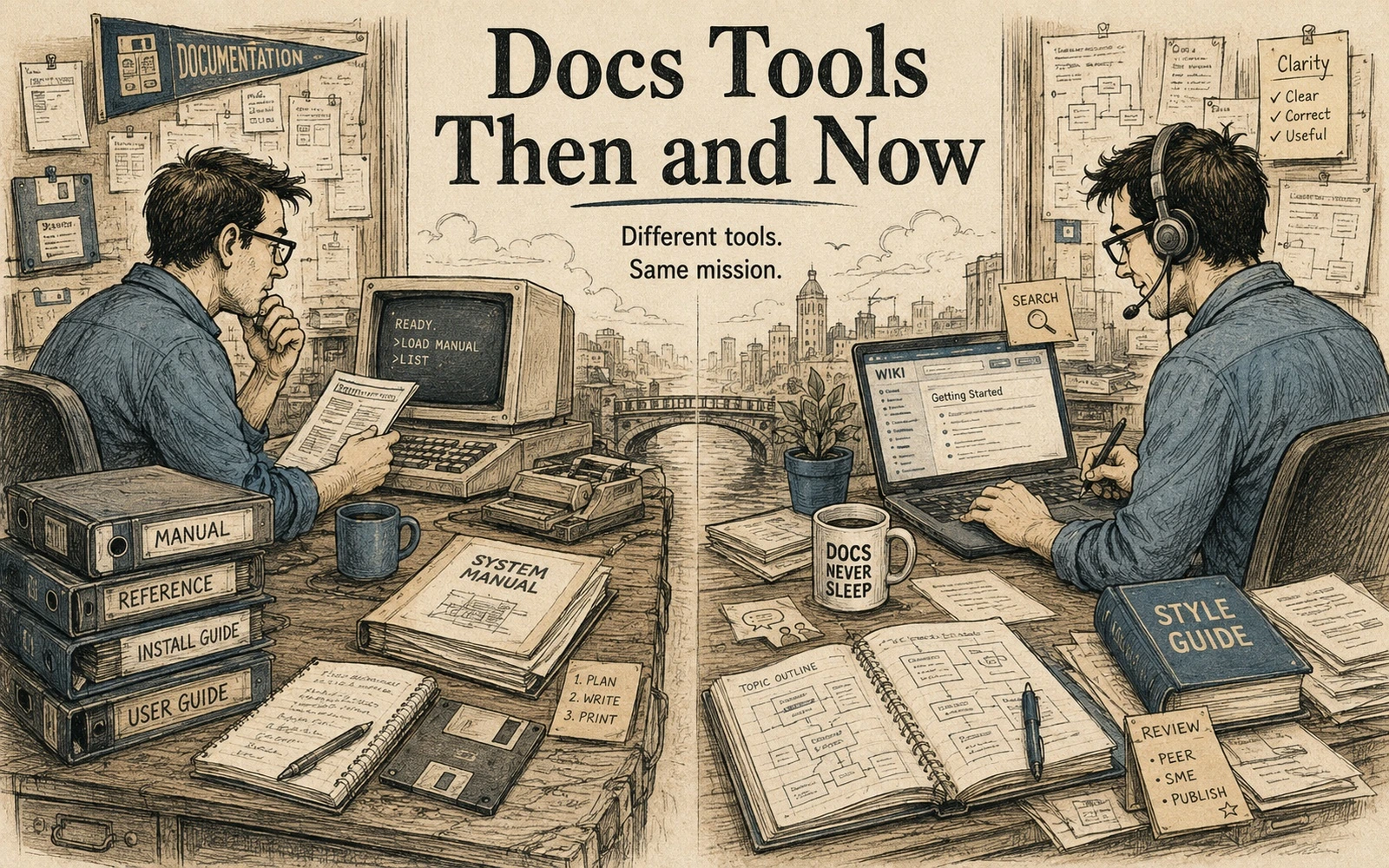
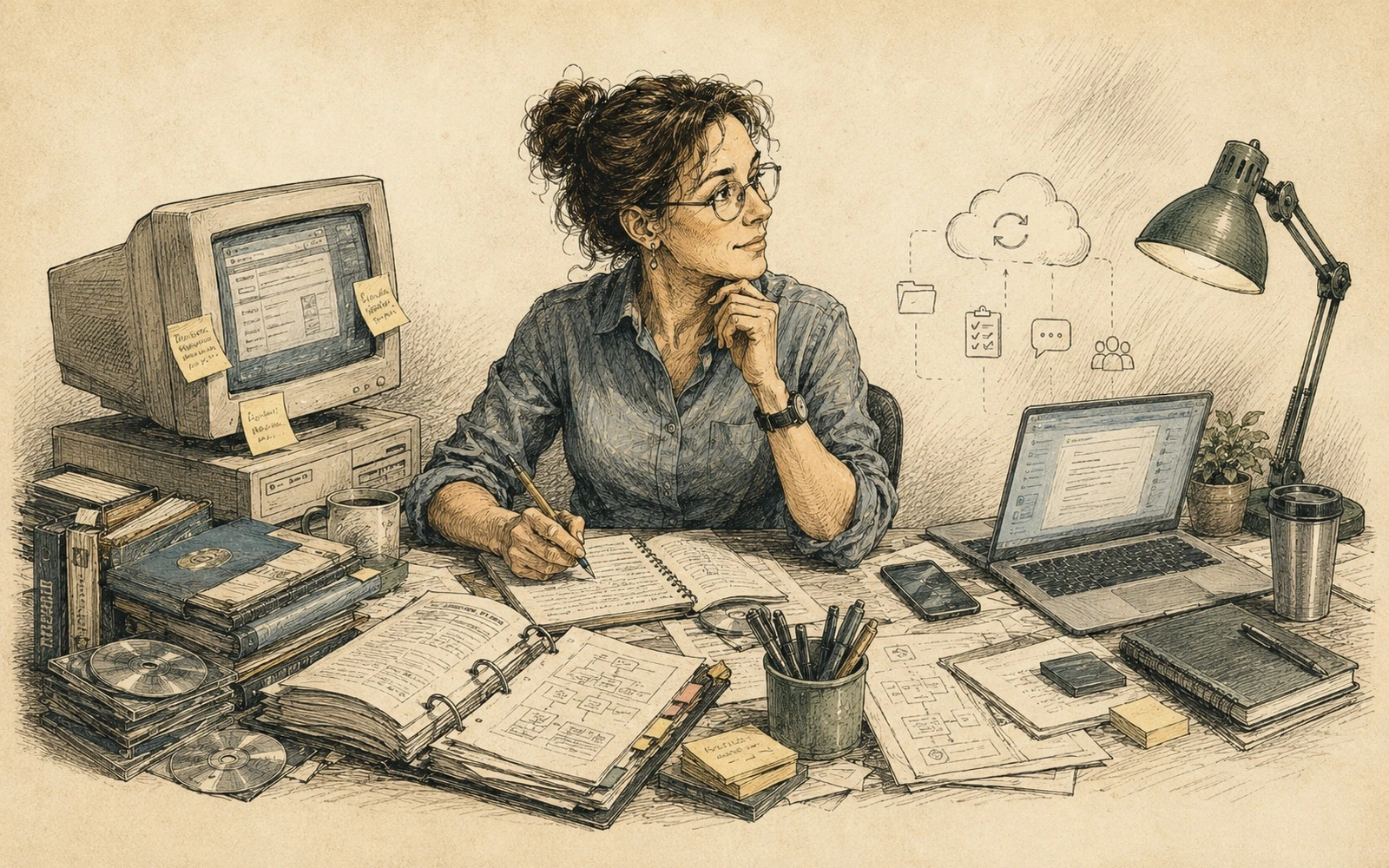
In 2006 a technical writer could spend much more time in desktop publishing tools, office formats and manually maintained help systems. Continuous delivery, Git-based collaboration and AI-assisted drafting were not normal assumptions for documentation teams.
The toolset changed dramatically. The core job did not change at the same speed.
Audience is still the first design decision
A document for an administrator, an API developer and an end user cannot simply share the same explanation with different headings. Understanding what the reader is trying to accomplish remains the foundation of useful documentation.
Structure outlives formats
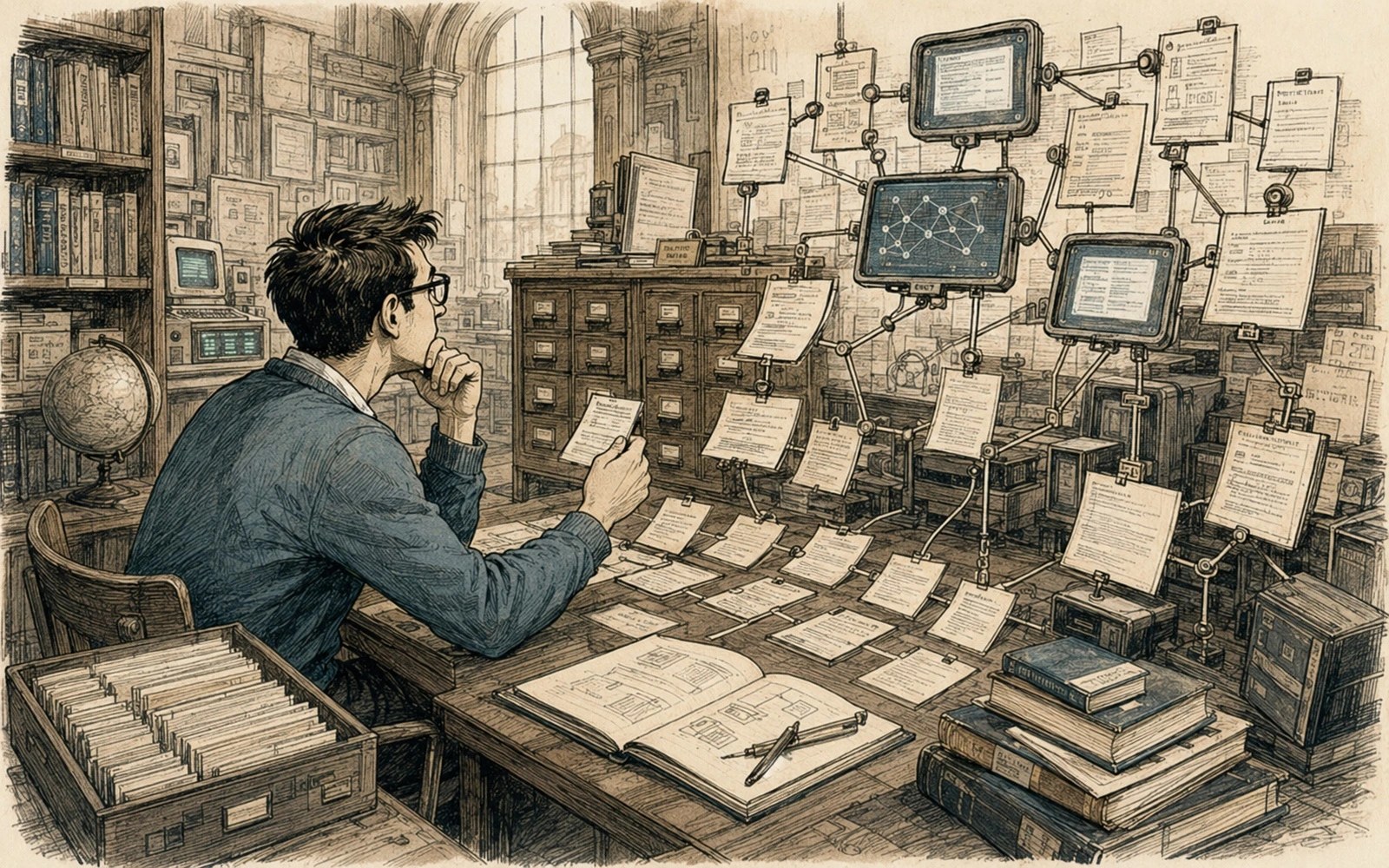
Formats come and go. Clear hierarchy, progressive disclosure, predictable navigation, consistent terminology and task-oriented organization survive migrations surprisingly well. A well-structured old manual is often easier to modernize than a beautiful but chaotic newer site.
Verification still separates documentation from copywriting
A technical writer has always needed access to engineers, products and real behavior. Today we can automate more checks, but responsibility for truth has not disappeared.
What really changed
Documentation now participates in software delivery more directly. Writers work with repositories, APIs, CI systems, analytics and structured content. Publishing can happen dozens of times per day. Readers expect search, deep links, runnable examples and immediate updates.
What is worth carrying forward
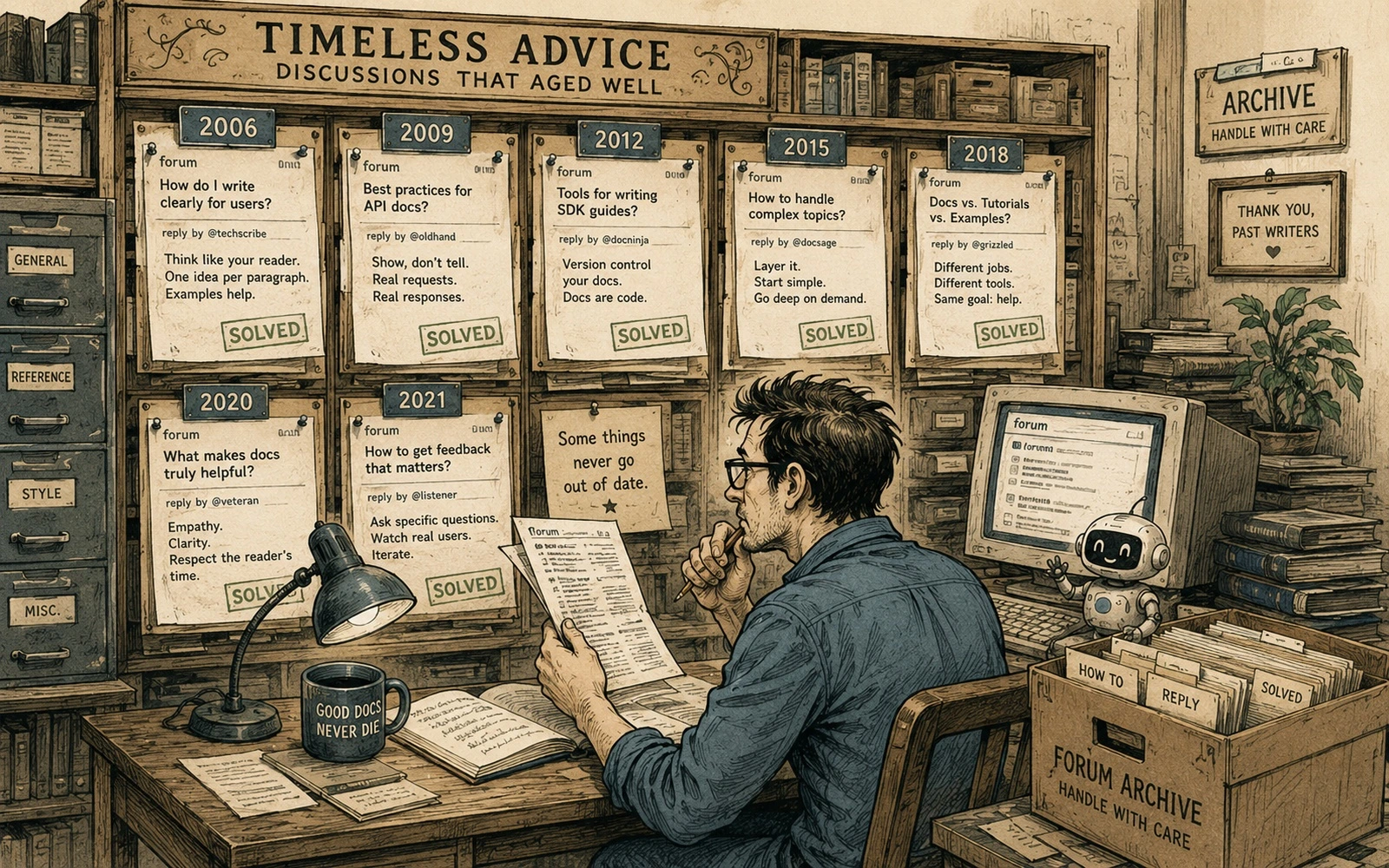
From the technical writer of 2006 we should keep discipline: know the audience, verify facts, control terminology, design structure and take responsibility for what is published. The rest — tools, formats and workflows — should be allowed to evolve without nostalgia.
Applied example
Read “What remains of the technical writer of 2006?” in two columns: what belonged to the technology of its time, and what belonged to the underlying documentation problem. Recreate one small historical workflow with current tools—for example, publishing a release note, maintaining a glossary or packaging an offline manual—and mark which decisions stayed the same even though the medium changed.
Look for durable patterns rather than nostalgia:
- How did readers find information?
- How were corrections distributed?
- Who owned accuracy after publication?
- Which limitations of the old medium forced useful discipline?
Historical material becomes valuable when it helps us see a current problem more clearly. The goal is not to restore an old workflow, but to separate enduring editorial principles from tools that happened to be available at the time.
Quick editorial checklist
- A very different toolset. In 2006 a technical writer could spend much more time in desktop publishing tools, office formats and manually maintained help systems.
- Audience is still the first design decision. A document for an administrator, an API developer and an end user cannot simply share the same explanation with different headings.
- Structure outlives formats. Formats come and go. Clear hierarchy, progressive disclosure, predictable navigation, consistent terminology and task-oriented organization survive migrations surprisingly well.
- Verification still separates documentation from copywriting. A technical writer has always needed access to engineers, products and real behavior.