
Standards
Accessibility in technical documentation does not end with navigation and contrast. Code examples, JSON responses, reference tables, and explanatory diagrams must also remain understandable, scannable, and usable without relying only on color.
Standards
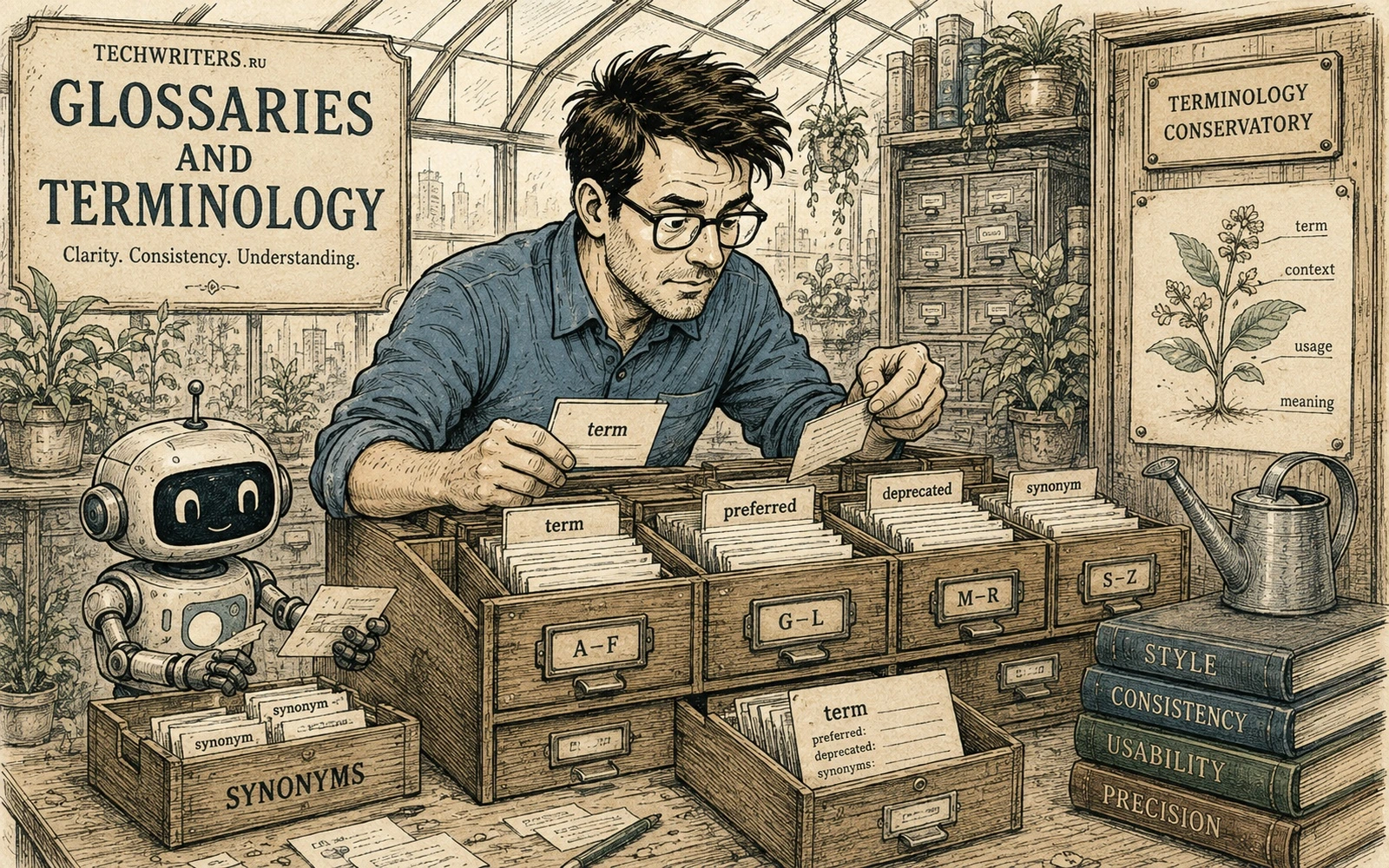
A glossary becomes useful when it controls decisions across products, interfaces and documentation instead of merely collecting words. A useful terminology entry answers more than “what does this word mean?”.
Standards
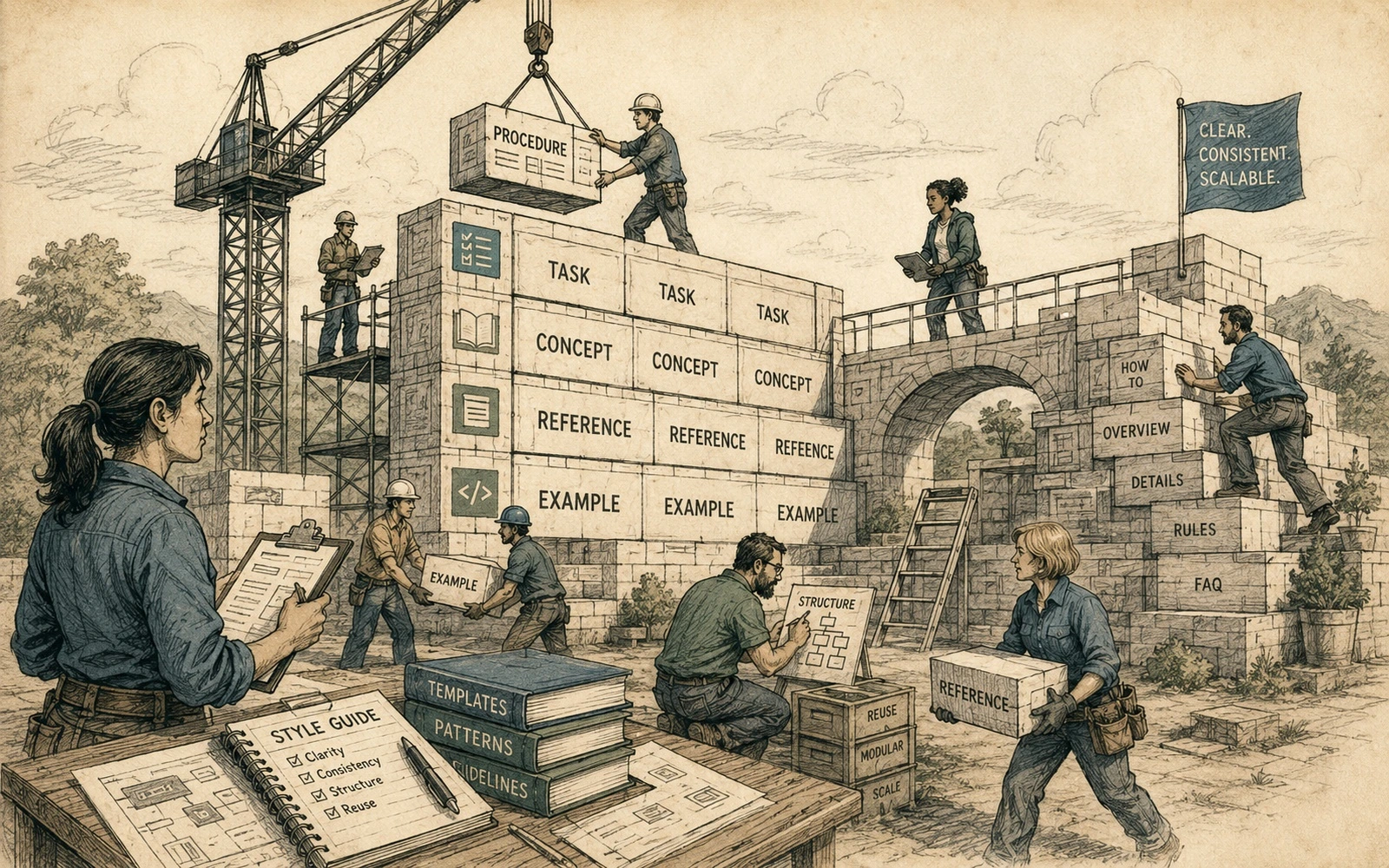
Consistency at scale comes from content models, terminology and reusable patterns, not from asking every contributor to memorize a giant style guide. Encode the rules that matter in schemas and components. A small team can rely on shared habits and direct editing.

Standards
A useful style guide resolves recurring editorial decisions quickly; it does not try to preserve every preference the team has ever discussed. Add a rule when writers repeatedly face the same decision and inconsistency actually matters.
Standards
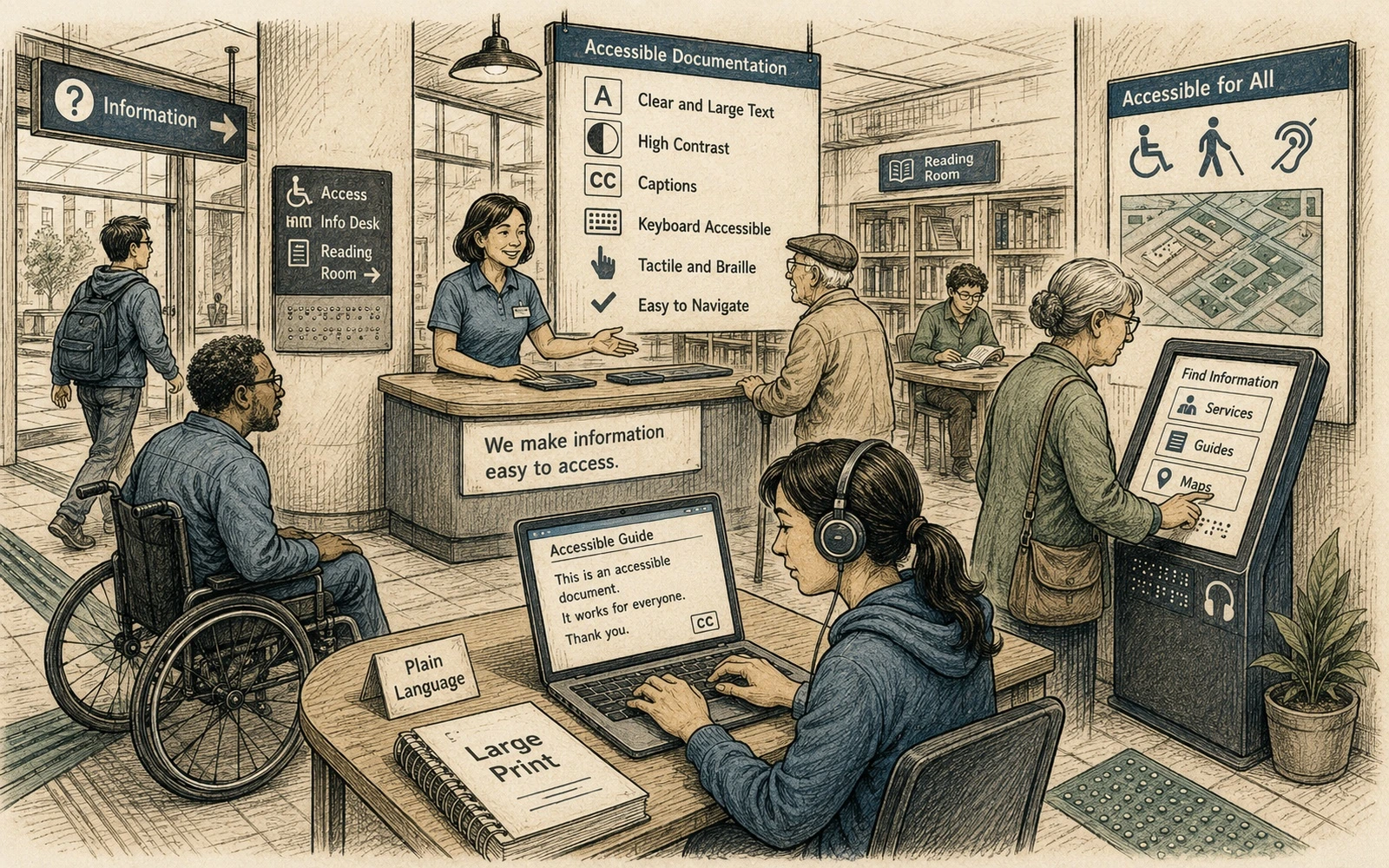
Accessibility is not only a frontend task. Documentation authors control headings, link purpose, alternative text, tables, instructions and the structure that assistive technology depends on. A theme can provide good contrast and keyboard behavior, but authors still determine whether the content is understandable.