The old problem was already synchronization
Long before Docs-as-Code became a label, documentation teams struggled with multiple source files, reused fragments, versioned manuals and the question of which copy was current. The tools were different, but the coordination problem is recognizable.
What changed is the degree to which documentation can now participate in the same delivery machinery as software.
Text sources became easier to automate
Plain-text formats, Git and static generators made diffs, branching and automated builds widely accessible. Review moved closer to the source. A documentation change can trigger link checks, style linting, previews and deployment without a manual publishing application.
That does not make every old workflow obsolete. It changes the cost of automation and collaboration.
The web changed the unit of reading
A printed manual encourages linear structure. Web documentation is entered through search, deep links and support answers. Individual pages must carry more context, while navigation and cross-linking become part of the product experience.
Responsive layouts, accessibility, search metadata and analytics are now ordinary publishing concerns.
Reuse became both easier and more dangerous
Components, includes and structured content can eliminate duplication. They can also create fragments that are correct in one context and confusing in another. Modern tooling does not remove the editorial decision about what should actually be shared.
The next tool will not remove the old responsibilities
AI can draft and transform content at a new scale. That makes source quality, review, provenance and information architecture more important, not less.
The history is useful because it prevents us from mistaking every new tool for a new profession. Technology keeps changing the workflow; responsibility for accurate, usable information remains.
Applied example
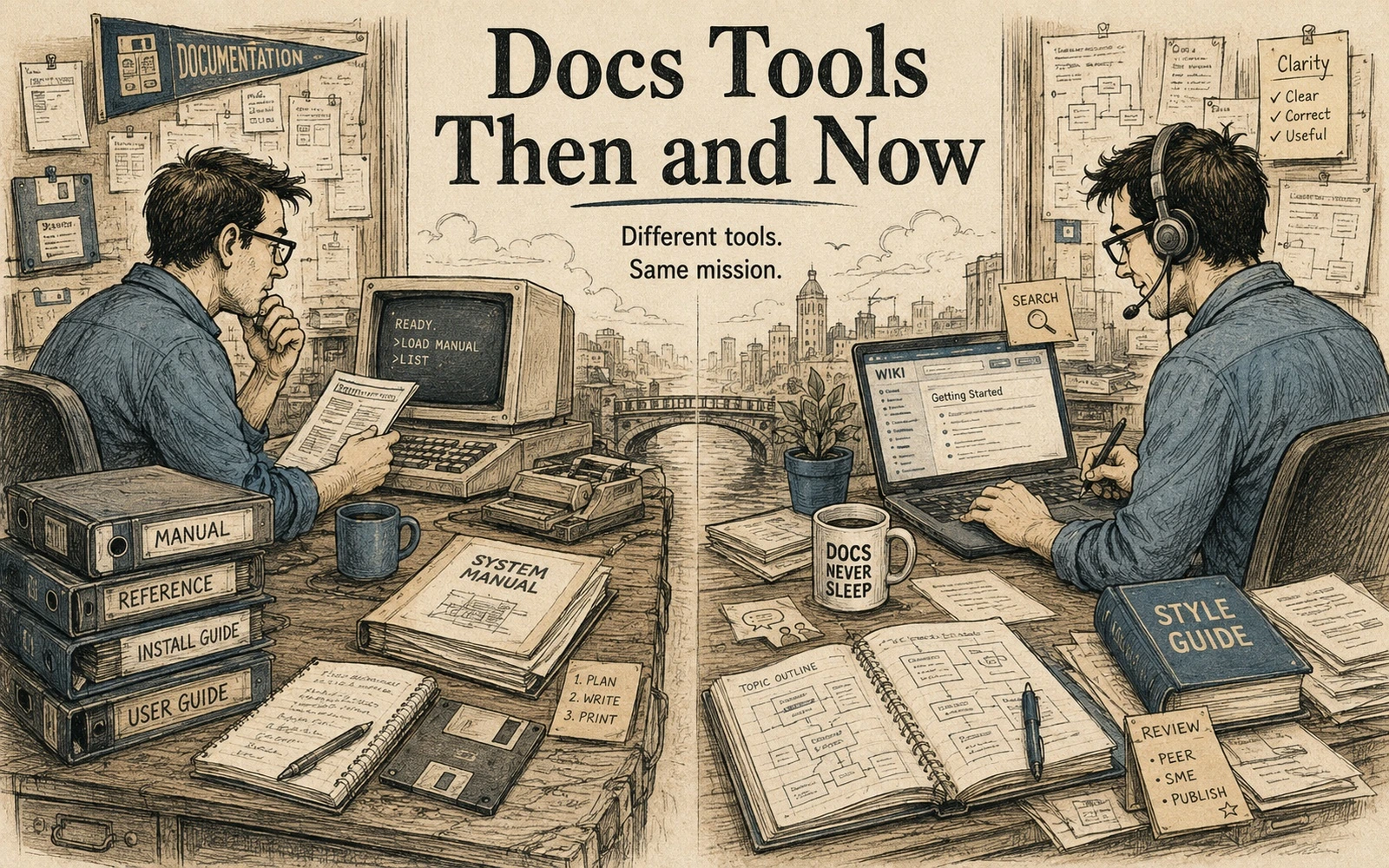
Read “Documentation tools then and now: what actually changed” in two columns: what belonged to the technology of its time, and what belonged to the underlying documentation problem. Recreate one small historical workflow with current tools—for example, publishing a release note, maintaining a glossary or packaging an offline manual—and mark which decisions stayed the same even though the medium changed.
Look for durable patterns rather than nostalgia:
- How did readers find information?
- How were corrections distributed?
- Who owned accuracy after publication?
- Which limitations of the old medium forced useful discipline?
Historical material becomes valuable when it helps us see a current problem more clearly. The goal is not to restore an old workflow, but to separate enduring editorial principles from tools that happened to be available at the time.
Quick editorial checklist
- The old problem was already synchronization. Long before Docs-as-Code became a label, documentation teams struggled with multiple source files, reused fragments, versioned manuals and the question of which copy was current.
- Text sources became easier to automate. Plain-text formats, Git and static generators made diffs, branching and automated builds widely accessible.
- The web changed the unit of reading. A printed manual encourages linear structure.
- Reuse became both easier and more dangerous. Components, includes and structured content can eliminate duplication.