Tools
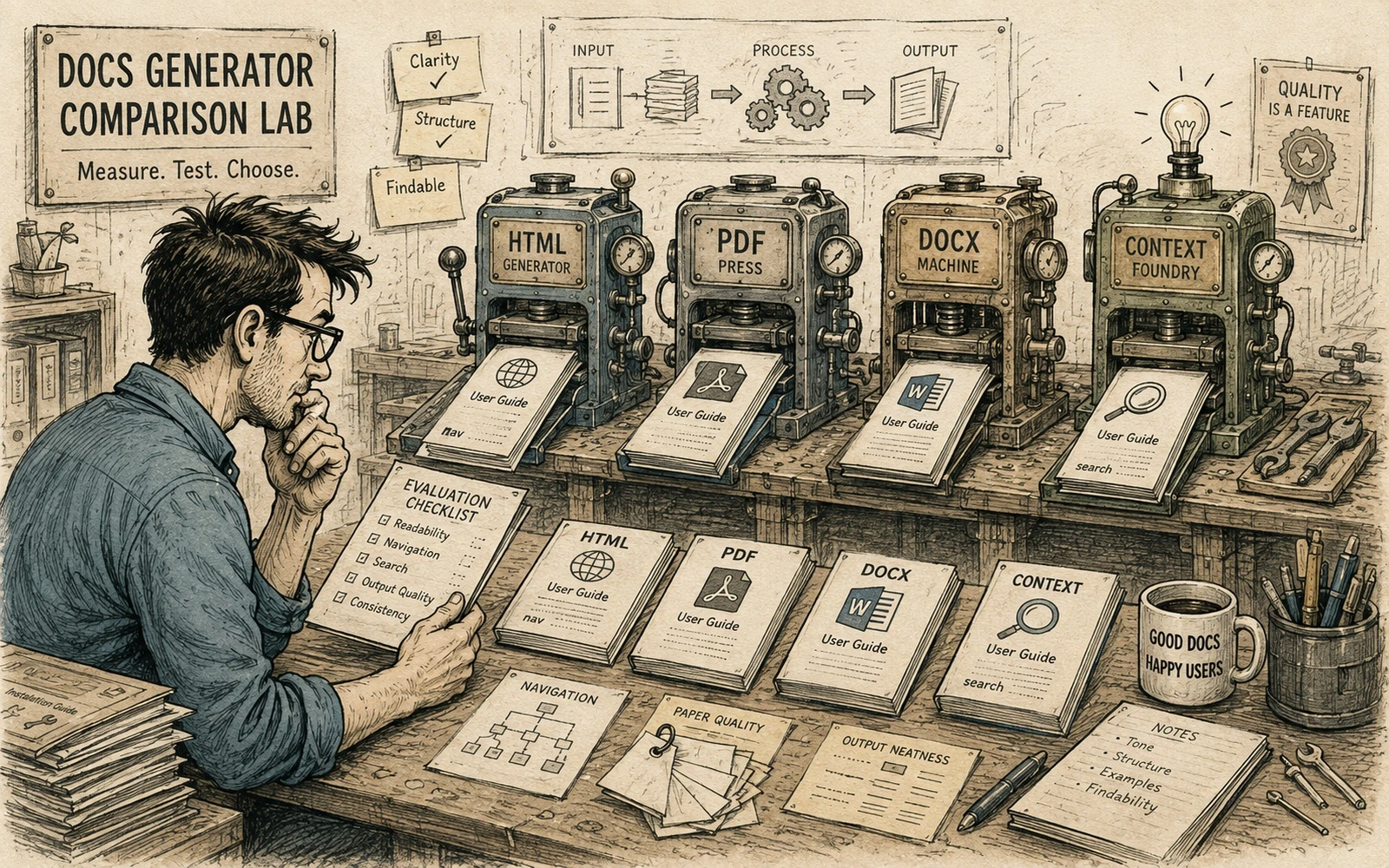
Sphinx, MkDocs, Astro and other generators optimize for different content models and teams. Choose by authoring workflow, extensibility, localization and maintenance cost instead of feature-list enthusiasm. A generator demo can look excellent and still be wrong for your documentation.
Tools
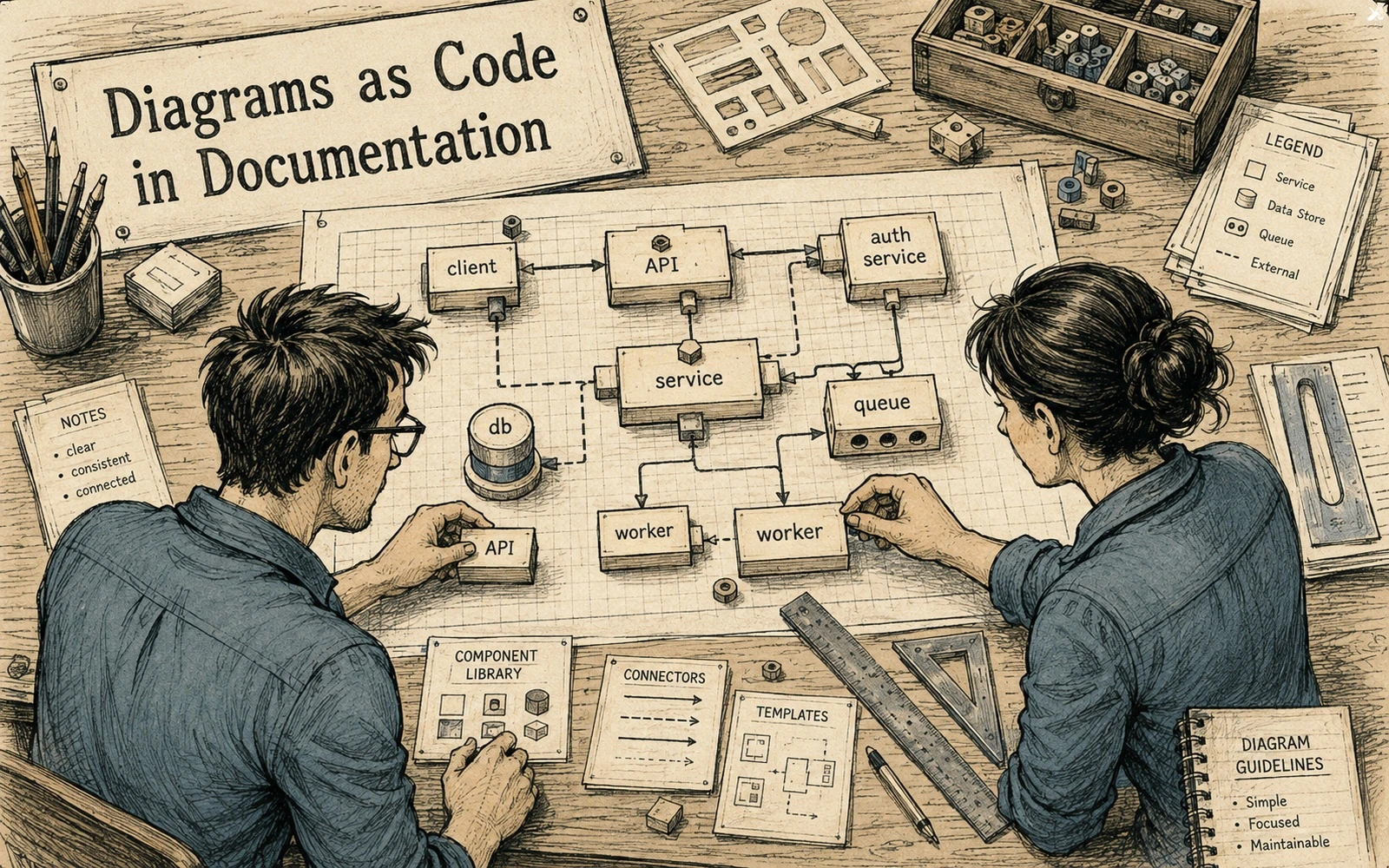
Text-defined diagrams are maintainable and reviewable, but only when the visual problem matches what the notation can express clearly. Use text-defined diagrams for flows, states, dependencies and sequences where relationships are the main information.

Practice
Docs-as-Code does not mean forcing every writer into an IDE. This guide covers the full workflow: browser editing, Git, previews, useful automated checks, human review, publication, and a transparent way to measure time savings without inventing benchmarks.
Archive
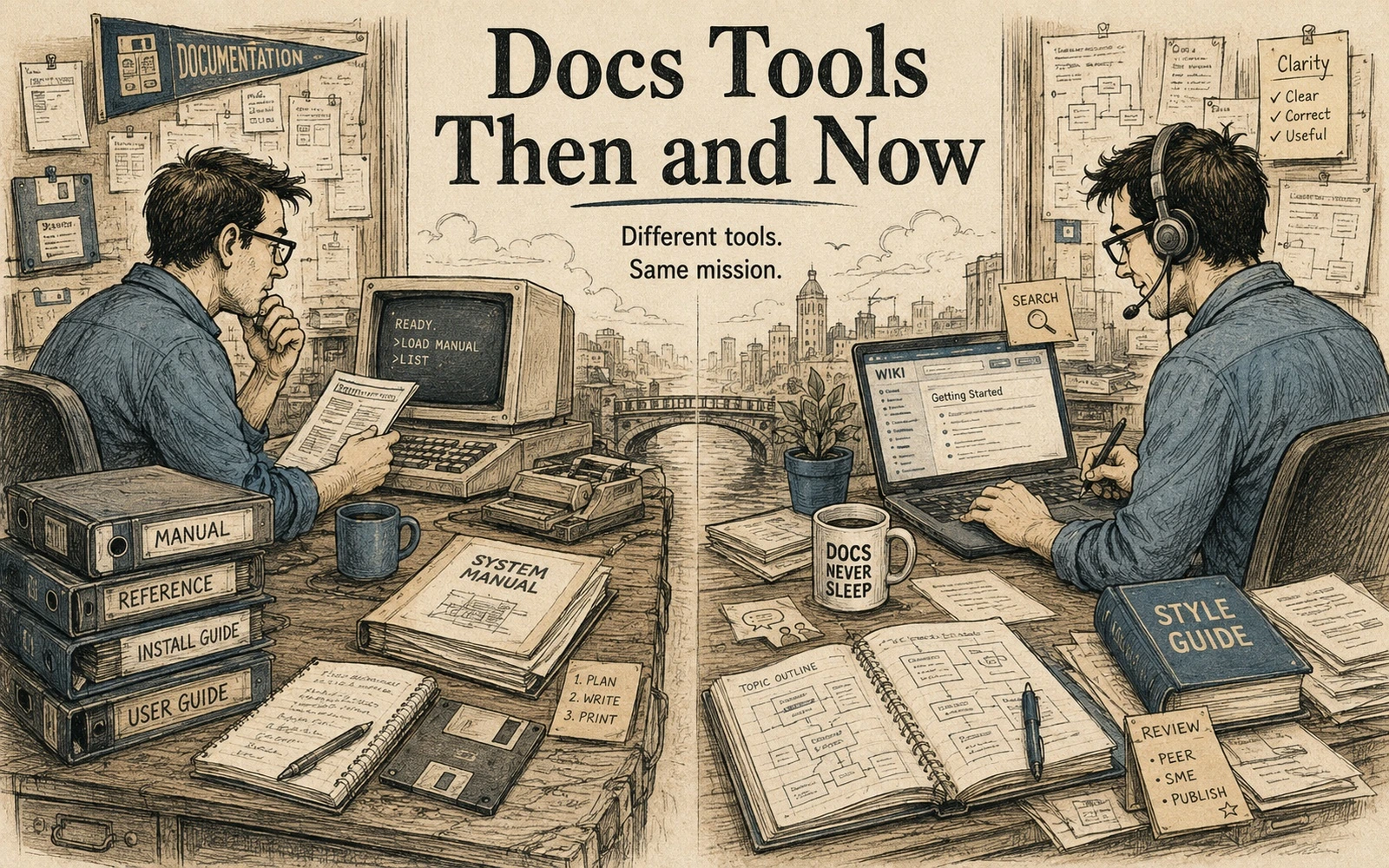
The formats and delivery pipelines changed dramatically, but the durable problems are familiar: source control, reuse, navigation, review and keeping published information synchronized with the product. Long before Docs-as-Code became a label, documentation teams struggled with multiple source files, reused fragments, versioned manuals and the question of which copy was current.
Tools
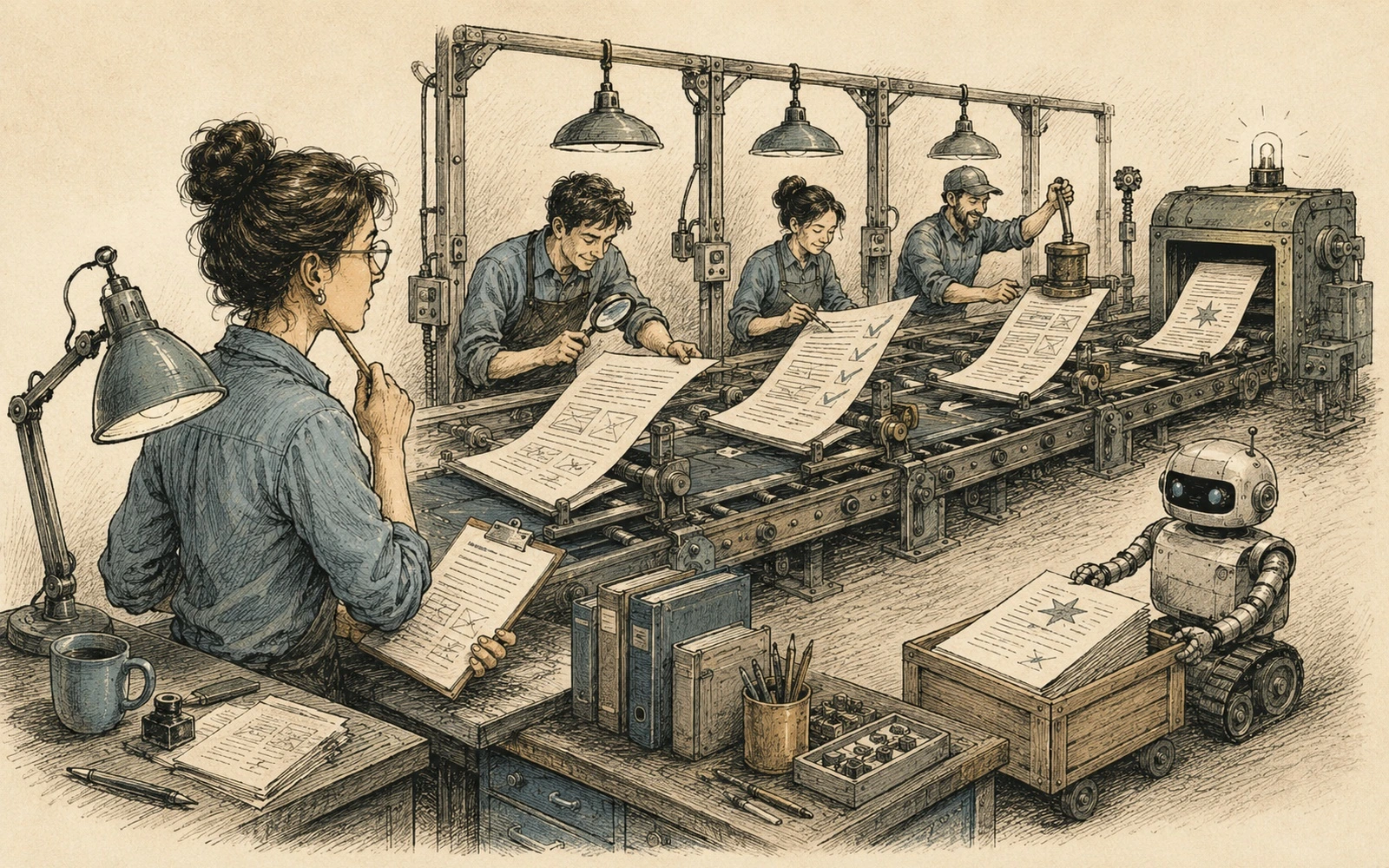
Treat documentation as a build artifact: validate structure, links, examples and publication rules before changes reach readers. CI cannot decide whether an explanation is useful, but it can reject many predictable defects before a human spends time on them.
Tools
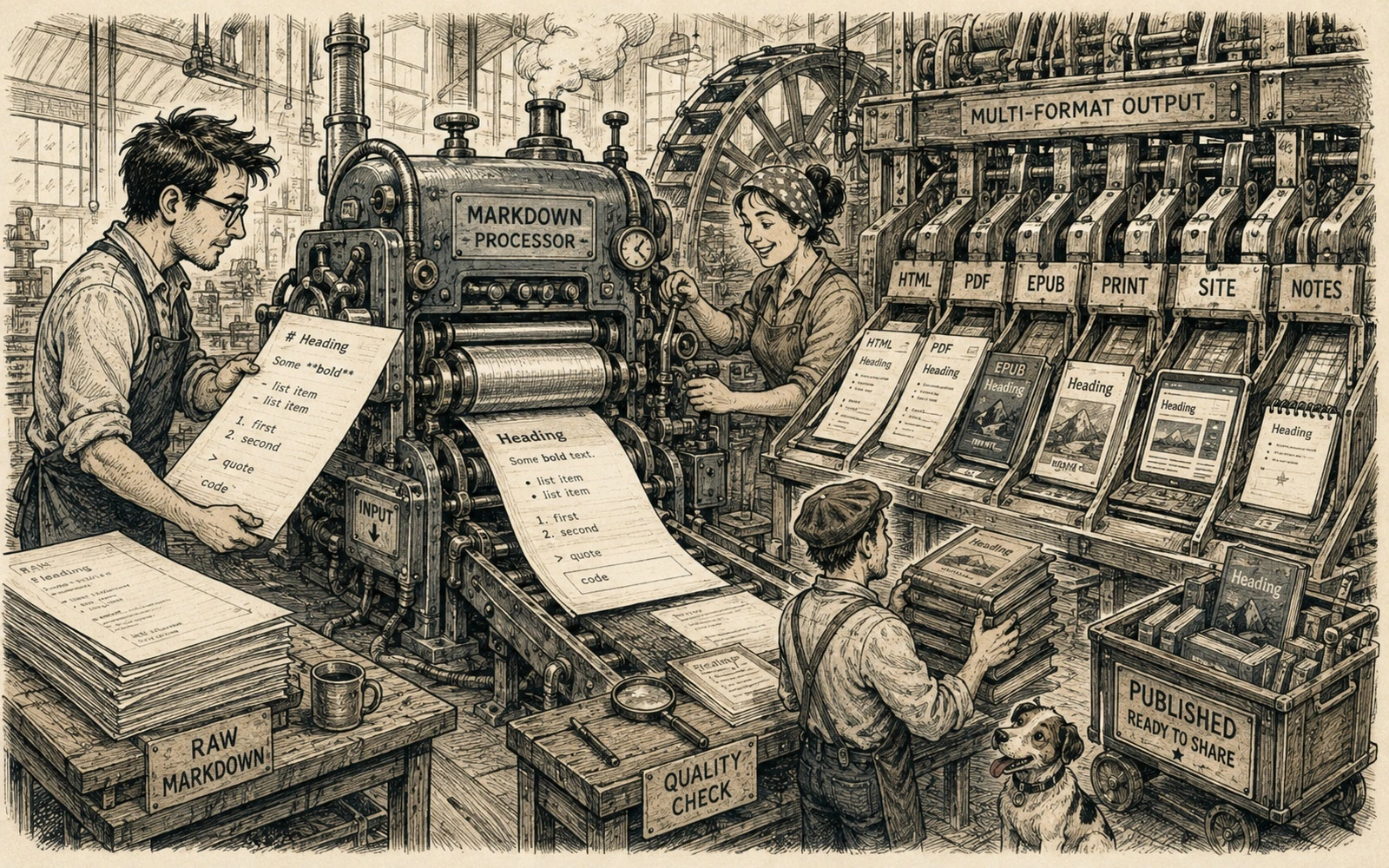
Markdown stays simple only when a team agrees on structure, metadata and extensions before thousands of files make every exception permanent. Standardize filenames, frontmatter, headings, image locations and internal-link conventions early.