Define the problem
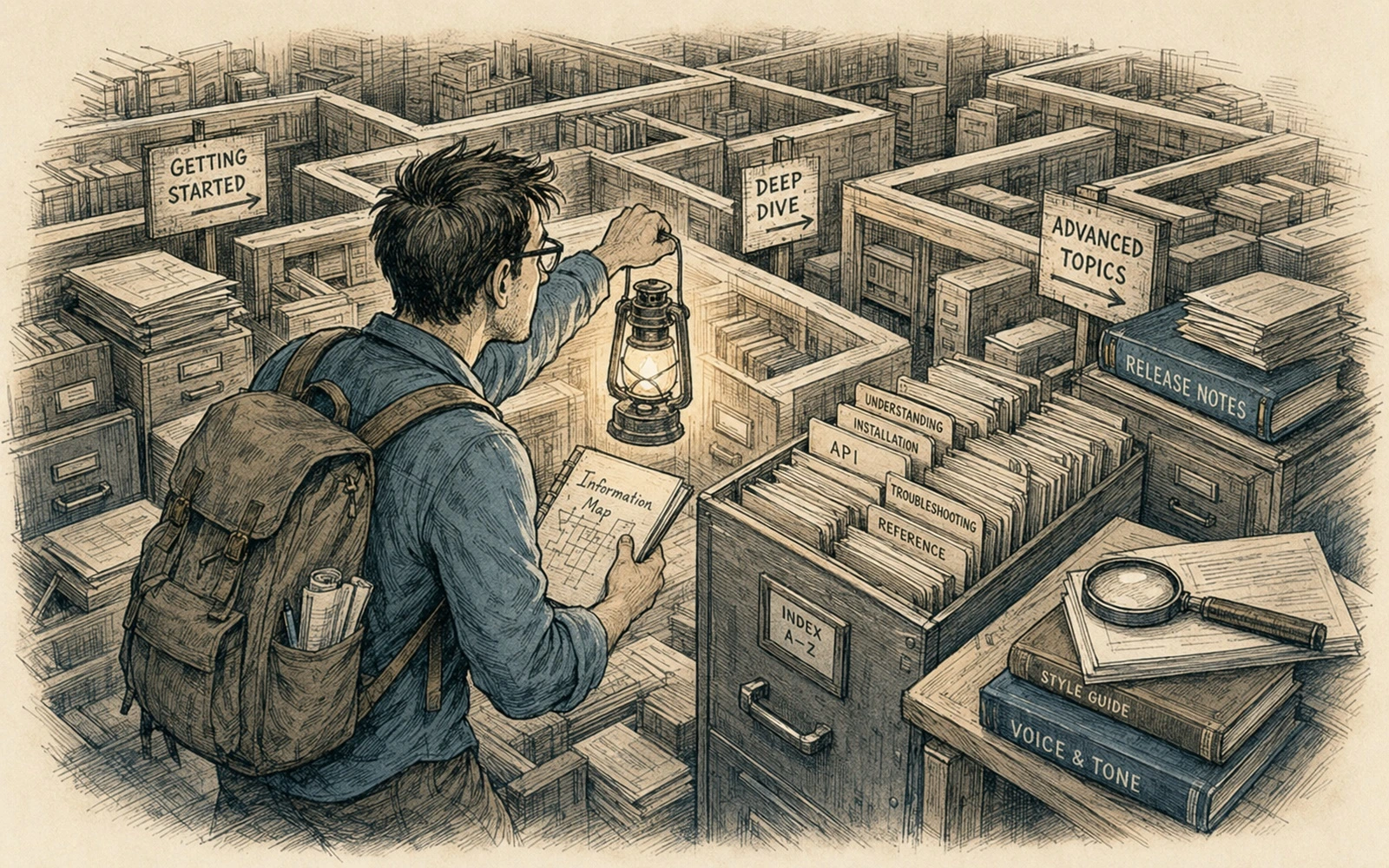
Standardize filenames, frontmatter, headings, image locations and internal-link conventions early. Markdown scales when the repository has conventions for metadata, filenames, components and review, not merely because the syntax is simple.
Choose a useful model
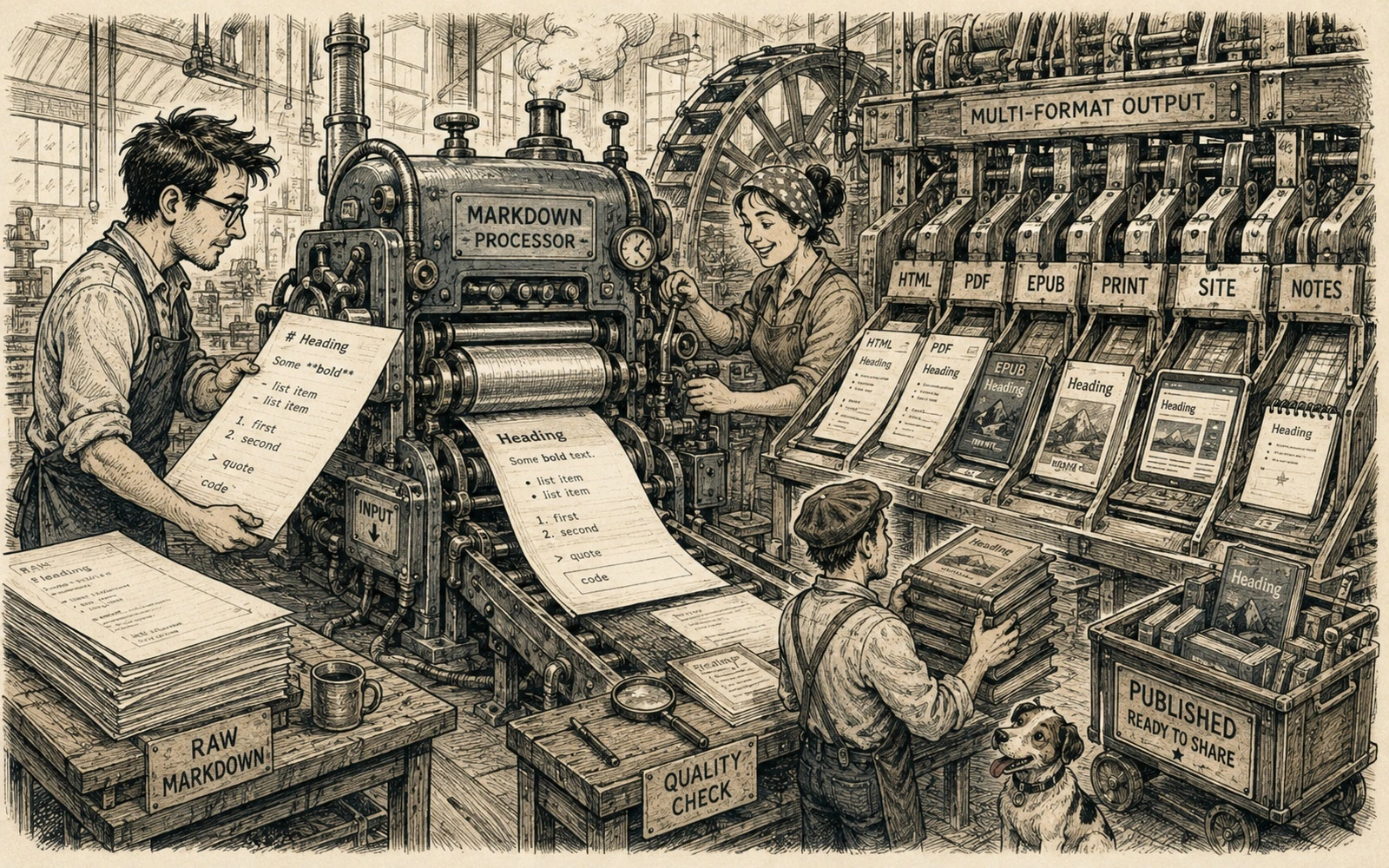
Every shortcode and Markdown extension creates a maintenance obligation; keep a deliberately small supported set. Define the subset your toolchain supports and document extensions explicitly; undocumented flavor differences become portability bugs.
Build the workflow
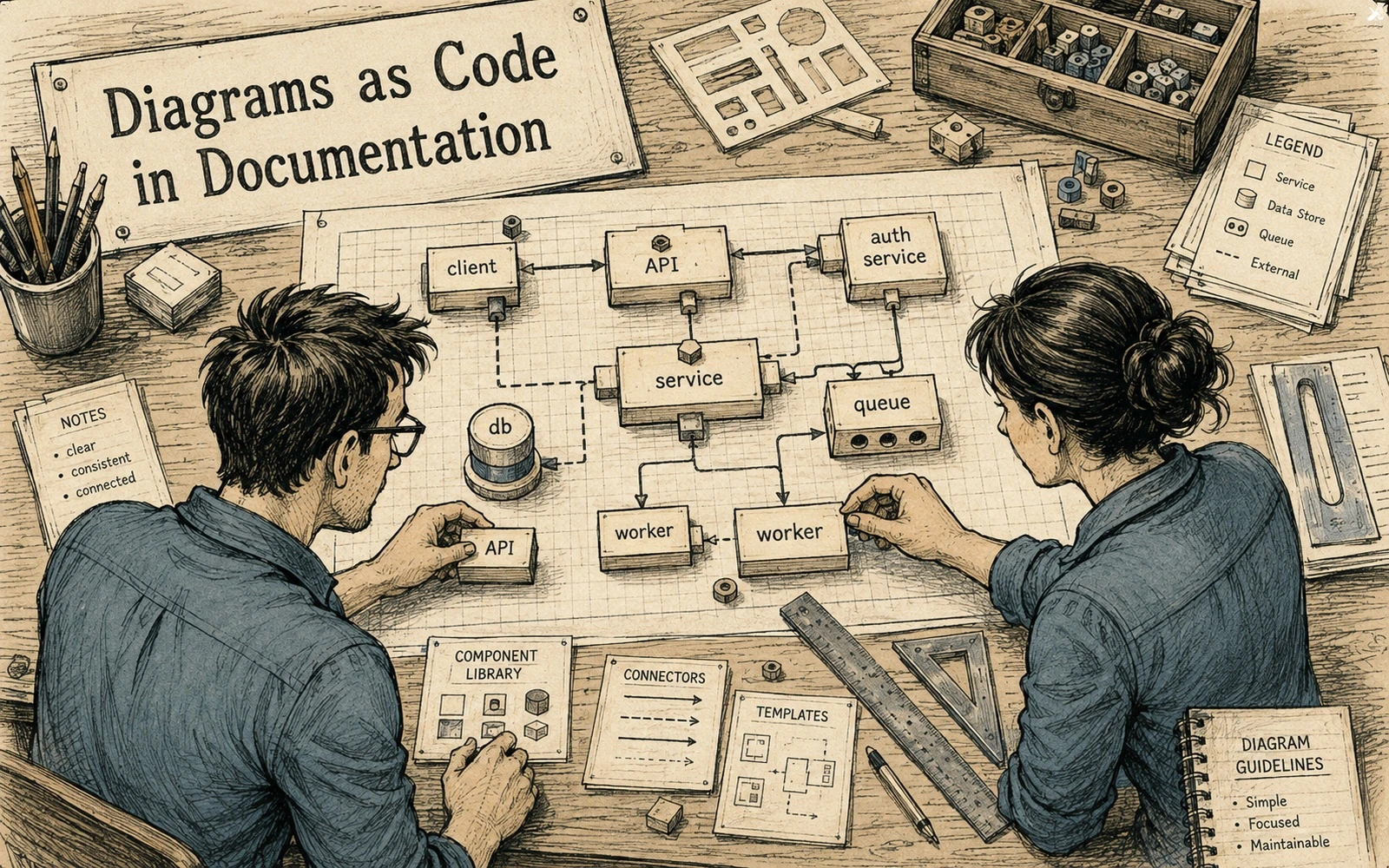
Use consistent metadata so navigation, archives and quality reports can be generated instead of hand-maintained. Move repeated complex patterns into tested components or directives instead of copying large HTML fragments into dozens of pages.
Check the result
Run deterministic checks near the author and make every failure point to a fixable problem. Lint structure as well as prose: headings, frontmatter, links, code fences and reusable identifiers can all fail mechanically.
Keep it maintainable
Treat syntax migrations as product work and remove historical exceptions instead of supporting them forever. Periodically build representative content with the next toolchain version so a growing archive does not trap the team on accidental syntax.
Applied example
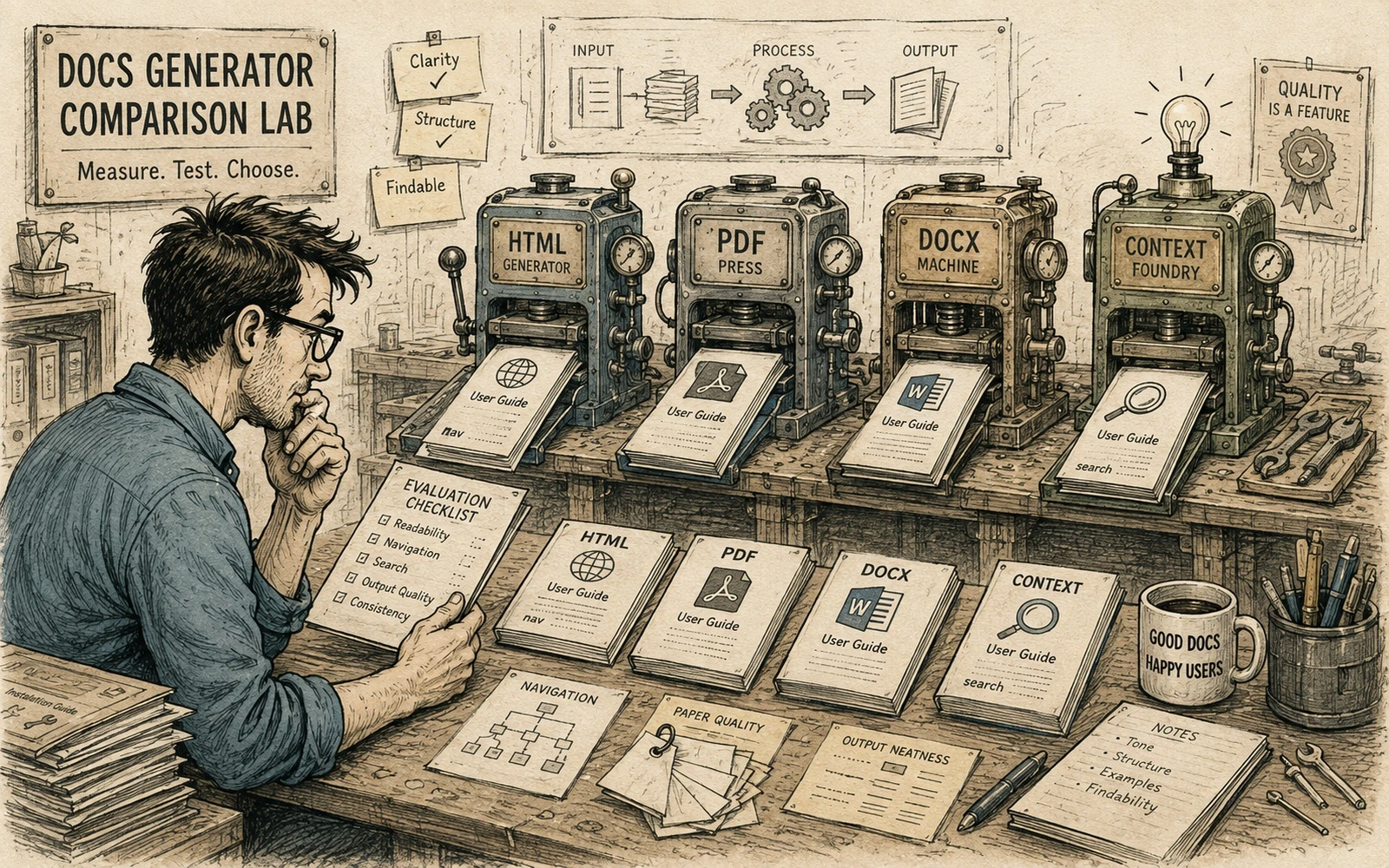
Treat “Markdown at scale: conventions that prevent a repository from becoming chaos” as a small evaluation, not a feature-list comparison. Choose three representative content samples from your own work: one simple page, one page with code or structured data, and one awkward page with navigation, reuse or localization requirements. Run all three through the tool or method and record what becomes easier and what new maintenance cost appears.
Judge the result on work your team will repeat every week:
- Can an author understand the source without specialized knowledge?
- Can a reviewer see a meaningful diff?
- Can the build fail with an error that points to a fixable problem?
- Can content be moved, localized or reused without manual cleanup?
Do not reward a tool for producing an impressive demo that your real content cannot sustain. A good documentation tool reduces uncertainty in authoring, review and publishing. If it shifts complexity into hidden configuration, fragile plugins or one expert’s memory, include that cost in the decision.
Quick editorial checklist
- Define the problem. Standardize filenames, frontmatter, headings, image locations and internal-link conventions early.
- Choose a useful model. Every shortcode and Markdown extension creates a maintenance obligation; keep a deliberately small supported set.
- Build the workflow. Use consistent metadata so navigation, archives and quality reports can be generated instead of hand-maintained.
- Check the result. Run deterministic checks near the author and make every failure point to a fixable problem.