Define the problem
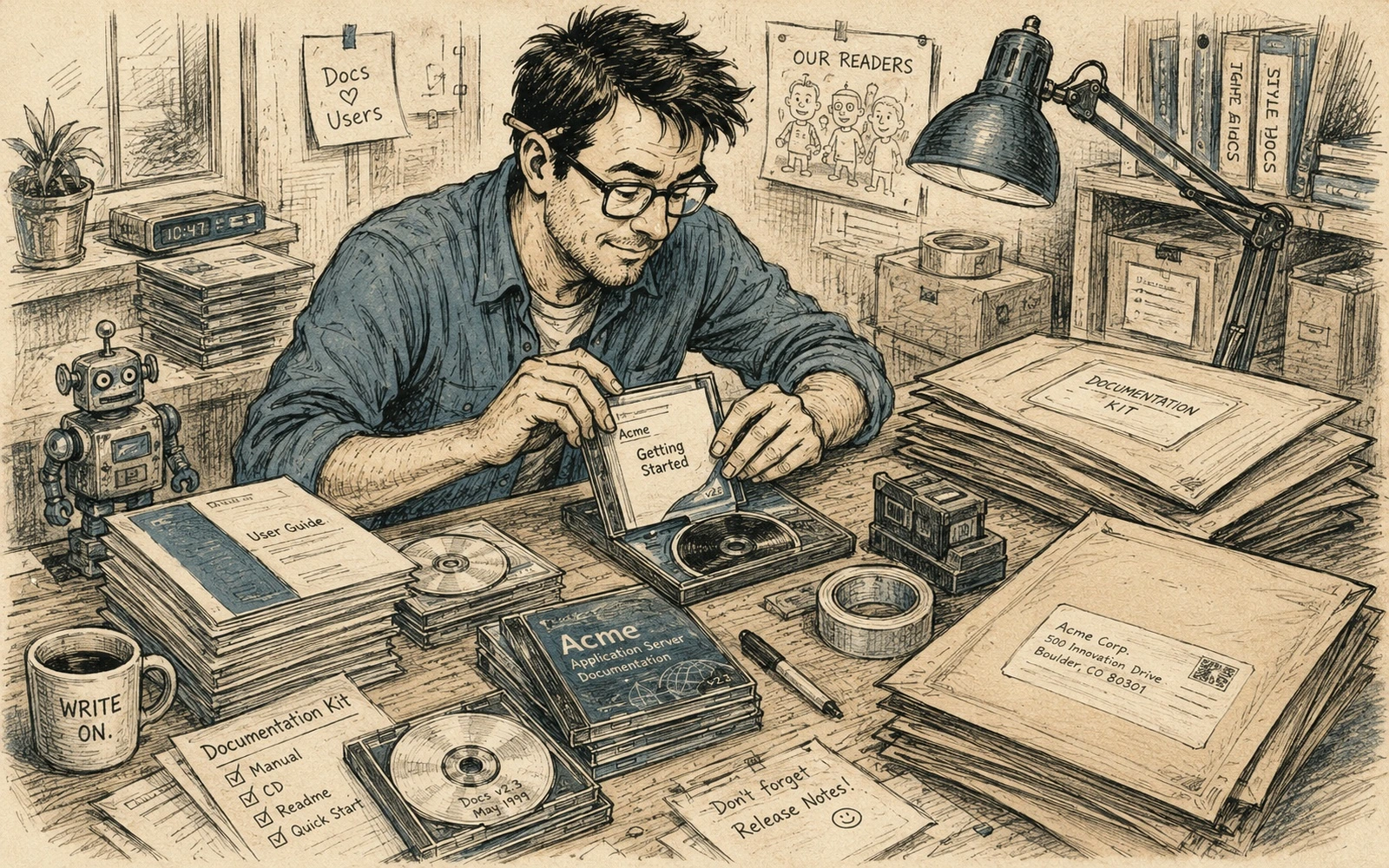
A physical publication deadline made content freeze, build verification and release coordination much more visible. CD-era manuals had to assume intermittent connectivity, fixed release snapshots and readers who could not rely on a server-side correction tomorrow.
Choose a useful model
Search had to work locally, so index generation, navigation, file size and viewer compatibility were part of the deliverable. Publishing forced teams to think carefully about version identity, install-time navigation, local search and the relationship between printed and electronic help.
Build the workflow
The manual often traveled with a specific product build, making version synchronization concrete. Late corrections were expensive, so review gates and release coordination carried more weight than in continuously deployed web documentation.
Check the result
Storage limits affected screenshots, duplicated media and packaging choices, encouraging disciplined assets. The medium also encouraged complete offline sets, which solved availability but made duplication and stale cross-version content harder to control.
Keep it maintainable
The useful lesson is not nostalgia but respect for the release boundary: verify exactly what the reader receives. Today the useful lesson is not nostalgia for discs; it is the discipline of defining what documentation belongs to a release and how readers identify that contract.
Applied example
Read “When manuals shipped on CD” in two columns: what belonged to the technology of its time, and what belonged to the underlying documentation problem. Recreate one small historical workflow with current tools—for example, publishing a release note, maintaining a glossary or packaging an offline manual—and mark which decisions stayed the same even though the medium changed.
Look for durable patterns rather than nostalgia:
- How did readers find information?
- How were corrections distributed?
- Who owned accuracy after publication?
- Which limitations of the old medium forced useful discipline?
Historical material becomes valuable when it helps us see a current problem more clearly. The goal is not to restore an old workflow, but to separate enduring editorial principles from tools that happened to be available at the time.
Quick editorial checklist
- Define the problem. A physical publication deadline made content freeze, build verification and release coordination much more visible.
- Choose a useful model. Search had to work locally, so index generation, navigation, file size and viewer compatibility were part of the deliverable.
- Build the workflow. The manual often traveled with a specific product build, making version synchronization concrete.
- Check the result. Storage limits affected screenshots, duplicated media and packaging choices, encouraging disciplined assets.