A page is not the whole skill
A polished article shows that you can produce polished text. It does not show how you discovered missing information, chose an audience, handled conflicting requirements or verified the final instructions.
A portfolio becomes more convincing when each sample is a small case study.
Explain the problem first
For every sample, state who the reader was and what they needed to accomplish. Describe the constraints: incomplete product behavior, multiple versions, a tight release date, regulated terminology or a difficult migration.
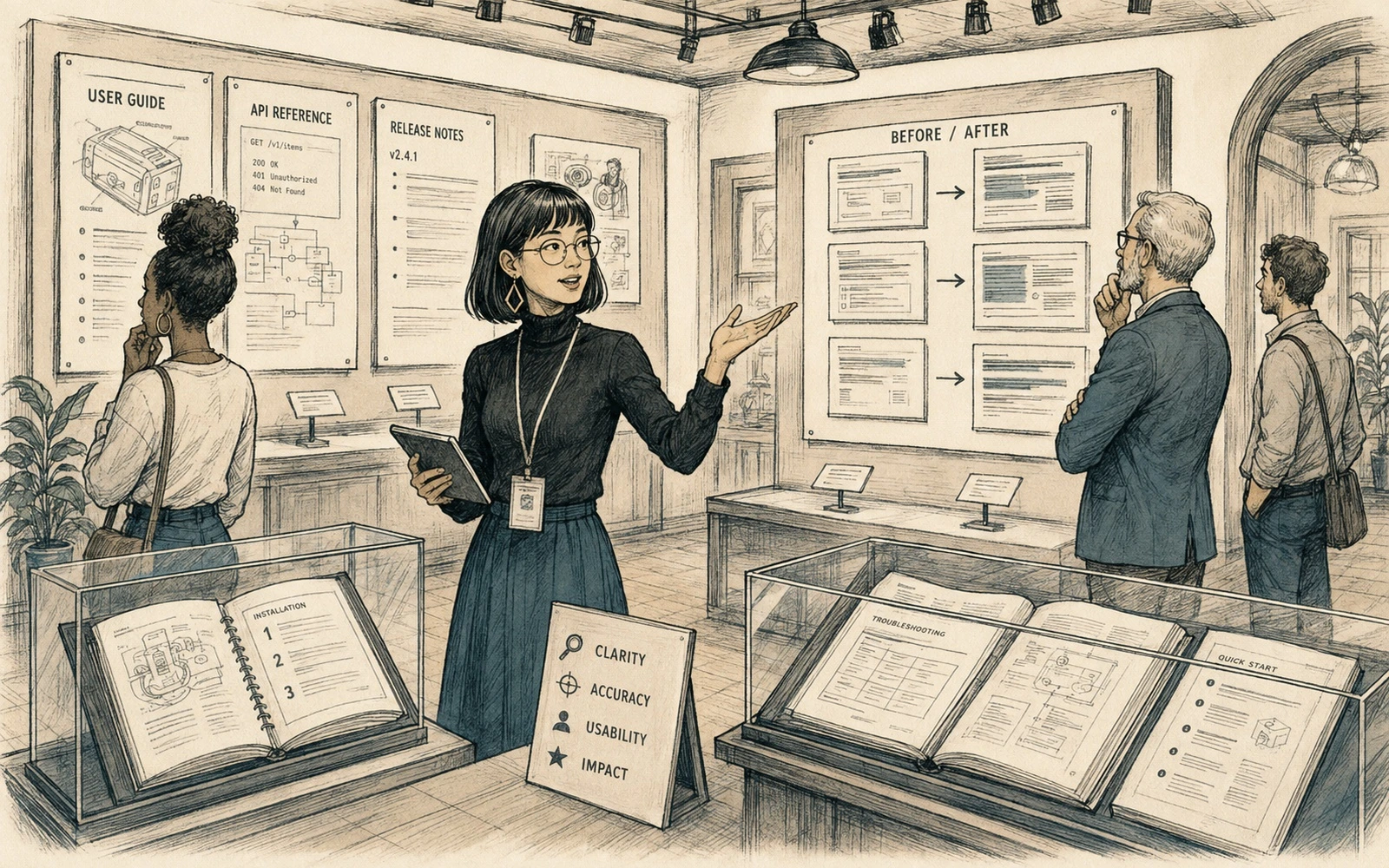
Then show what you changed and why. A before-and-after structure can be more informative than a beautiful final screenshot.
Include different kinds of evidence
One sample might demonstrate a procedure, another API reference, another information architecture or quality automation. If you cannot publish proprietary work, recreate the problem with public software or anonymize the structure without exposing confidential details.
Code, diagrams and small repository examples are useful when they demonstrate the workflow rather than distract from it.
Show verification
Mention how you tested commands, validated examples, worked with subject-matter experts or measured whether the change solved the problem. Documentation is trusted because it is connected to evidence.
Avoid claiming business impact you cannot support.
Make the portfolio easy to review
Three strong case studies are usually more useful than twenty unrelated links. Give each one a short summary and let the reviewer reach the artifact quickly. Check that links, images and downloadable files work without special permissions.
A portfolio should answer a hiring manager’s practical question: what kind of documentation problem can this person solve with us?
Applied example
Turn “Build a technical writing portfolio that shows decisions, not just pages” into a short practice assignment with an observable result. Choose a small artifact that can be finished in one or two sessions: a one-page procedure, an API example, a before/after edit, a terminology cleanup or a miniature portfolio case. Define what “better” means before you start, then compare the first version with the revised one.
Keep evidence of the work, not only the final page:
- the original problem and audience;
- the decisions you made and alternatives you rejected;
- feedback from a reader, reviewer or subject-matter expert;
- one thing you would change on the next attempt.
This is more useful than passively collecting articles and courses. Technical writing is a craft of repeated decisions under constraints. A small finished exercise with a clear review teaches more than a large theoretical project that never reaches a reader.
Quick editorial checklist
- A page is not the whole skill. A polished article shows that you can produce polished text.
- Explain the problem first. For every sample, state who the reader was and what they needed to accomplish.
- Include different kinds of evidence. One sample might demonstrate a procedure, another API reference, another information architecture or quality automation.
- Show verification. Mention how you tested commands, validated examples, worked with subject-matter experts or measured whether the change solved the problem.