Define the problem
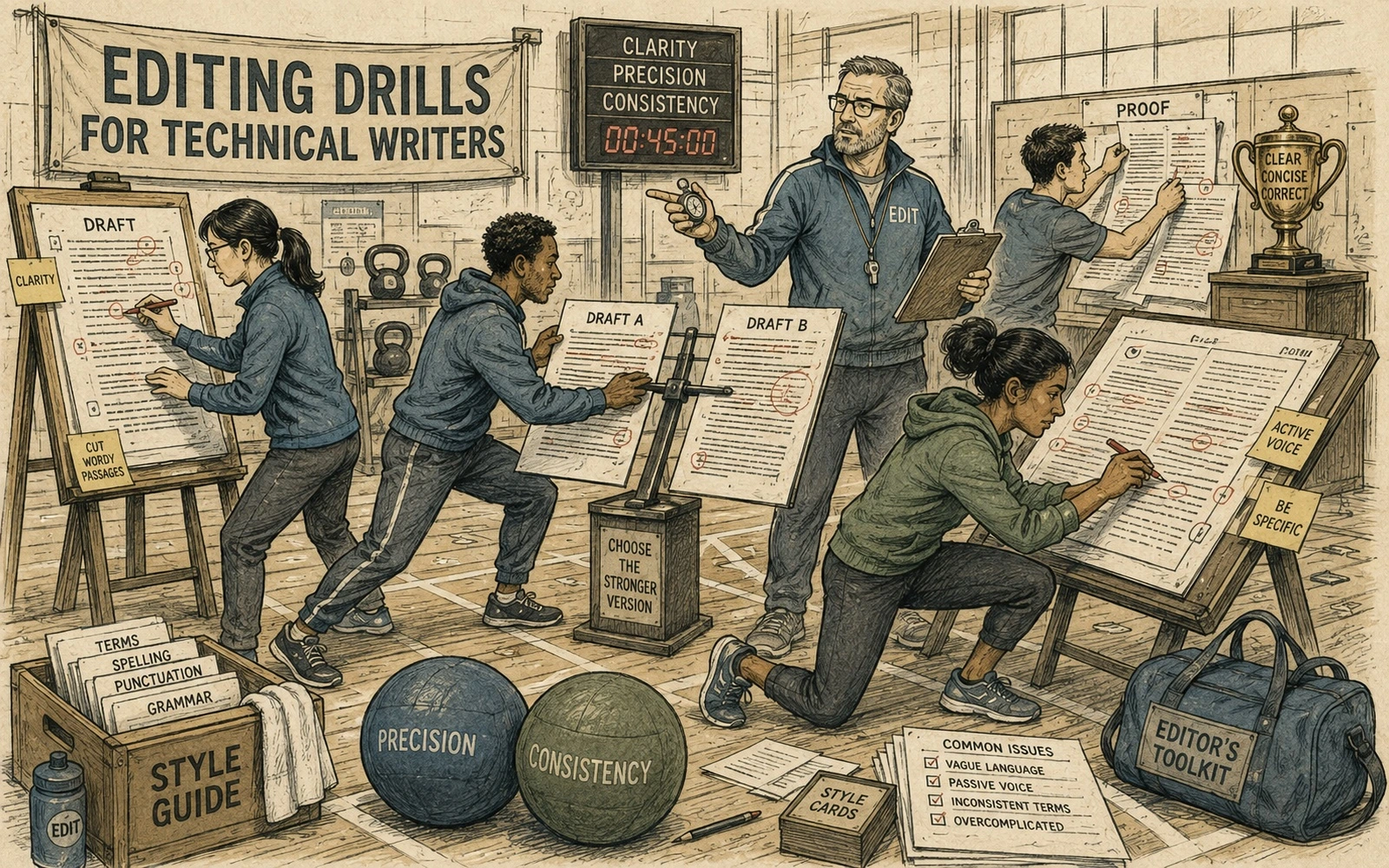
Practice one defect at a time: prerequisites, vague verbs, terminology, long sentences or missing outcomes. Editing improves faster when practice isolates one skill at a time: unnecessary words, hidden prerequisites, weak headings, inconsistent terminology or unsafe sequence.
Choose a useful model
Rewrite procedure steps as tests by asking what observable state proves success. Use short flawed passages and require an explanation for each change; the explanation exposes whether the edit follows a repeatable rule or personal taste.
Build the workflow
Compress a paragraph without deleting conditions or warnings to learn which words actually carry meaning. Compare two acceptable revisions to learn where clarity has multiple solutions and where correctness permits no stylistic compromise.
Check the result
Reverse the outline by naming the job of every section; duplicated jobs reveal structural problems. Repeat the same drill on unfamiliar technical domains so editing skill does not depend on already knowing the product.
Keep it maintainable
Keep selected before-and-after edits with a short rationale to build a personal pattern library. Keep a small error log of patterns you miss repeatedly and turn those patterns into the next month of deliberate practice.
Applied example
Turn “Editing drills that improve technical writing faster than more theory” into a short practice assignment with an observable result. Choose a small artifact that can be finished in one or two sessions: a one-page procedure, an API example, a before/after edit, a terminology cleanup or a miniature portfolio case. Define what “better” means before you start, then compare the first version with the revised one.
Keep evidence of the work, not only the final page:
- the original problem and audience;
- the decisions you made and alternatives you rejected;
- feedback from a reader, reviewer or subject-matter expert;
- one thing you would change on the next attempt.
This is more useful than passively collecting articles and courses. Technical writing is a craft of repeated decisions under constraints. A small finished exercise with a clear review teaches more than a large theoretical project that never reaches a reader.
Quick editorial checklist
- Define the problem. Practice one defect at a time: prerequisites, vague verbs, terminology, long sentences or missing outcomes.
- Choose a useful model. Rewrite procedure steps as tests by asking what observable state proves success.
- Build the workflow. Compress a paragraph without deleting conditions or warnings to learn which words actually carry meaning.
- Check the result. Reverse the outline by naming the job of every section; duplicated jobs reveal structural problems.