
AI & Documentation
AI is often more useful when it challenges structure, ambiguity and omissions than when it is treated as the authority that decides what is true. Separate language work from truth: a clearer sentence can still describe incorrect behavior.
AI & Documentation
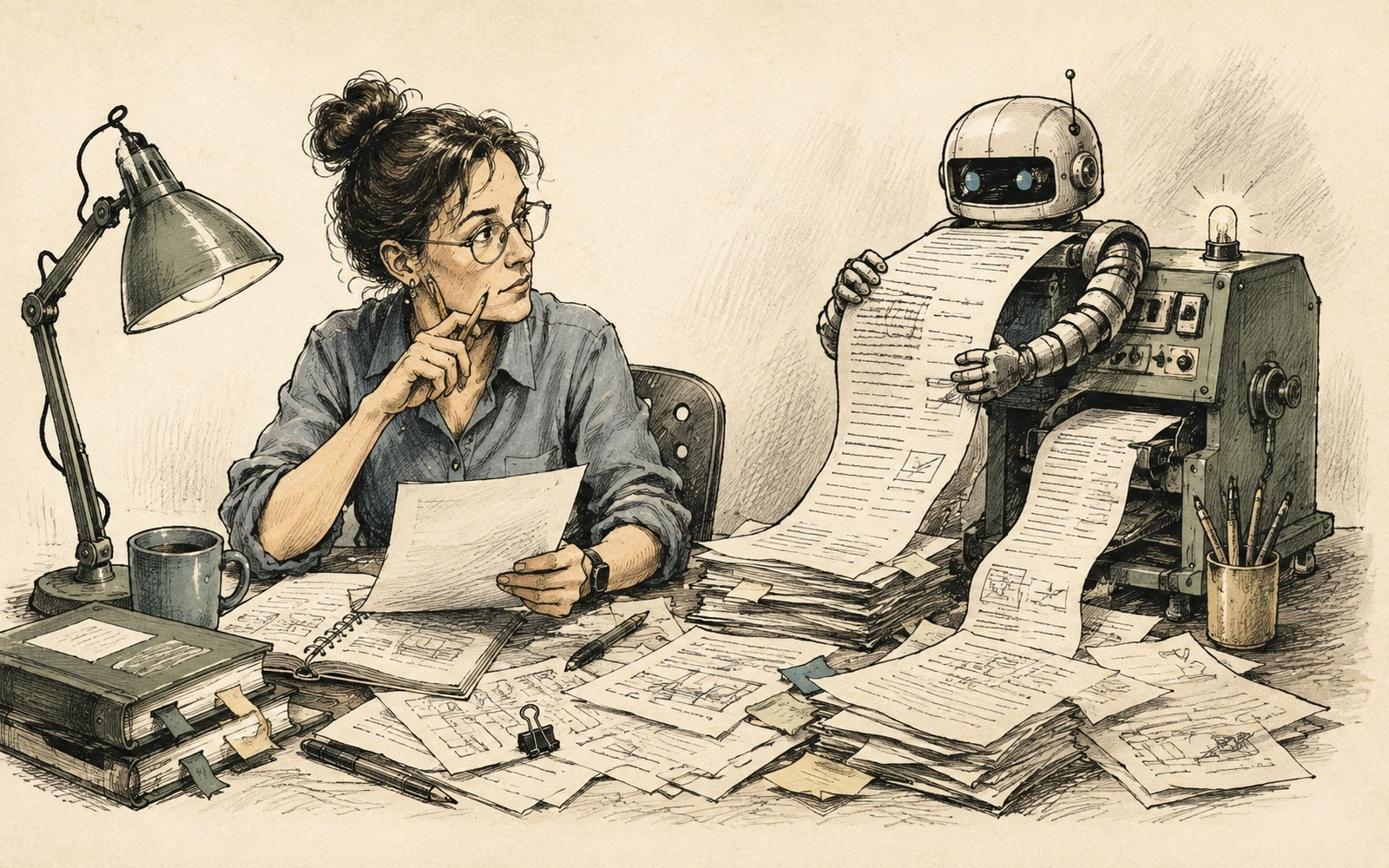
In three years, generative AI turned a first draft from an expensive output into a cheap operation. The important question is no longer whether a model can write, but who owns facts, structure, review, updates, and quality once text can be produced in minutes.
Learning
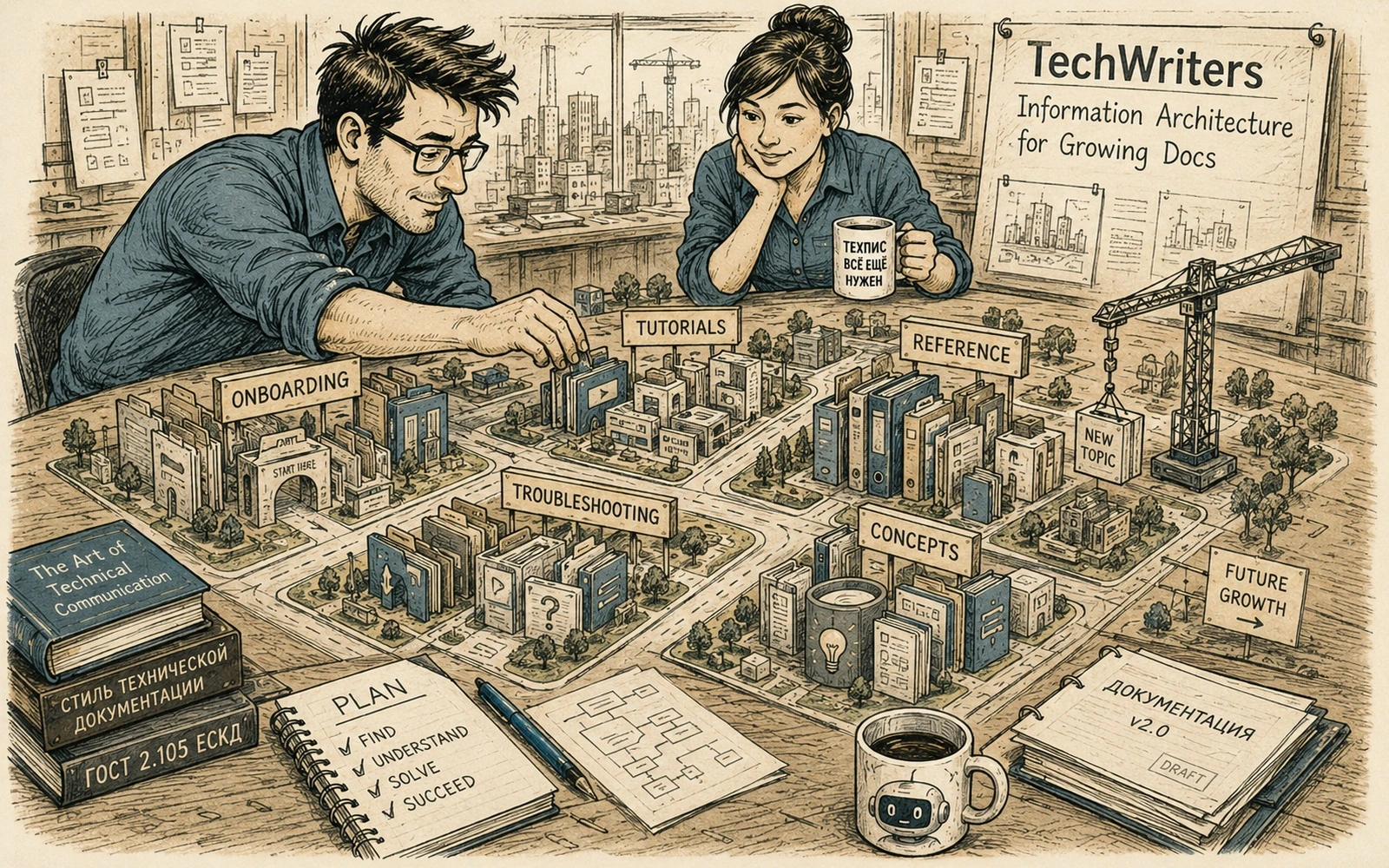
Reading about documentation helps, but skill grows faster when you repeatedly perform small research, restructuring, editing and verification exercises with clear feedback. “Improve technical writing” is too broad to train.

Practice
A review process should make responsibility visible, reduce waiting and separate factual, editorial and product approval. Documentation review fails when nobody knows who must act next.
Learning
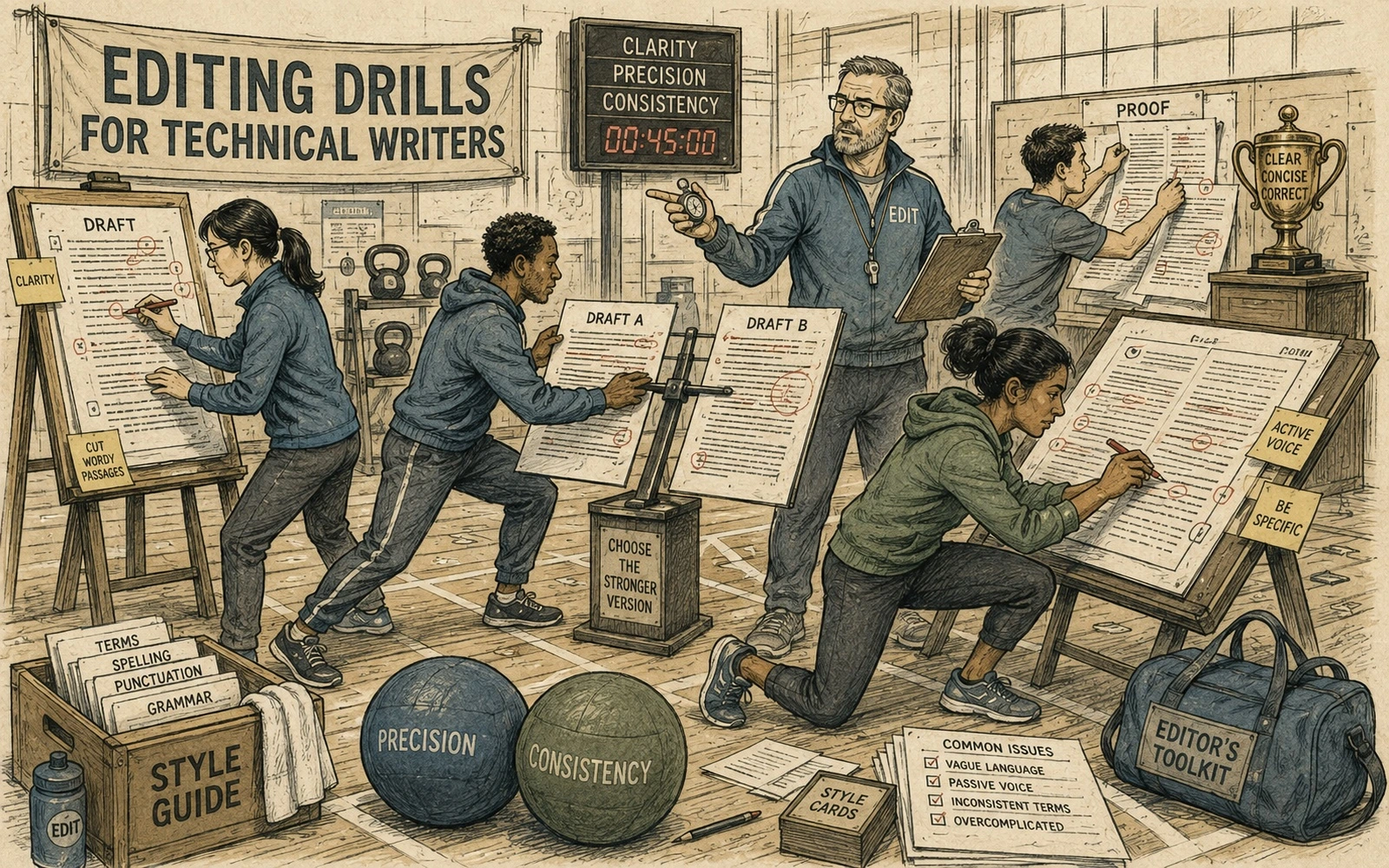
Short repeated editing exercises train diagnosis: finding ambiguity, missing conditions, weak structure and unnecessary words in real documentation. Practice one defect at a time: prerequisites, vague verbs, terminology, long sentences or missing outcomes.