Practice needs a target
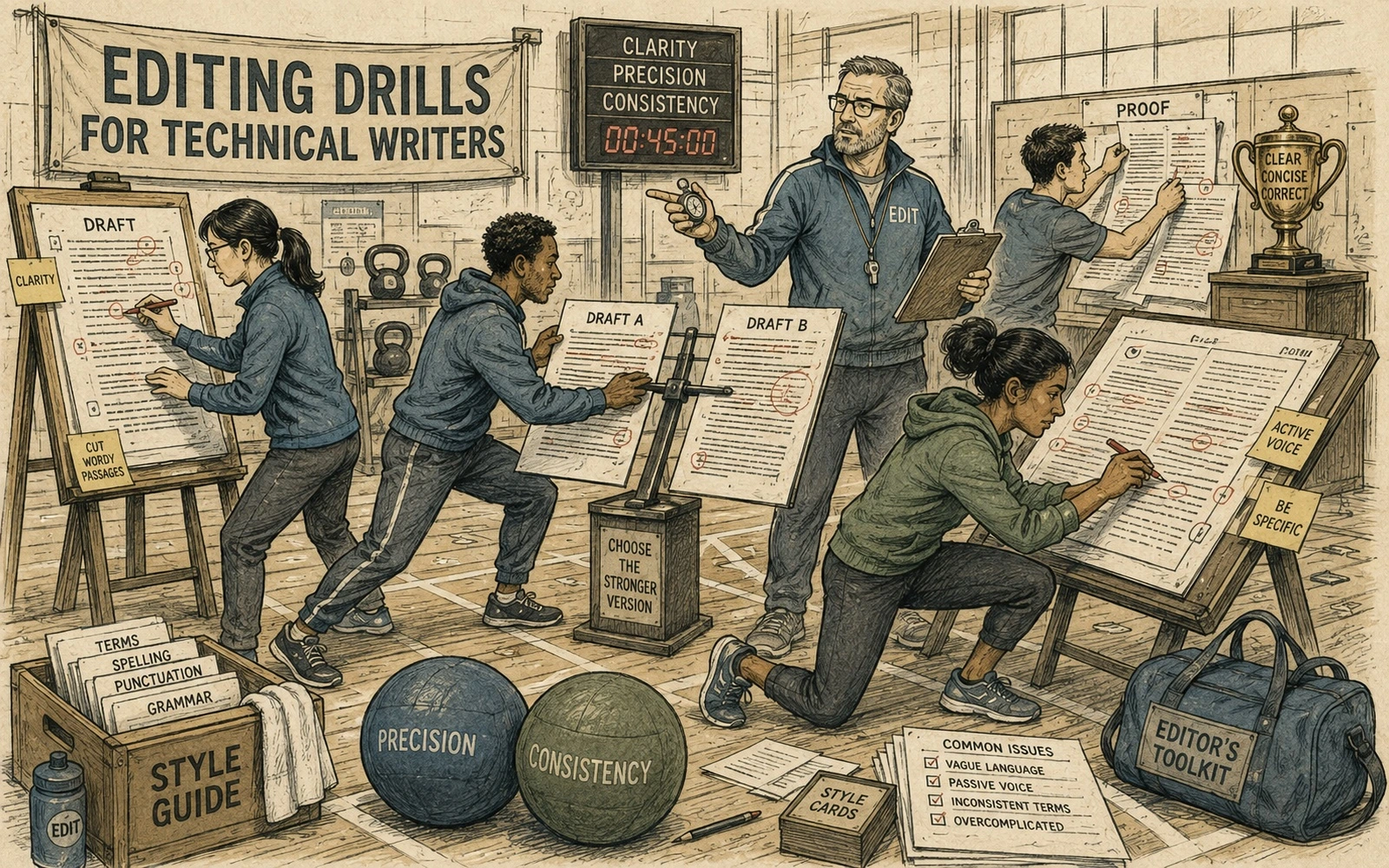
“Improve technical writing” is too broad to train. Choose one capability at a time: reducing ambiguity, designing procedures, interviewing an engineer, editing API examples, restructuring navigation or building a terminology list.
Use a real artifact whenever possible. Feedback is stronger when the exercise has constraints and a reader.
Practice diagnosis before rewriting
Take a weak page and identify the failure without editing it immediately. Is the audience unclear? Are prerequisites missing? Is a concept mixed into a procedure? Are terms inconsistent? Does the example prove anything?
This separates editorial judgment from sentence polishing.
Rebuild the same material in different forms
Turn a long explanation into a task. Turn a task into a troubleshooting flow. Turn a product description into an API quickstart. The exercise exposes which information is essential and which structure serves a particular intent.
Compare your result with established documentation, but do not copy its surface style blindly.
Get feedback from the right reviewer
Ask a subject-matter expert to check technical truth, an editor to check clarity and a target reader to attempt the task. These are different kinds of feedback. Combining them into one vague “looks good” review slows learning.
Keep a short log of repeated mistakes and revisit them after several weeks.
Build small systems
Once the writing basics are comfortable, practice the surrounding work: add a Vale rule, create a content schema, validate a code sample, or design a review checklist. Modern documentation quality comes from both craft and systems.
Deliberate practice works because it turns “experience” into specific repetitions with evidence of improvement.
Applied example
Turn “Deliberate practice for technical writers: train the work, not the buzzwords” into a short practice assignment with an observable result. Choose a small artifact that can be finished in one or two sessions: a one-page procedure, an API example, a before/after edit, a terminology cleanup or a miniature portfolio case. Define what “better” means before you start, then compare the first version with the revised one.
Keep evidence of the work, not only the final page:
- the original problem and audience;
- the decisions you made and alternatives you rejected;
- feedback from a reader, reviewer or subject-matter expert;
- one thing you would change on the next attempt.
This is more useful than passively collecting articles and courses. Technical writing is a craft of repeated decisions under constraints. A small finished exercise with a clear review teaches more than a large theoretical project that never reaches a reader.
Quick editorial checklist
- Practice needs a target. “Improve technical writing” is too broad to train.
- Practice diagnosis before rewriting. Take a weak page and identify the failure without editing it immediately.
- Rebuild the same material in different forms. Turn a long explanation into a task.
- Get feedback from the right reviewer. Ask a subject-matter expert to check technical truth, an editor to check clarity and a target reader to attempt the task.