Learning
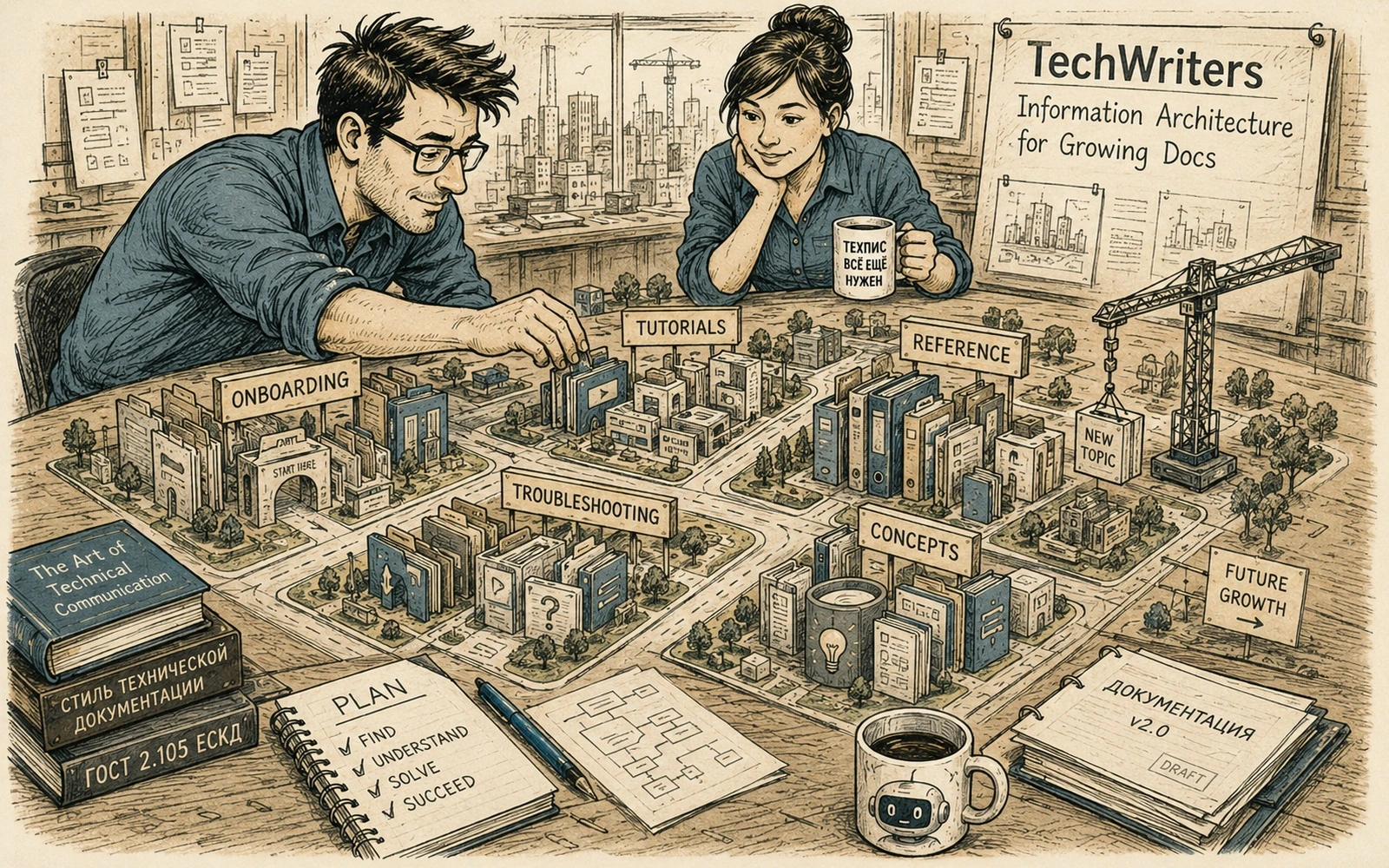
Reading about documentation helps, but skill grows faster when you repeatedly perform small research, restructuring, editing and verification exercises with clear feedback. “Improve technical writing” is too broad to train.
Profession
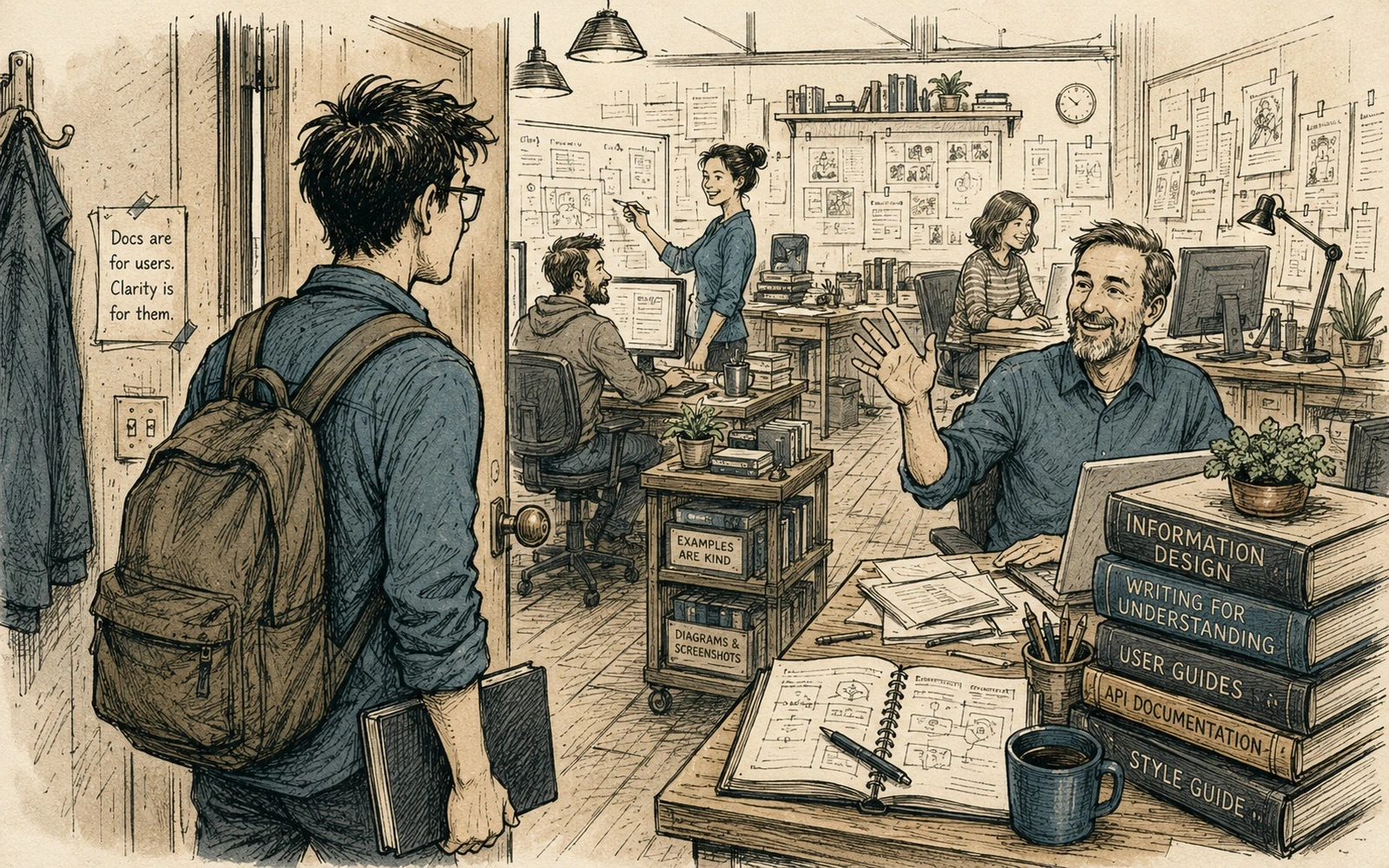
Three years ago, a beginner could enter the field by writing clearly, learning a few tools, and building a portfolio. In 2026 the entry bar is higher: AI drafts the easy material, teams are leaner, and new technical writers are increasingly expected to verify facts, work with docs-as-code and APIs, and own documentation as a system.
Learning
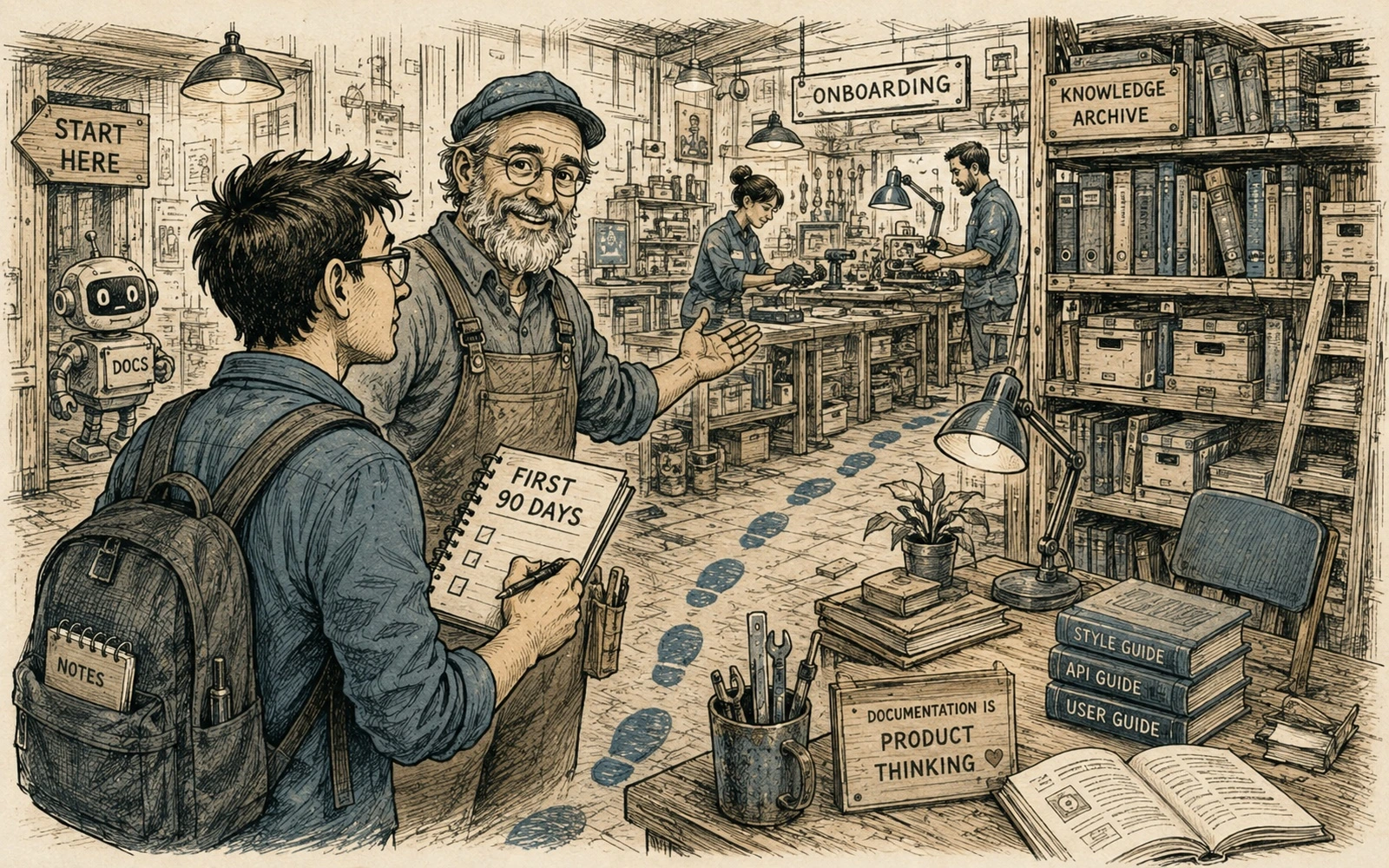
A new technical writer learns faster by mapping the product, users, publishing system and decision makers before trying to rewrite everything. First month: map product areas, audiences, source repositories, build, reviewers and release flow.
Profession
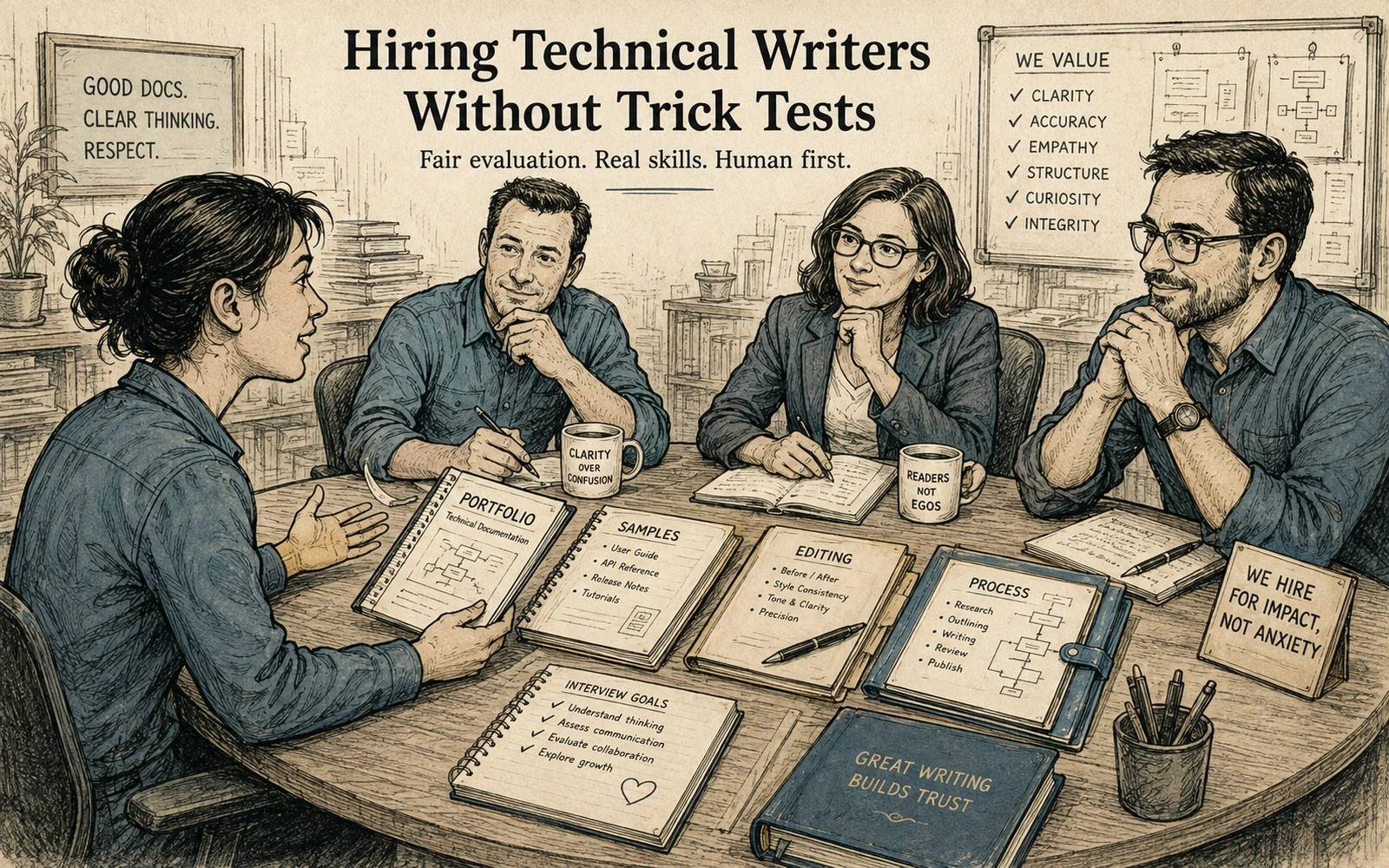
A practical hiring process should reveal how a writer understands users, verifies facts and improves information — not reward unpaid marathon assignments. Test the work the role actually requires instead of grammar puzzles and obscure trivia.
Learning
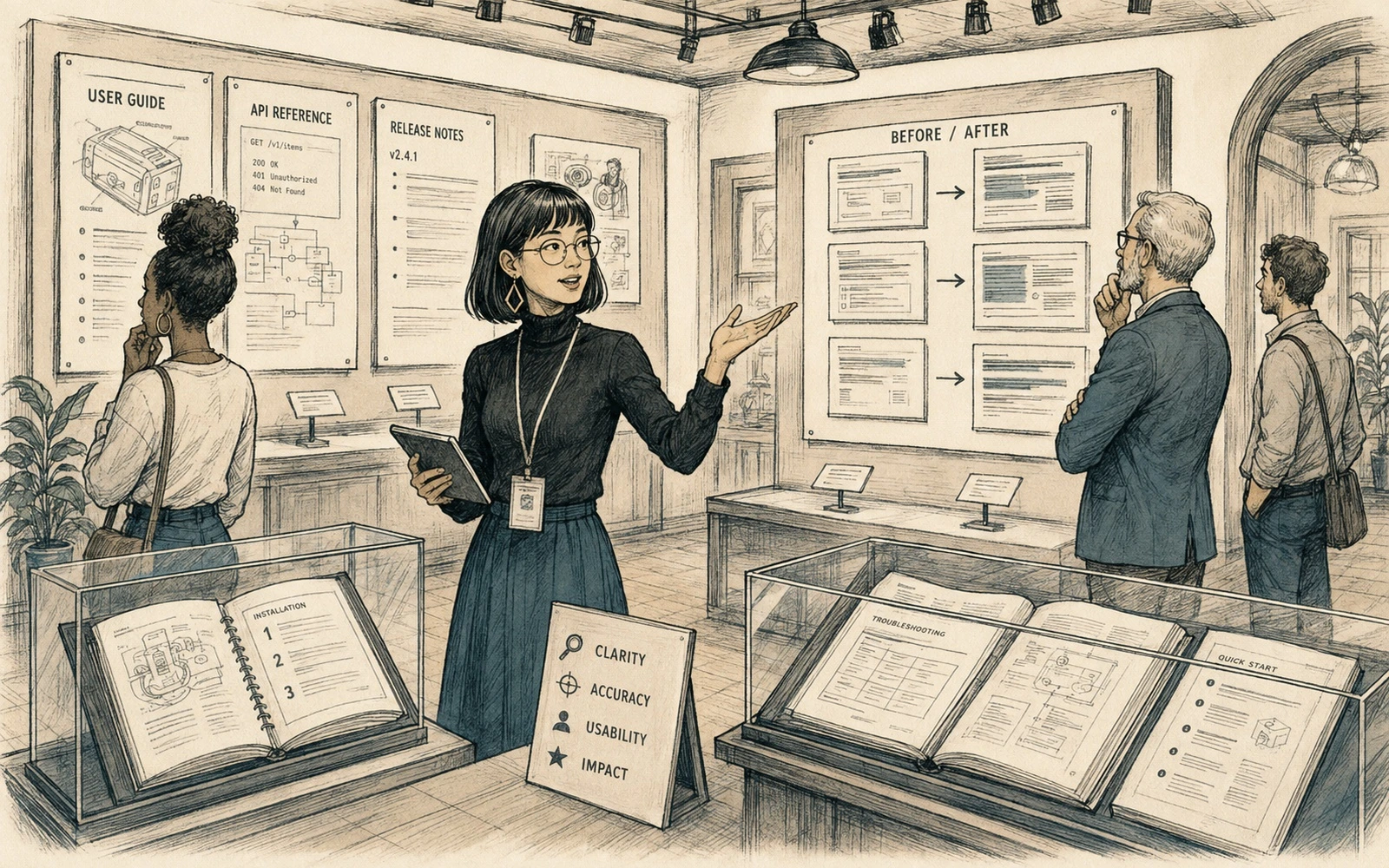
Hiring teams need evidence of how you investigate, structure and verify documentation. A strong portfolio explains the problem, constraints, process and result instead of displaying isolated polished screenshots. A polished article shows that you can produce polished text.

Profession
A good matrix helps people grow and teams hire. A bad one turns vague personality traits into fake precision. Measure observable documentation capabilities and the complexity of problems a writer can own. Teams often build a skills matrix when hiring becomes inconsistent or promotion conversations become subjective.