Define the problem
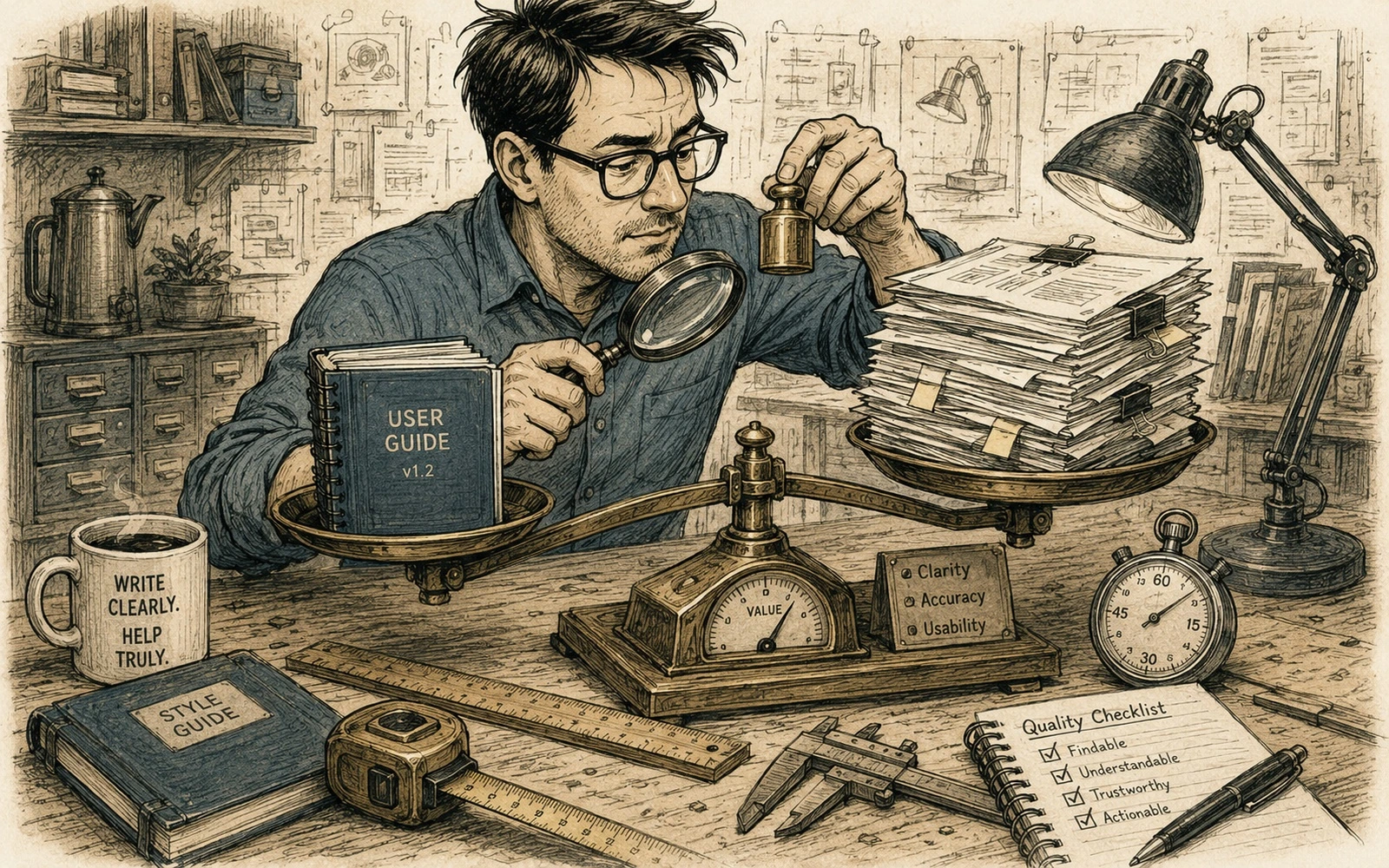
Traffic is context, not success; a popular page can be popular because it is confusing. A metric matters when it changes an editorial decision; page views alone rarely tell a team whether readers completed a task.
Choose a useful model
For procedural content, look for task completion, fewer repeated attempts and fewer support escalations. Combine behavioral signals such as search exits and failed journeys with operational signals such as support volume, review latency and correction rate.
Build the workflow
Measure maintainability too: stale ownership, review latency, broken builds and emergency edits reveal system health. Define the decision attached to each metric before collecting it: what will the team do differently if the number rises or falls?
Check the result
Use a metric to trigger investigation rather than automatic judgment about a page. Compare trends around releases and documentation changes instead of treating one absolute number as a universal quality score.
Keep it maintainable
Keep a small dashboard tied to explicit decisions; remove numbers that never change an action. Retire metrics that no longer produce decisions; a small dashboard tied to actions is healthier than a wall of numbers nobody owns.
Applied example
Use “Documentation metrics that matter more than page views” as a team exercise rather than a statement about job titles. Pick one recent documentation task and reconstruct who made each important decision: who discovered the user need, who found the technical facts, who designed the structure, who reviewed it, and who will own the next revision. This usually reveals that the profession is defined less by a fixed list of tools than by the decisions a person can make reliably.
Then compare the task with the capability you actually want to develop or hire for. Ask the team to describe observable evidence instead of personality labels:
- What problem can the person own without step-by-step supervision?
- Which stakeholders can they interview and challenge constructively?
- What quality risks can they detect before publication?
- What documentation system or process can they improve, not merely use?
A useful professional model should help a person choose the next difficult problem to practice. If it only produces labels such as “junior”, “senior”, “good communicator” or “tool expert”, it is too vague to guide growth or hiring.
Quick editorial checklist
- Define the problem. Traffic is context, not success; a popular page can be popular because it is confusing.
- Choose a useful model. For procedural content, look for task completion, fewer repeated attempts and fewer support escalations.
- Build the workflow. Measure maintainability too: stale ownership, review latency, broken builds and emergency edits reveal system health.
- Check the result. Use a metric to trigger investigation rather than automatic judgment about a page.