Define the problem
A code example is a factual claim about fields, values, order and behavior. Synthetic examples are dangerous when plausible values imply product behavior that was never tested or guaranteed.
Choose a useful model
Generate from known constraints so the model has less space for plausible but nonexistent properties. Generate example shape from known schemas or fixtures first, then let AI help with presentation only inside those constraints.
Build the workflow
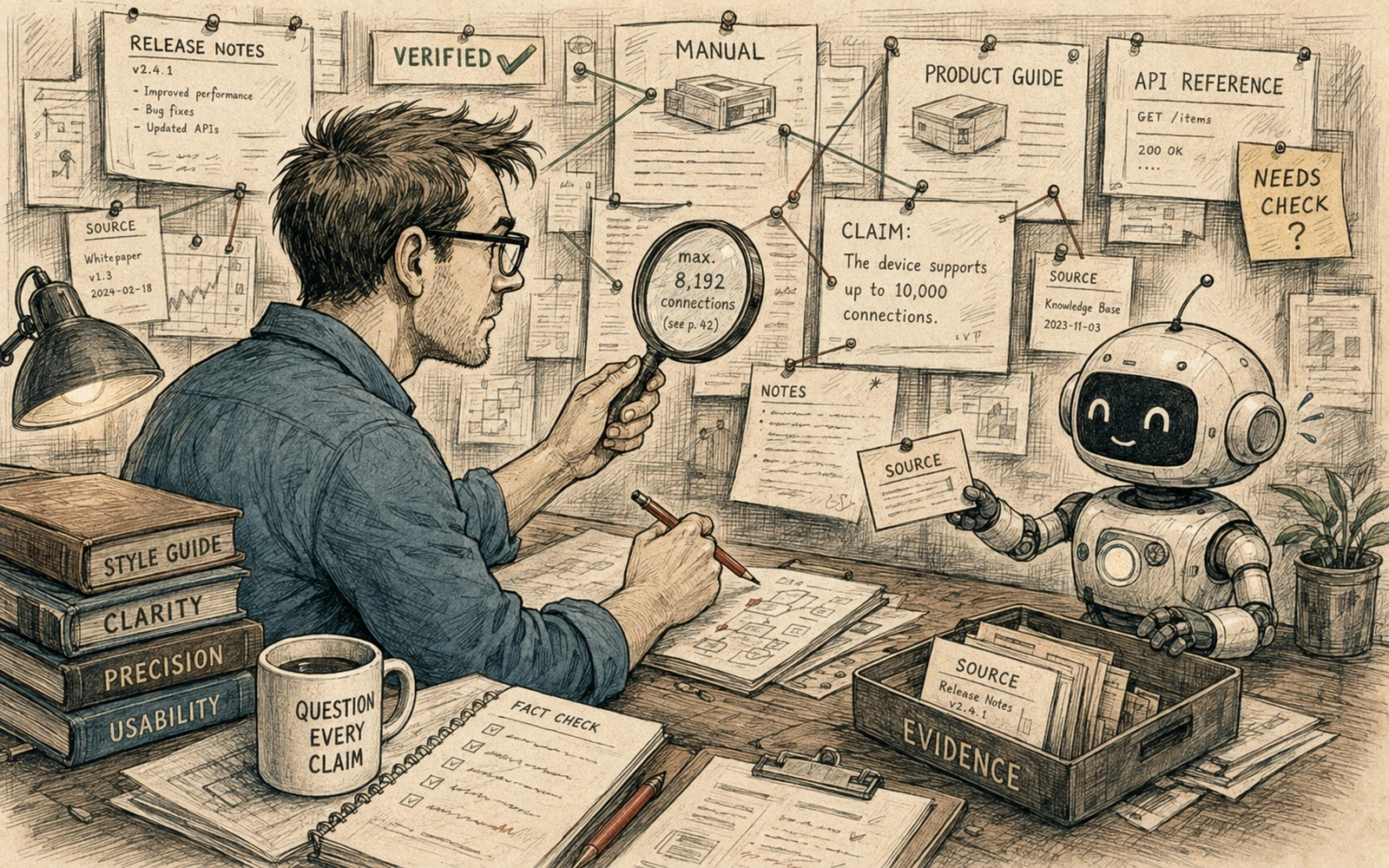
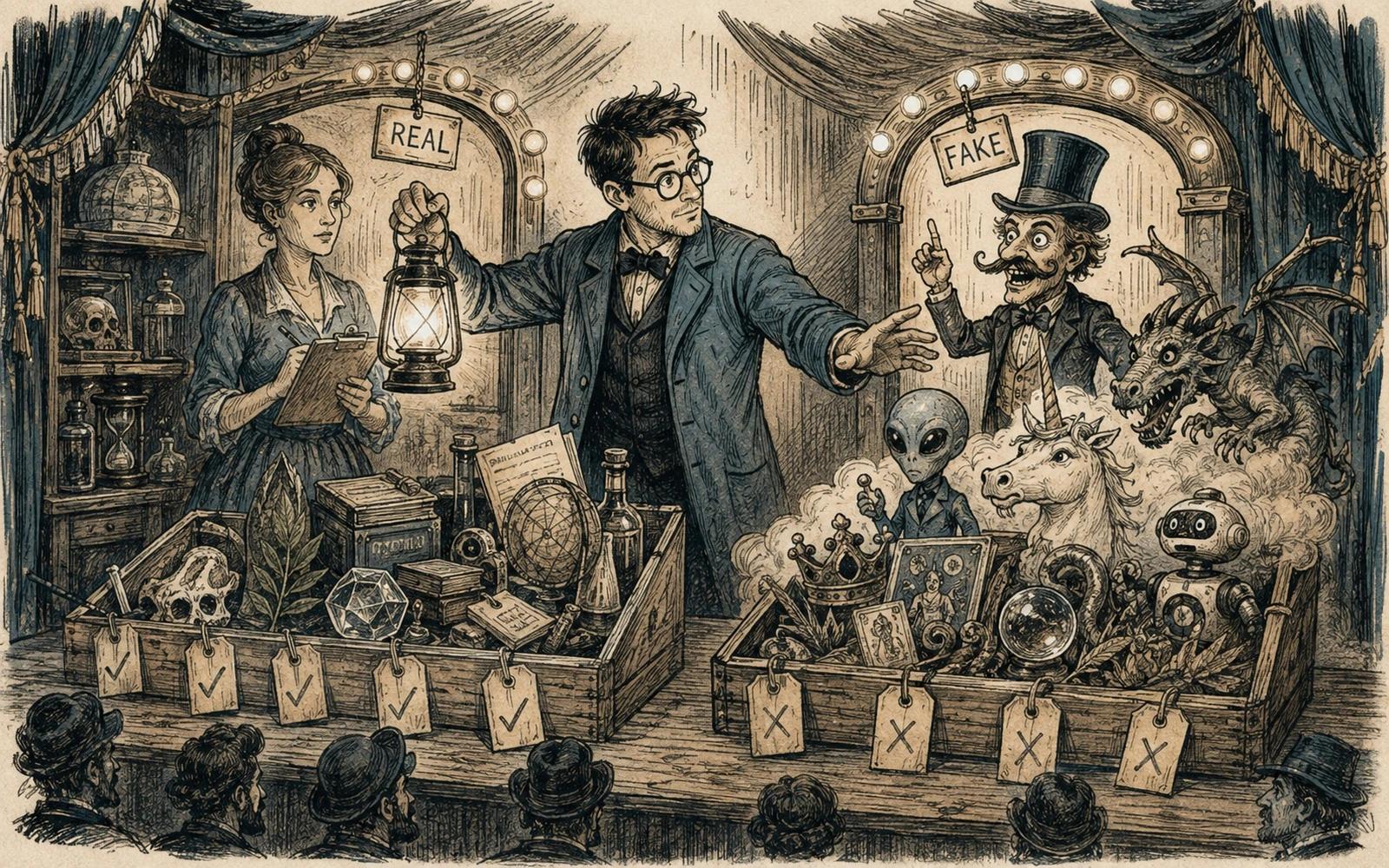
Validate outside the model with tests, parsers, schemas, product execution or an independent reviewer. Mark invented names and data clearly enough that readers do not mistake them for real endpoints, accounts, limits or compatibility claims.
Check the result
Check failure examples especially carefully because invented errors teach readers to handle behavior that does not exist. Run executable examples where possible and manually verify the rest against a real environment before publication.
Keep it maintainable
Only verified examples should become maintained documentation, regardless of how the draft was produced. If an example cannot be verified, remove or simplify it; an incomplete true example is safer than a polished fictional contract.
Applied example
Test “Synthetic examples: useful draft material, dangerous evidence” with a controlled sample before turning it into a production workflow. Select ten short pieces of documentation whose correct state you already know: some accurate, some outdated, some ambiguous and some intentionally misleading. Give the AI only the information it is supposed to use, keep the instructions fixed, and record both correct decisions and confident mistakes.
Review the result with an editor’s checklist:
- Did the model distinguish evidence from inference?
- Did it preserve terminology and product constraints?
- Did it invent missing facts or soften uncertainty?
- Can a human reviewer see what changed and why?
The useful question is not whether the model can produce fluent prose. It is whether the workflow makes errors visible before publication. Automation earns trust when its boundaries, inputs and review points are explicit enough that a second person can reproduce the decision.
Quick editorial checklist
- Define the problem. A code example is a factual claim about fields, values, order and behavior.
- Choose a useful model. Generate from known constraints so the model has less space for plausible but nonexistent properties.
- Build the workflow. Validate outside the model with tests, parsers, schemas, product execution or an independent reviewer.
- Check the result. Check failure examples especially carefully because invented errors teach readers to handle behavior that does not exist.