Fluency is not evidence
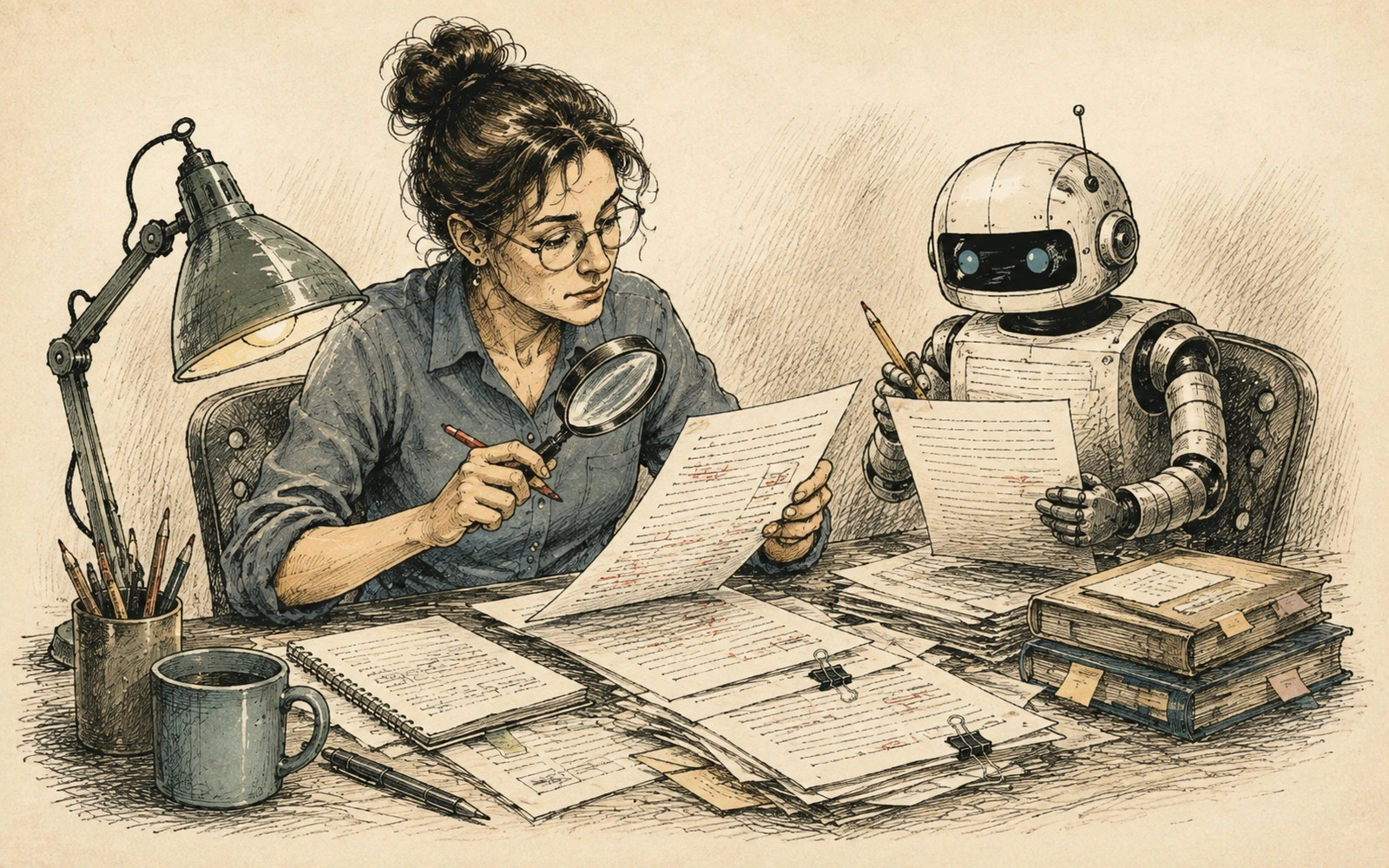
The dangerous AI error in documentation is rarely broken grammar. It is a plausible statement that nobody notices is unsupported: a default timeout, an undocumented parameter, a compatibility promise or a citation that points to something unrelated.
Treat generated prose as a draft with unknown provenance unless the workflow can show where each factual claim came from.
Classify claims before checking them
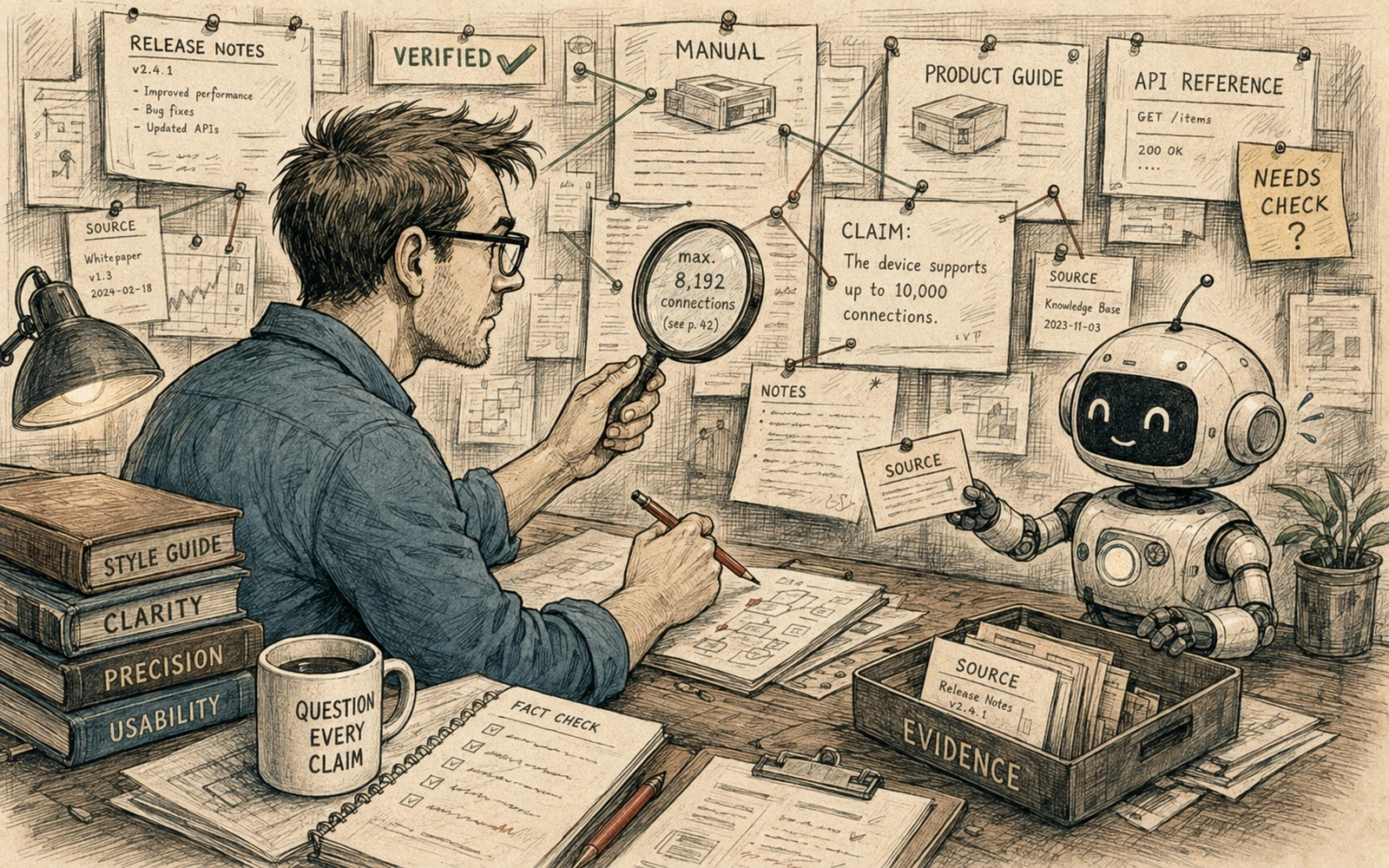
Not every sentence carries the same risk. Separate factual product behavior, numerical limits, commands and configuration from editorial explanation. Facts should resolve to authoritative evidence: code, tests, schemas, approved specifications, release artifacts or a named subject-matter owner.
General framing can receive ordinary editorial review, but it should not smuggle in new product claims.
Execute what can be executed
Run commands, validate JSON and YAML, compile code samples and check links. For API examples, validate payloads against the contract and use a test environment where practical. Automation cannot prove the whole explanation is correct, but it can eliminate a large class of avoidable mistakes.
Record the supported version or environment when results depend on it.
Make uncertainty visible
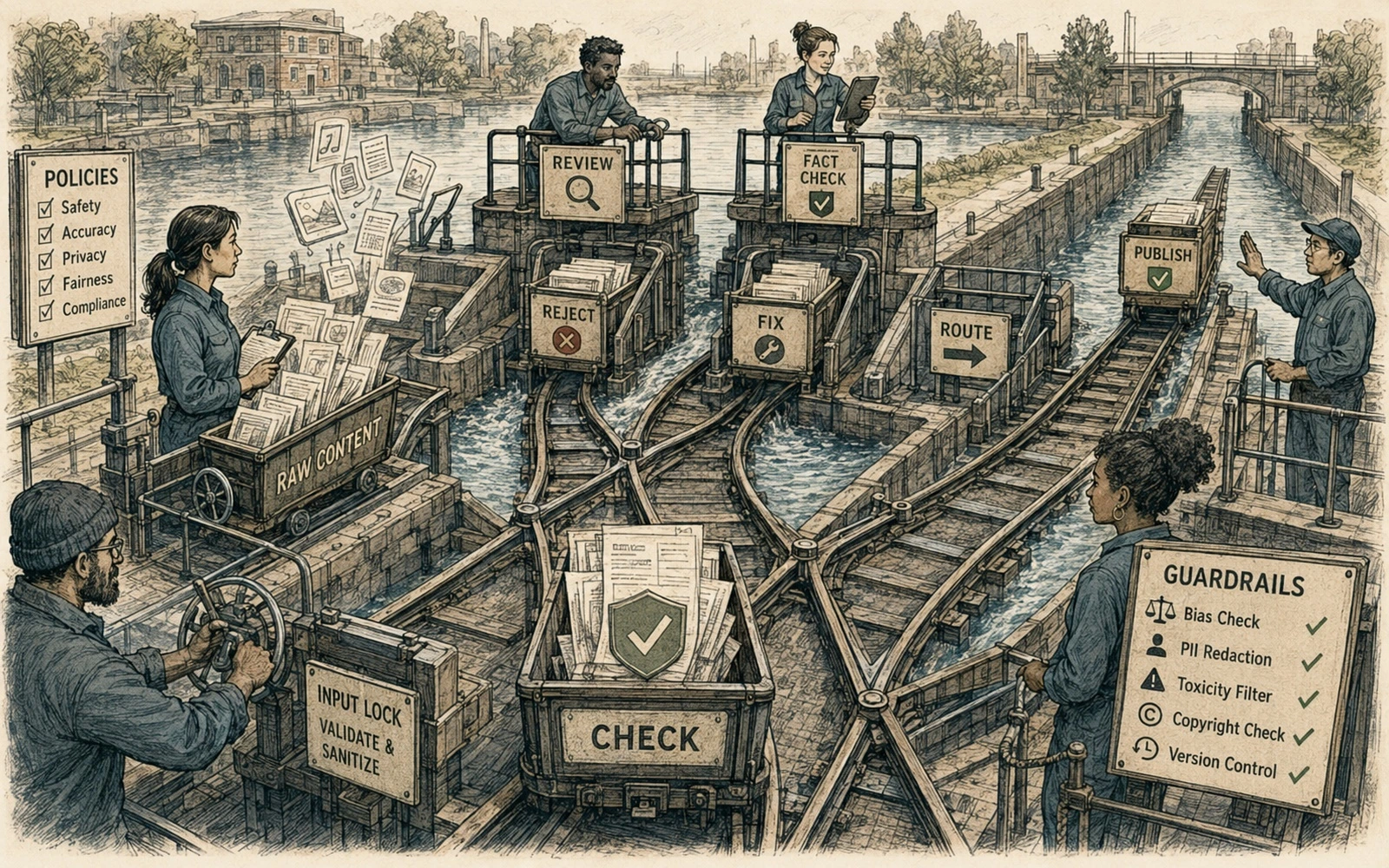
If evidence conflicts, stop the publication path. Do not ask the model to choose the most plausible answer. Flag the uncertainty, identify the owner and resolve it as a product decision.
This is especially important for security, billing, data retention, destructive operations and compatibility statements.
Keep the verification trail lightweight
You do not need a forensic dossier for every paragraph. A source list, review metadata and tested examples are often enough. The key is that a reviewer can reconstruct why the article is believed to be true.
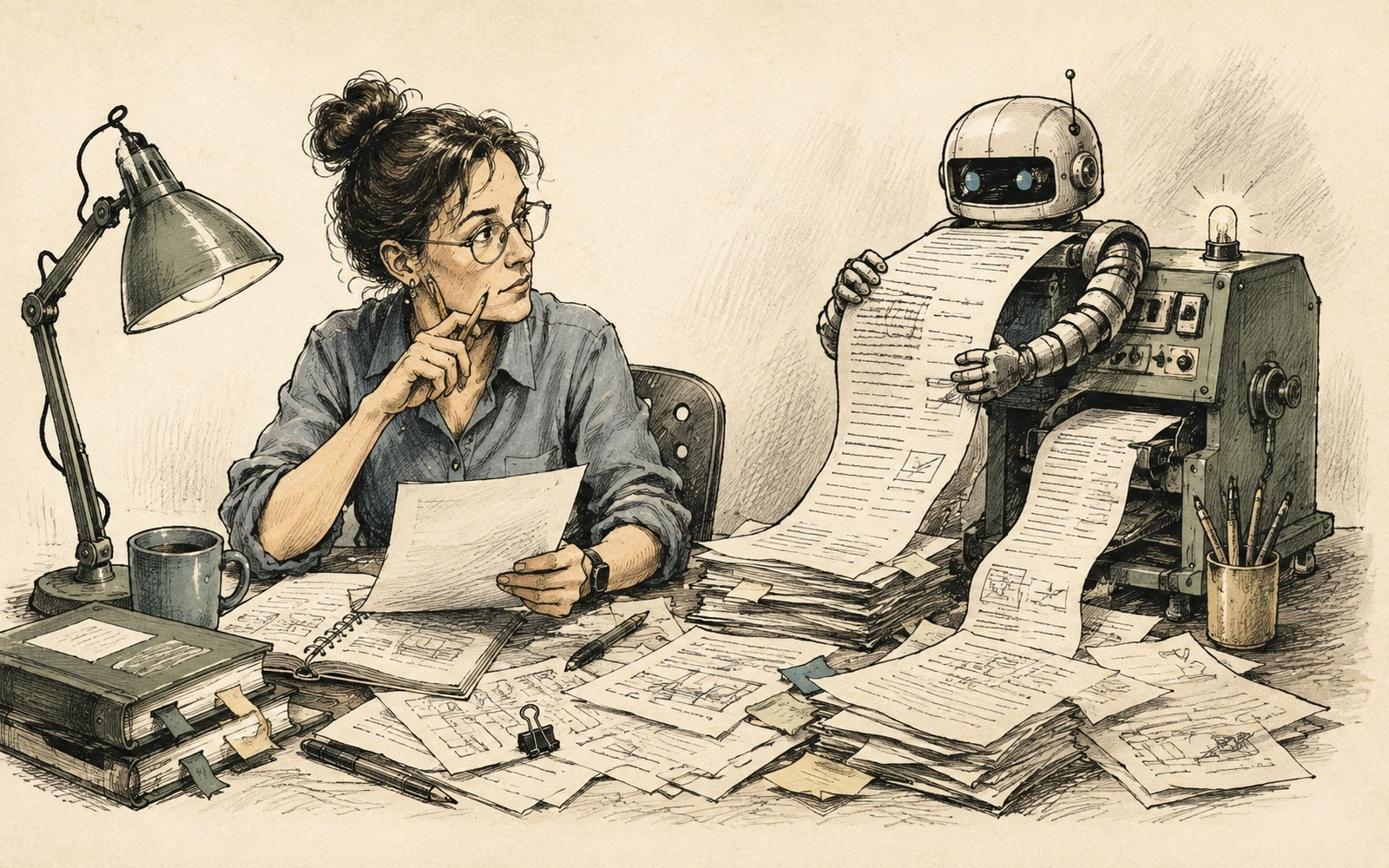
AI makes drafting cheap. That increases the value of verification, because a team can now create unsupported prose faster than ever.
Applied example
Test “Fact-check AI-assisted documentation before fluent mistakes ship” with a controlled sample before turning it into a production workflow. Select ten short pieces of documentation whose correct state you already know: some accurate, some outdated, some ambiguous and some intentionally misleading. Give the AI only the information it is supposed to use, keep the instructions fixed, and record both correct decisions and confident mistakes.
Review the result with an editor’s checklist:
- Did the model distinguish evidence from inference?
- Did it preserve terminology and product constraints?
- Did it invent missing facts or soften uncertainty?
- Can a human reviewer see what changed and why?
The useful question is not whether the model can produce fluent prose. It is whether the workflow makes errors visible before publication. Automation earns trust when its boundaries, inputs and review points are explicit enough that a second person can reproduce the decision.
Quick editorial checklist
- Fluency is not evidence. The dangerous AI error in documentation is rarely broken grammar.
- Classify claims before checking them. Not every sentence carries the same risk.
- Execute what can be executed. Run commands, validate JSON and YAML, compile code samples and check links.
- Make uncertainty visible. If evidence conflicts, stop the publication path.