API
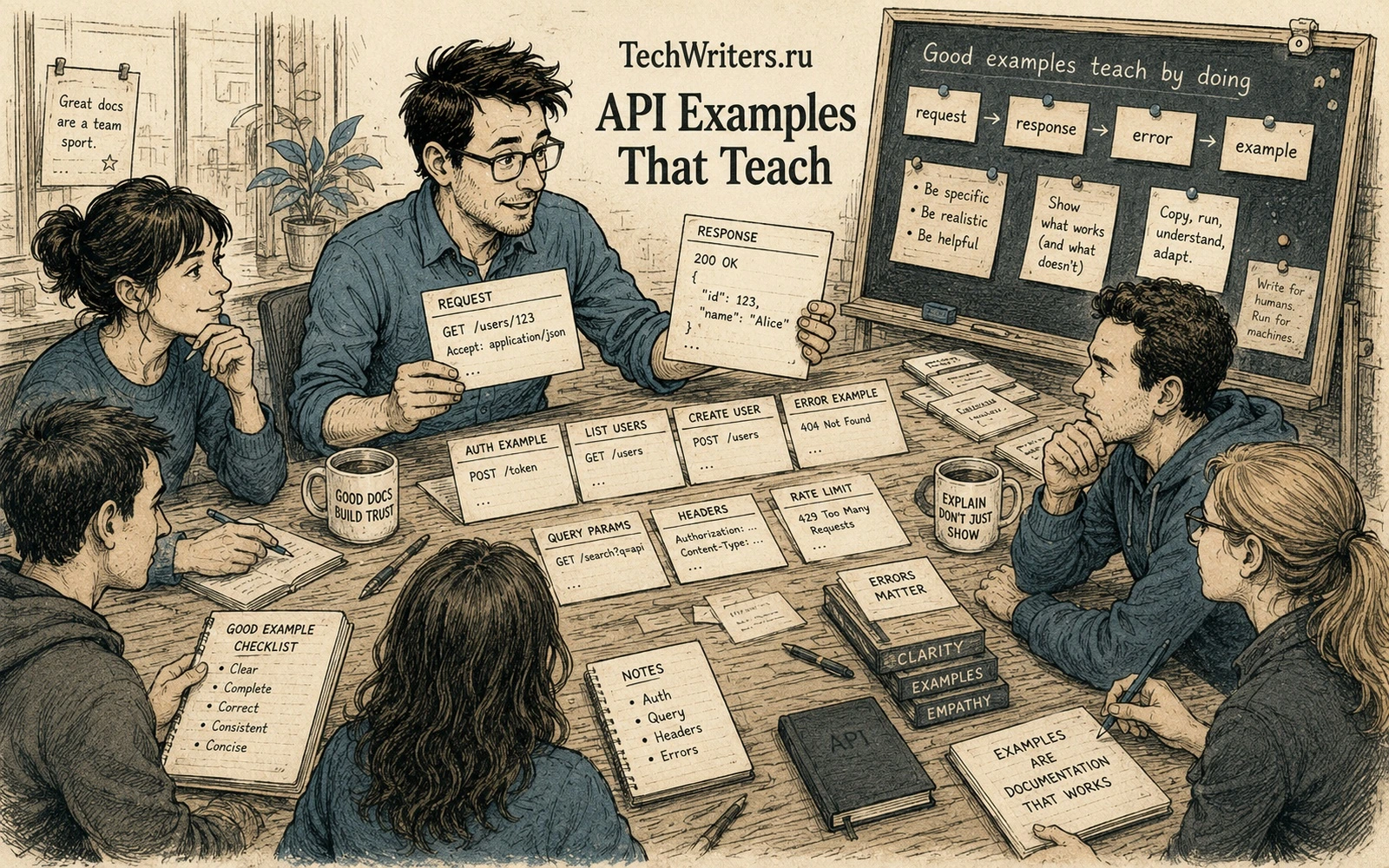
A technically valid request is not automatically a useful example. Choose examples that expose the mental model, show realistic values and let a developer predict what to do next. An example copied from a schema can be syntactically correct and still teach nothing.

API
Good authentication docs explain the whole credential lifecycle: obtaining access, sending credentials, rotating them and diagnosing failure. Explain prerequisites, roles, environments and credential issuance before the first HTTP request.
API
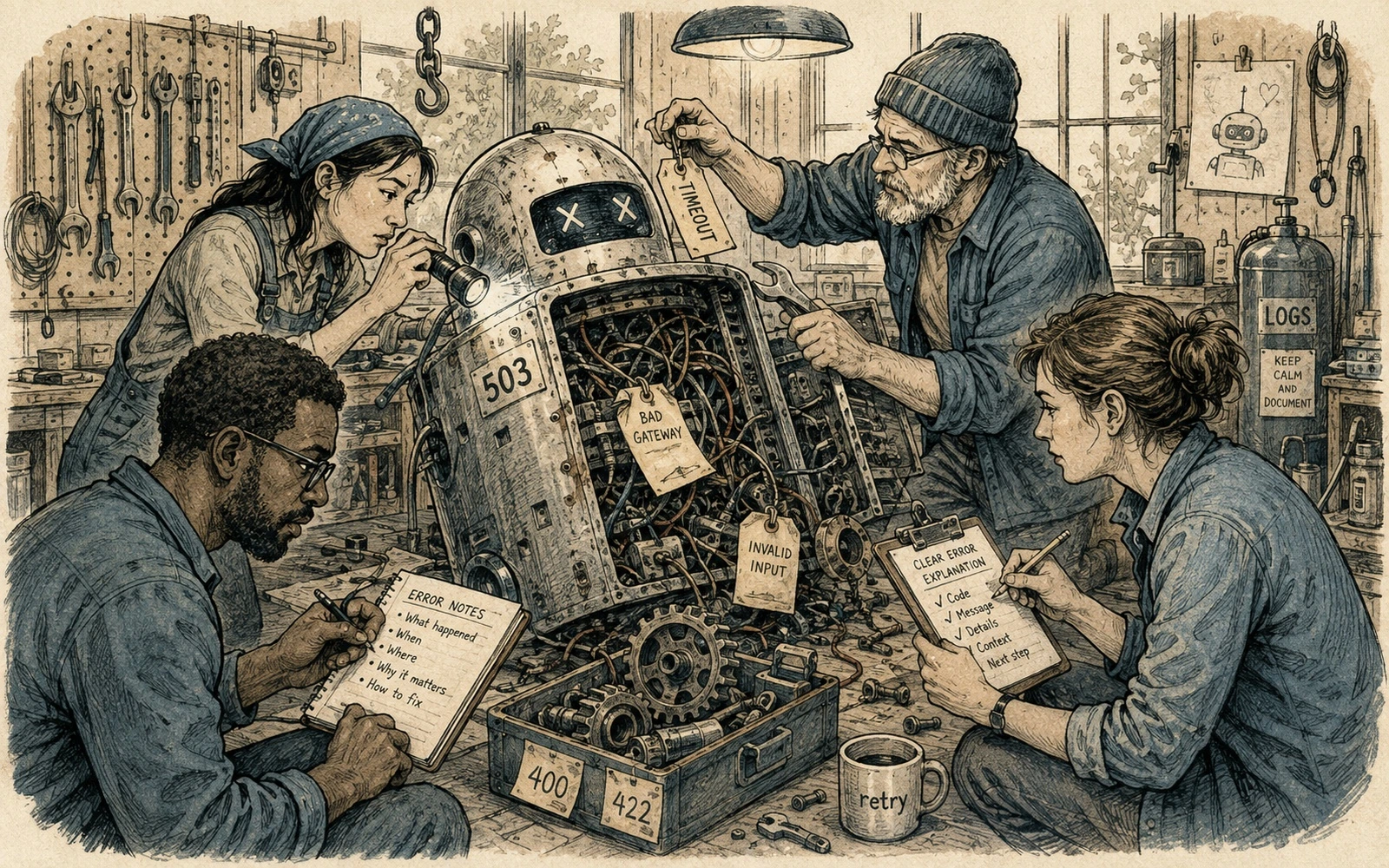
An error reference is useful only when it helps a developer identify the condition, understand the response and choose a safe next action. Describe the condition that triggers an error, not only a status code and message.
API
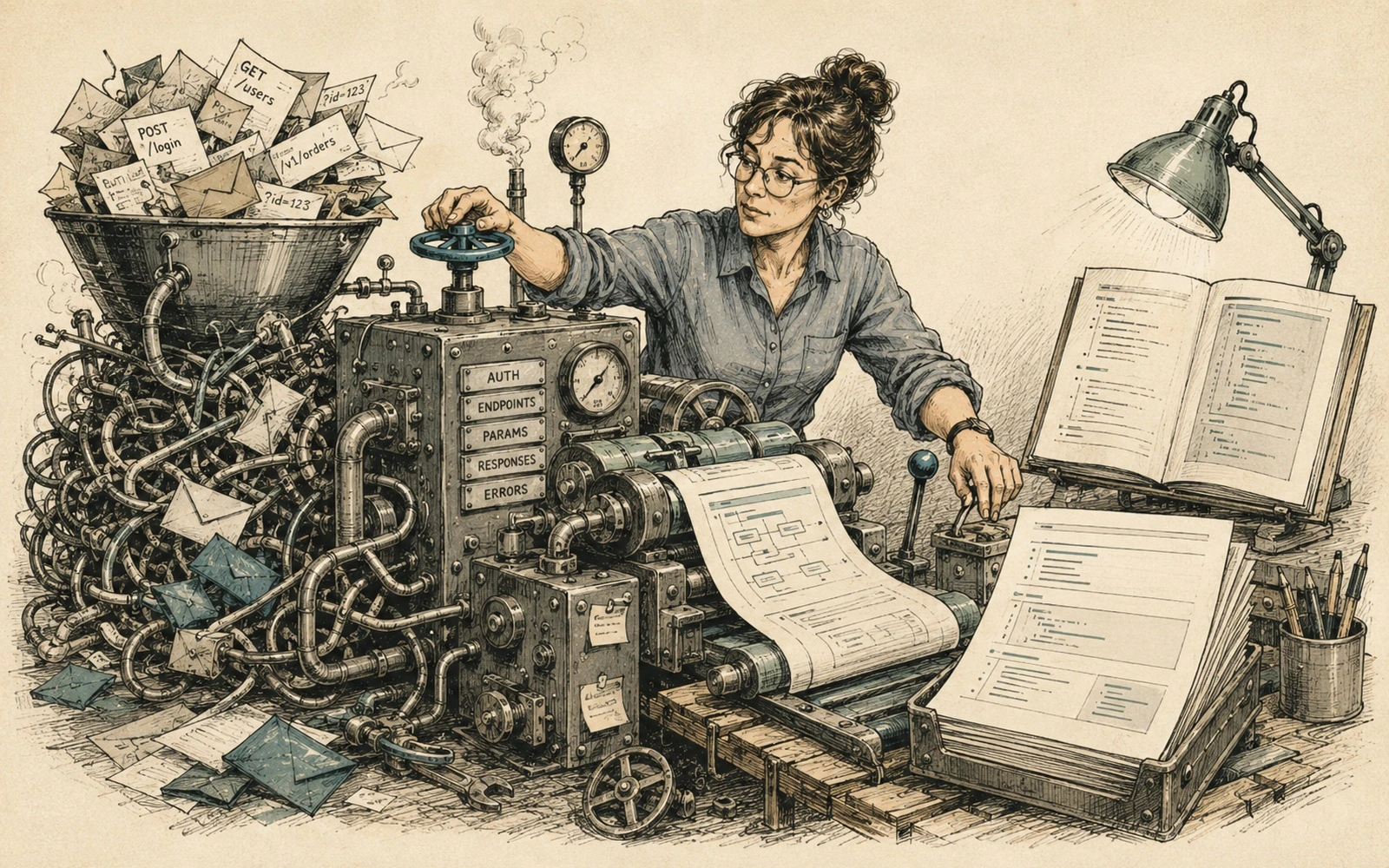
Good API documentation combines machine-readable contracts with human explanations, runnable examples and explicit error behavior. REST API documentation has two audiences at once: machines and people.

Learning
A tiny working API gives a technical writer enough surface area to practice reference, concepts, examples, errors and onboarding without a large project. Keep the API intentionally small; the goal is documentation practice, not backend engineering.

API
An OpenAPI description can generate accurate reference structure, but developers still need concepts, task flows, authentication guidance, examples and failure recovery that a schema alone cannot explain. OpenAPI is excellent at describing operations, parameters, request and response shapes, status codes and reusable schemas.