Start with the contract
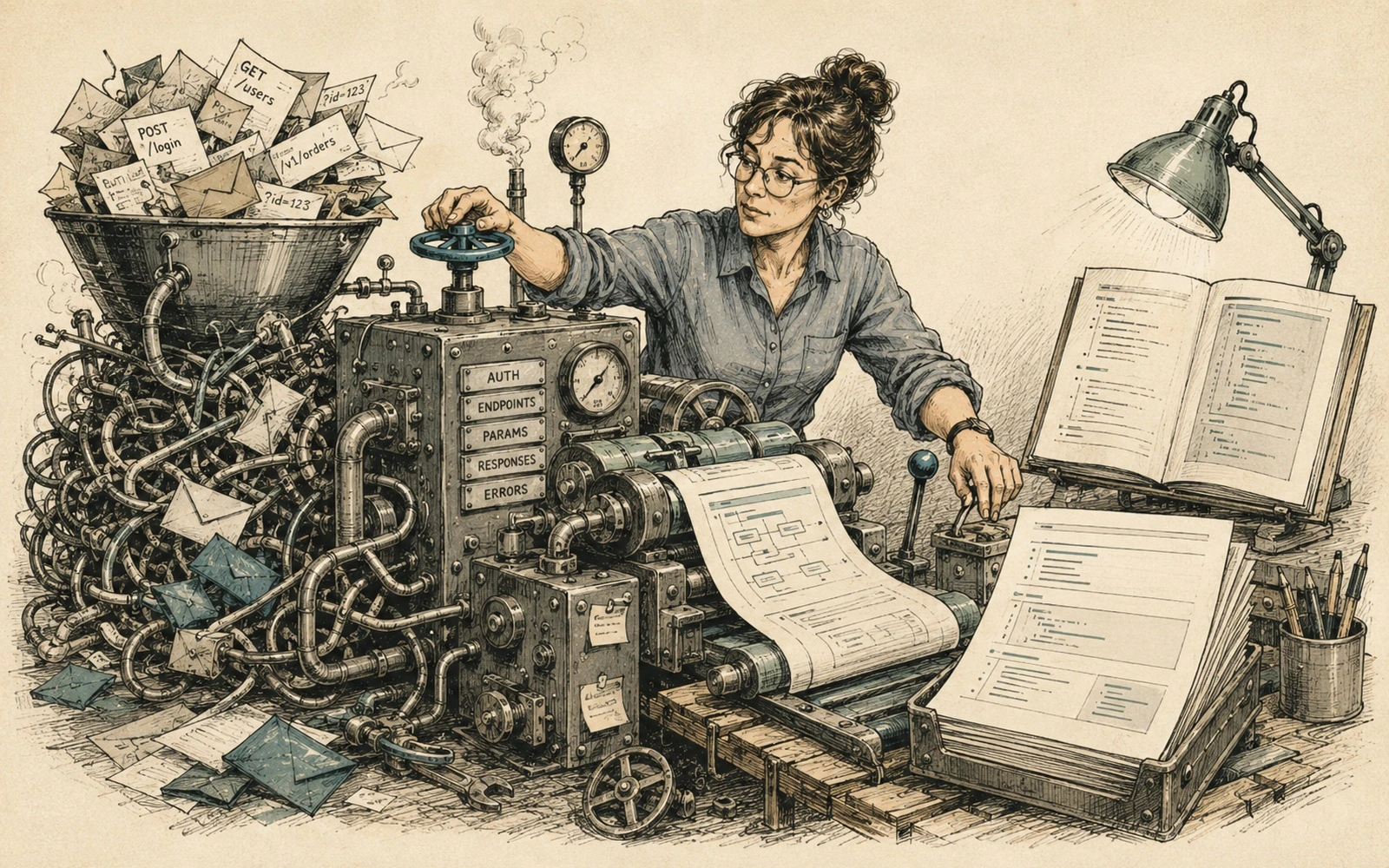
REST API documentation has two audiences at once: machines and people. A machine-readable contract describes paths, methods, parameters, schemas and responses. Human documentation explains intent, constraints, workflows and the choices a developer must make. You need both.
Document the happy path as a runnable story
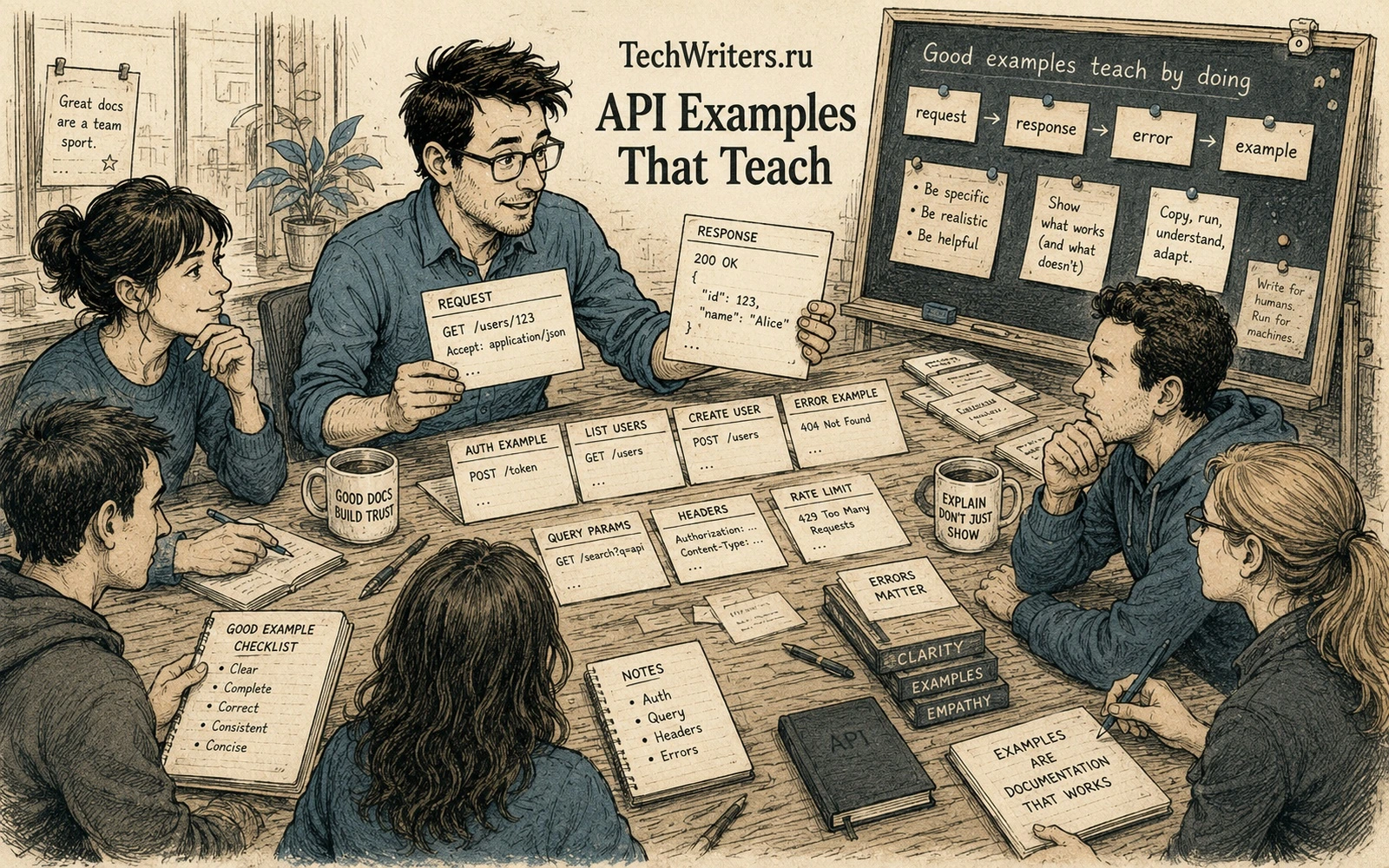
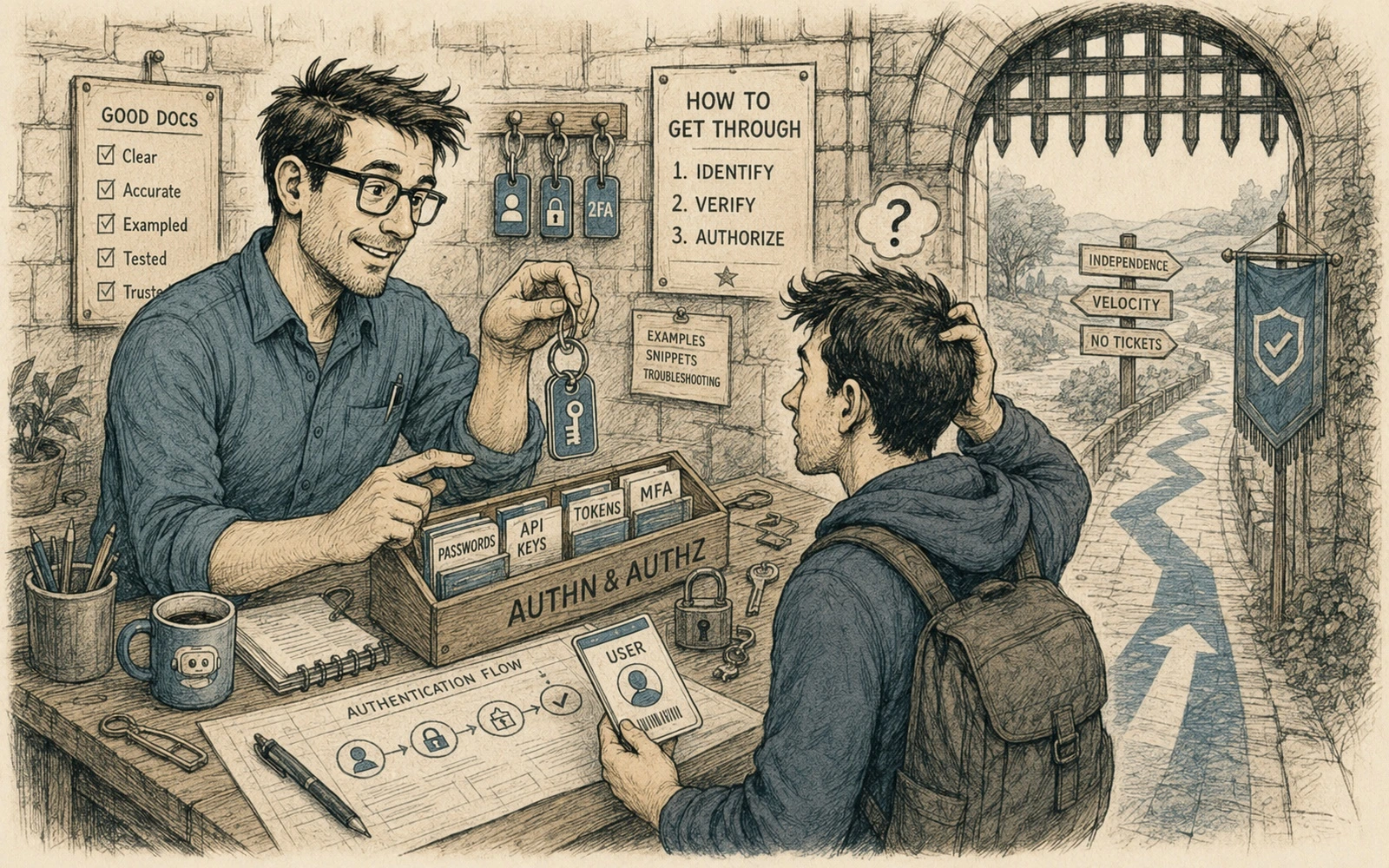
A reference page should let a developer make one successful request quickly. Show authentication, a complete request and a complete response. Keep examples valid and realistic. If a field is required only in a particular state, explain that state next to the field.
Errors are part of the interface
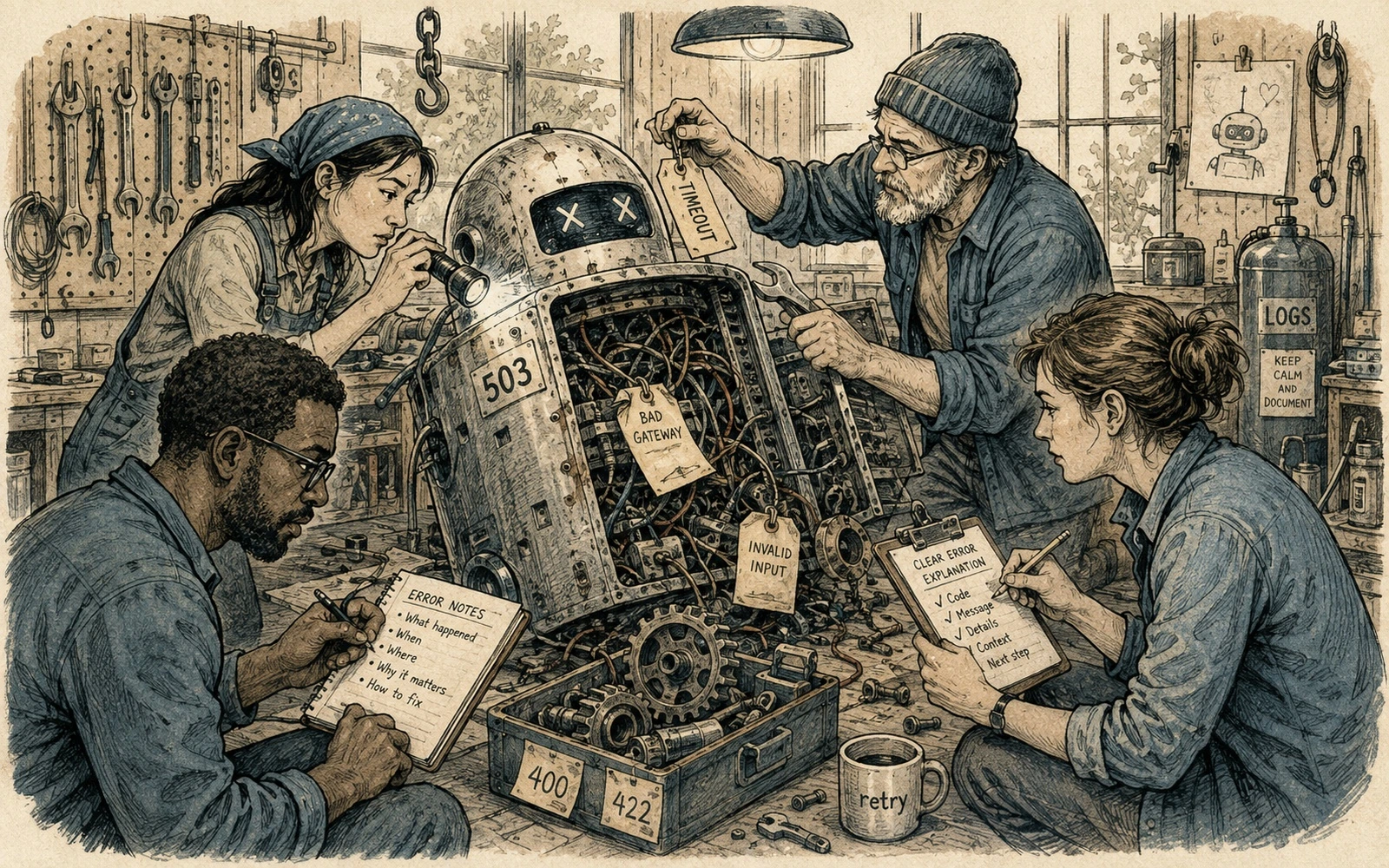
Do not stop at 200. Describe authentication failures, validation errors, conflicts, limits and asynchronous states. Give stable error identifiers when the product supports them, and explain what the caller can do next.
Separate reference from guides
Reference answers “what exists?” Guides answer “how do I accomplish a goal?”. A giant endpoint page that tries to teach architecture, onboarding and troubleshooting at the same time becomes hard to scan. Link layers together instead.
Keep examples executable
Examples rot faster than prose because they depend on real syntax and product state. Put representative requests in tests or CI where possible. At minimum, validate JSON and schema conformance.
Treat OpenAPI as a source, not the whole experience
OpenAPI can drive reference generation, mock servers and validation, but a schema cannot explain business intent by itself. Add conceptual pages, authentication guidance, lifecycle notes, limits and end-to-end scenarios.
Good API documentation lets a developer predict the system before they call it. That is a stronger goal than merely listing endpoints.
Applied example
Turn “How to document REST API properly” into one complete developer task. Use a fictional but realistic resource, such as a report, device or order, and write the shortest path from authentication to a successful result. Include the request, the important response fields, one likely failure and the next action after that failure. The exercise should be executable in principle even if the article does not depend on a live service.
Check the example as if you were building a client from it:
- Which values must the developer replace?
- Which identifiers are returned by the server and reused later?
- What status or field tells the client that the operation succeeded?
- What should the client do when credentials, input or rate limits fail?
If those answers are scattered across unrelated pages, the documentation may be technically complete but operationally weak. API documentation is successful when a developer can predict the interaction, not merely recognize endpoint names.
Quick editorial checklist
- Start with the contract. REST API documentation has two audiences at once: machines and people.
- Document the happy path as a runnable story. A reference page should let a developer make one successful request quickly.
- Errors are part of the interface. Do not stop at 200. Describe authentication failures, validation errors, conflicts, limits and asynchronous states.
- Separate reference from guides. Reference answers “what exists?” Guides answer “how do I accomplish a goal?”.