A schema answers a specific class of questions
OpenAPI is excellent at describing operations, parameters, request and response shapes, status codes and reusable schemas. That makes it valuable as a source for generated reference pages and automated validation.
Problems begin when a team assumes that a complete schema automatically produces complete developer documentation.
Developers need a journey
A new consumer usually asks questions before they care about individual fields: how do I authenticate, which environment should I use, what is the smallest successful request, how are resources related, what is eventually consistent, and how should retries work?
Those answers belong in conceptual and task-oriented documentation linked to the reference.
Examples carry semantics
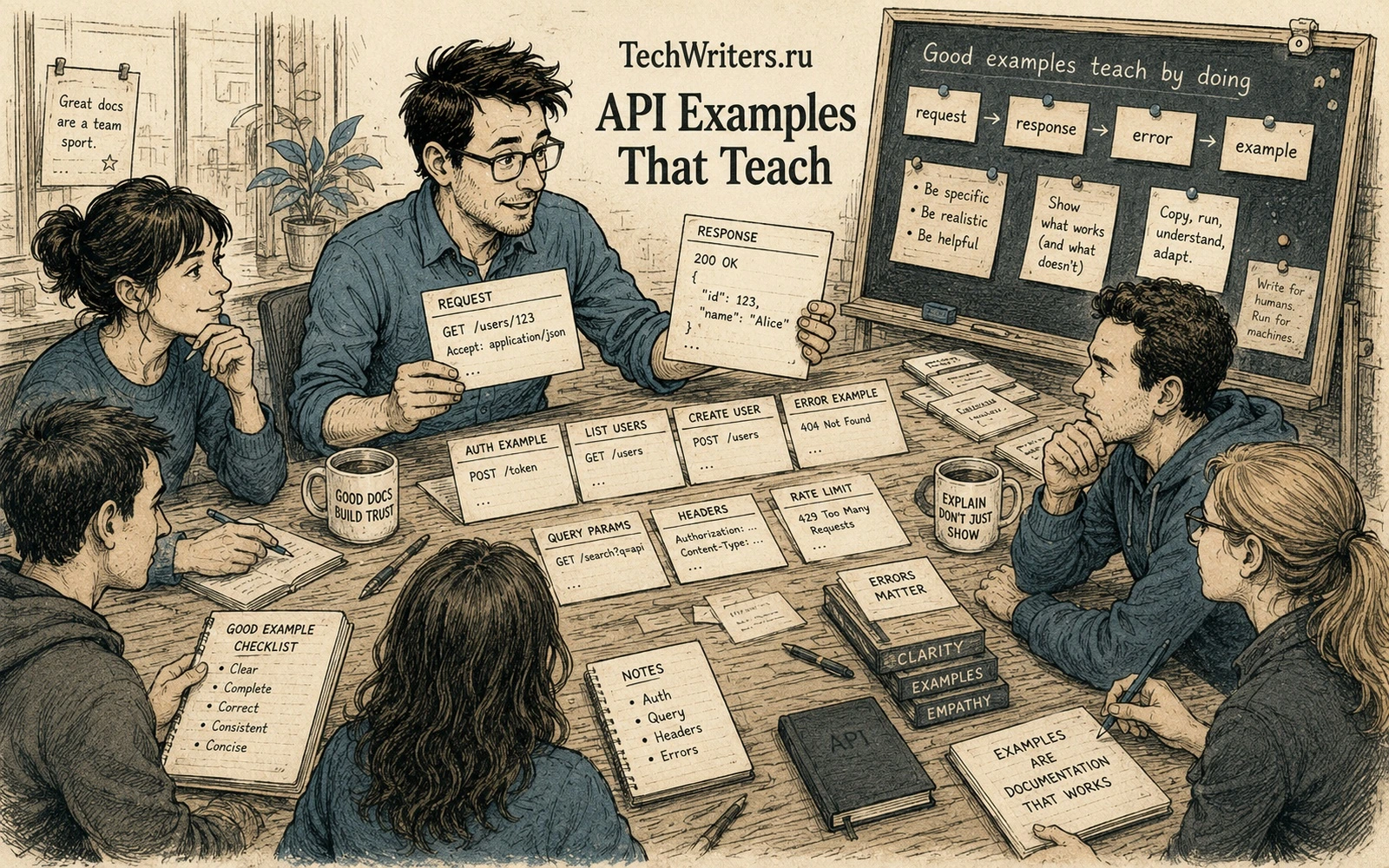
A schema can say that a field accepts a string. A useful example can show which value is realistic, how fields interact and what the server returns in a common workflow. Examples should be tested where possible and should demonstrate decisions, not merely satisfy validation.
Keep examples close enough to the API contract that changes are visible during review.
Document failure as a first-class path
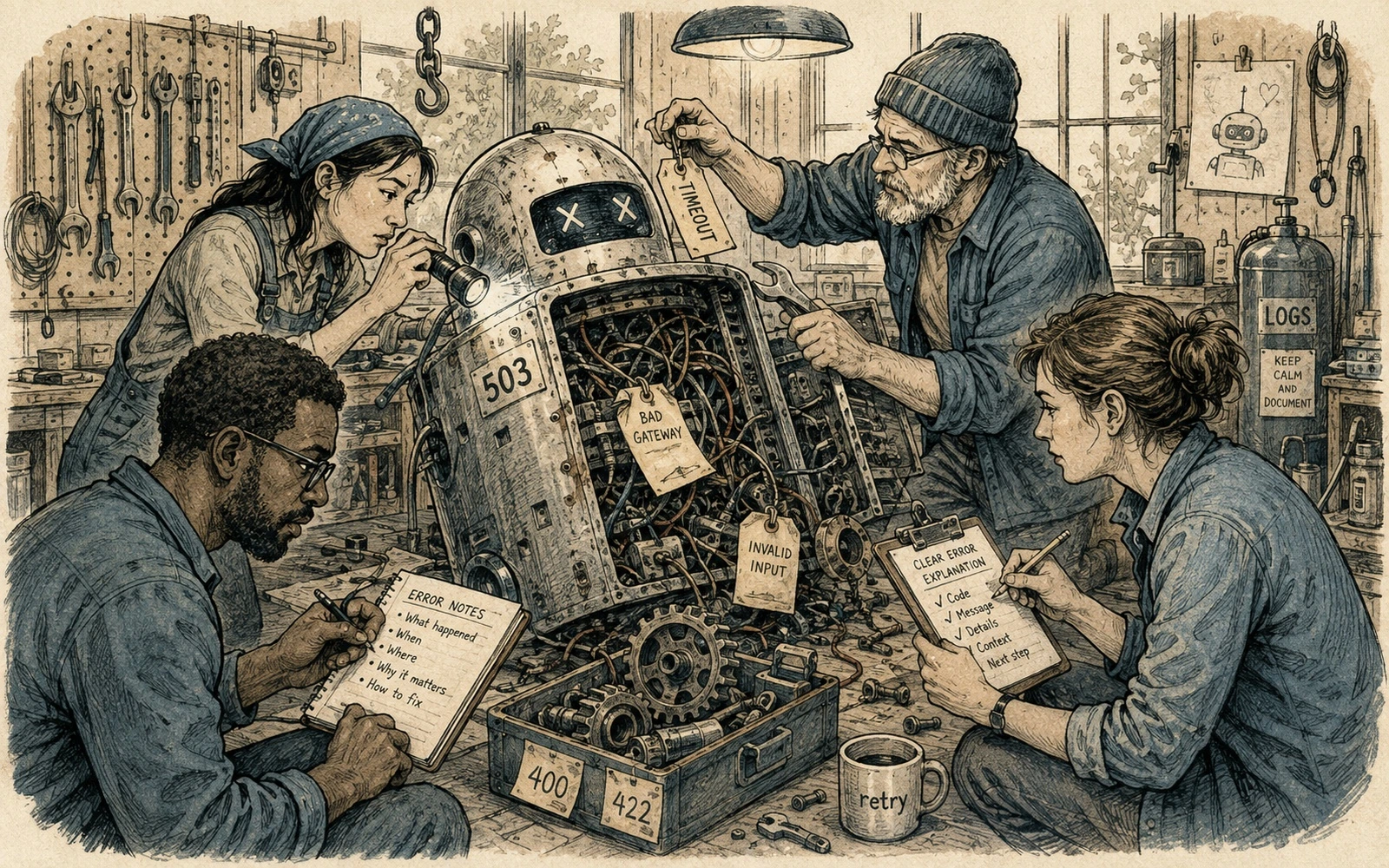
Generated reference often lists error responses without teaching recovery. Explain which errors are retryable, which indicate invalid state, how rate limits are communicated and what identifiers support needs for diagnosis.
Do not invent guarantees that the implementation does not make. If retry behavior or idempotency is unclear, that is a product question to resolve, not prose to improvise.
Let OpenAPI do what it does best
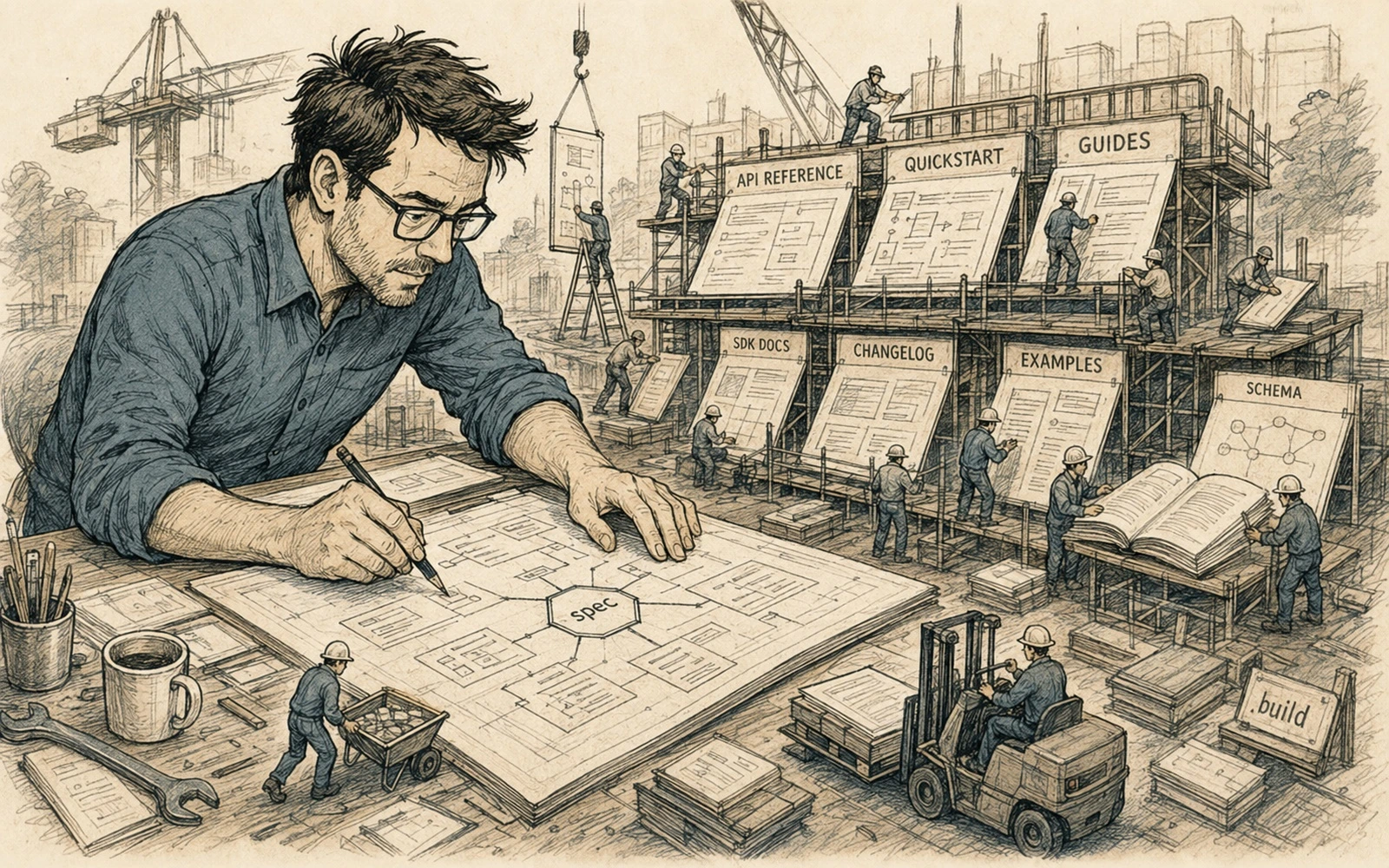
Use the specification to prevent duplication of field-level facts. Generate tables and reference sections from it. Validate examples against it. Then spend human editorial effort on mental models, workflows, trade-offs and recovery.
The best API documentation treats the schema as evidence and the published site as an experience built around that evidence.
Applied example
Turn “OpenAPI is a source of truth, not the whole API documentation” into one complete developer task. Use a fictional but realistic resource, such as a report, device or order, and write the shortest path from authentication to a successful result. Include the request, the important response fields, one likely failure and the next action after that failure. The exercise should be executable in principle even if the article does not depend on a live service.
Check the example as if you were building a client from it:
- Which values must the developer replace?
- Which identifiers are returned by the server and reused later?
- What status or field tells the client that the operation succeeded?
- What should the client do when credentials, input or rate limits fail?
If those answers are scattered across unrelated pages, the documentation may be technically complete but operationally weak. API documentation is successful when a developer can predict the interaction, not merely recognize endpoint names.
Quick editorial checklist
- A schema answers a specific class of questions. OpenAPI is excellent at describing operations, parameters, request and response shapes, status codes and reusable schemas.
- Developers need a journey. A new consumer usually asks questions before they care about individual fields: how do I authenticate, which environment should I use, what is the smallest successful request, how are resources related, what is eventually consistent, and ho…
- Examples carry semantics. A schema can say that a field accepts a string.
- Document failure as a first-class path. Generated reference often lists error responses without teaching recovery.