Define the problem
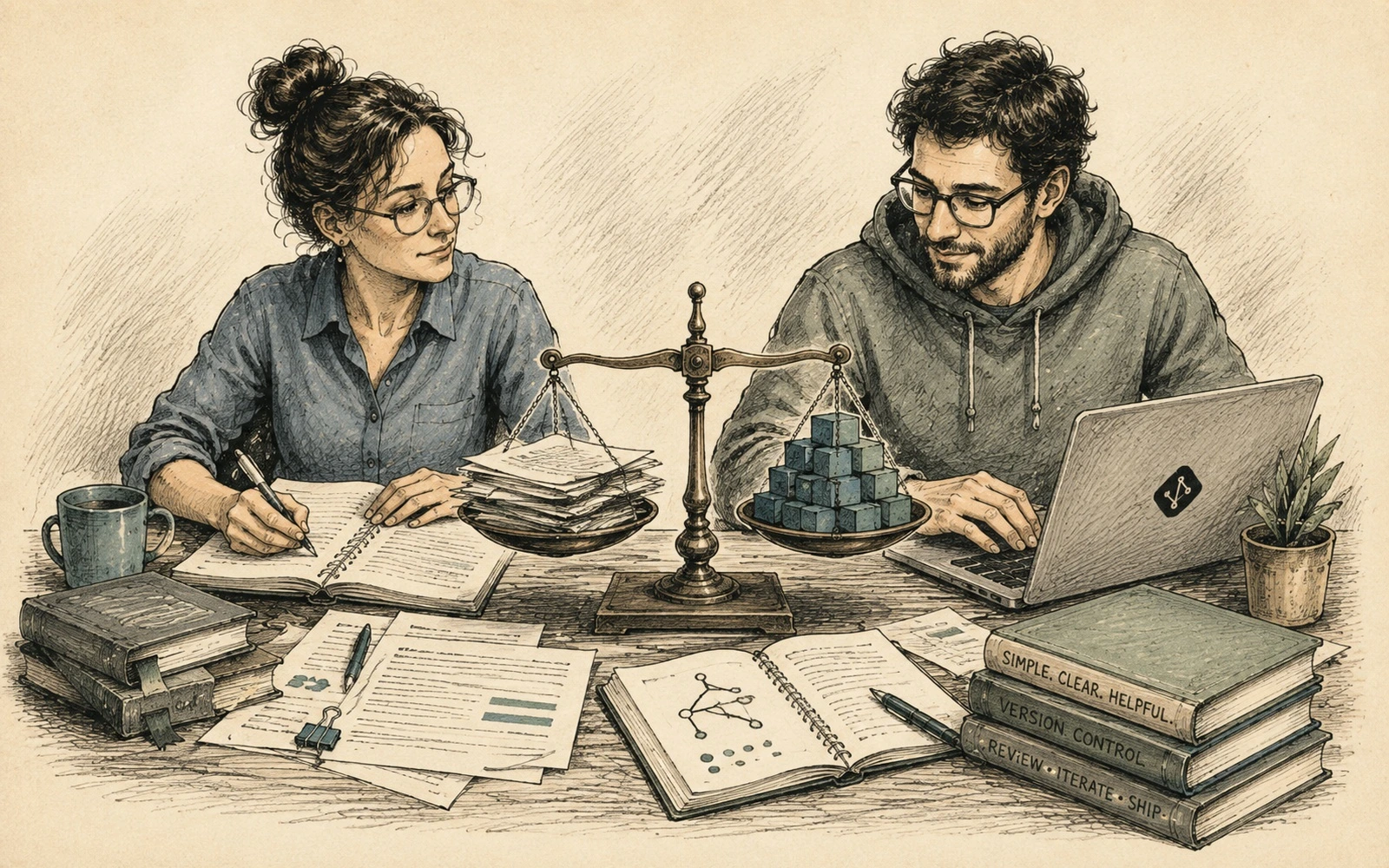
Ownership means authority and responsibility for a domain, not writing every sentence. Ownership is useful only when it answers who can verify a fact and who is expected to maintain the page after the product changes.
Choose a useful model
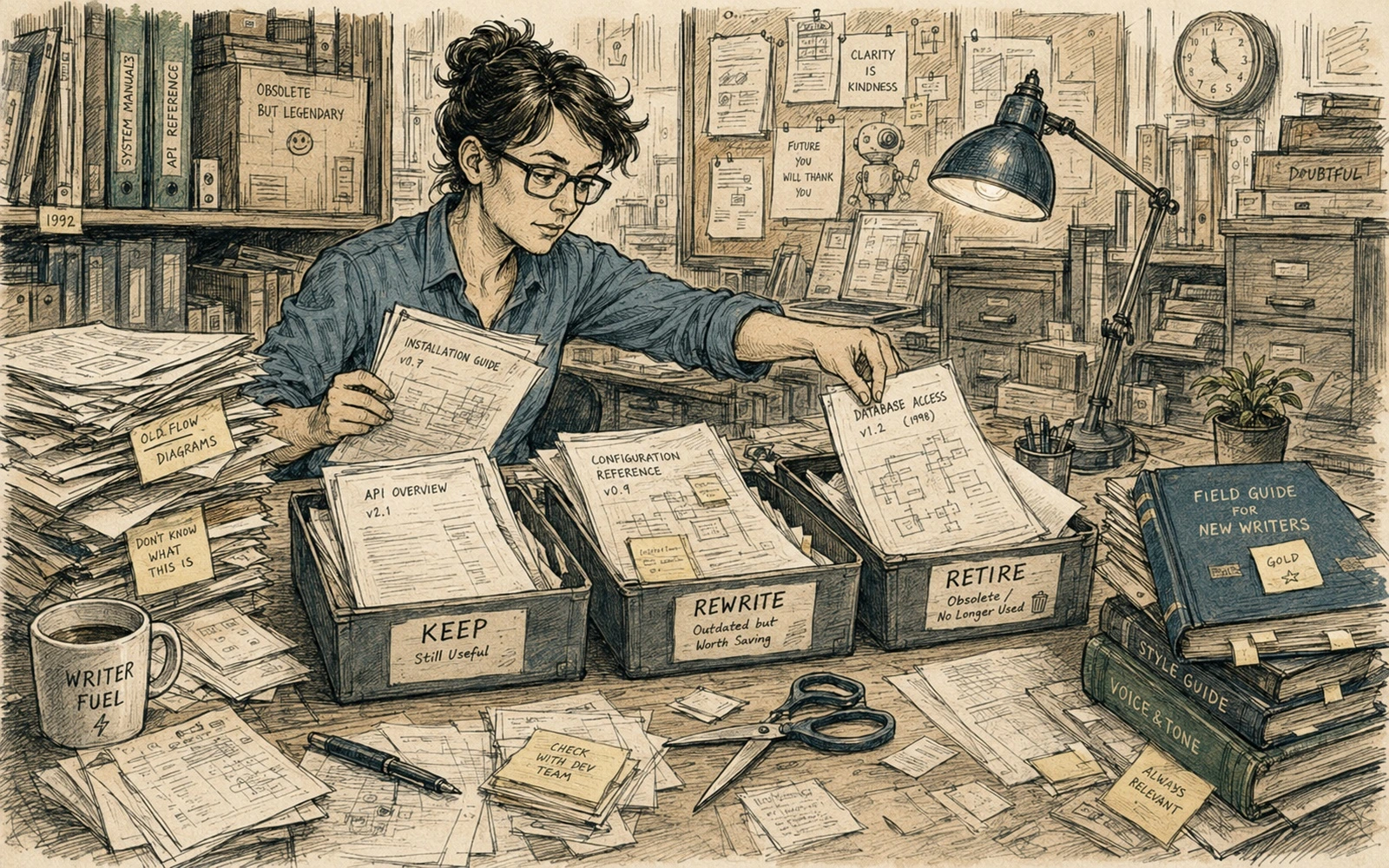
Assign owners to stable product or knowledge domains rather than individual pages. Map documentation to product surfaces or user tasks, not to an org chart that can change every quarter.
Build the workflow
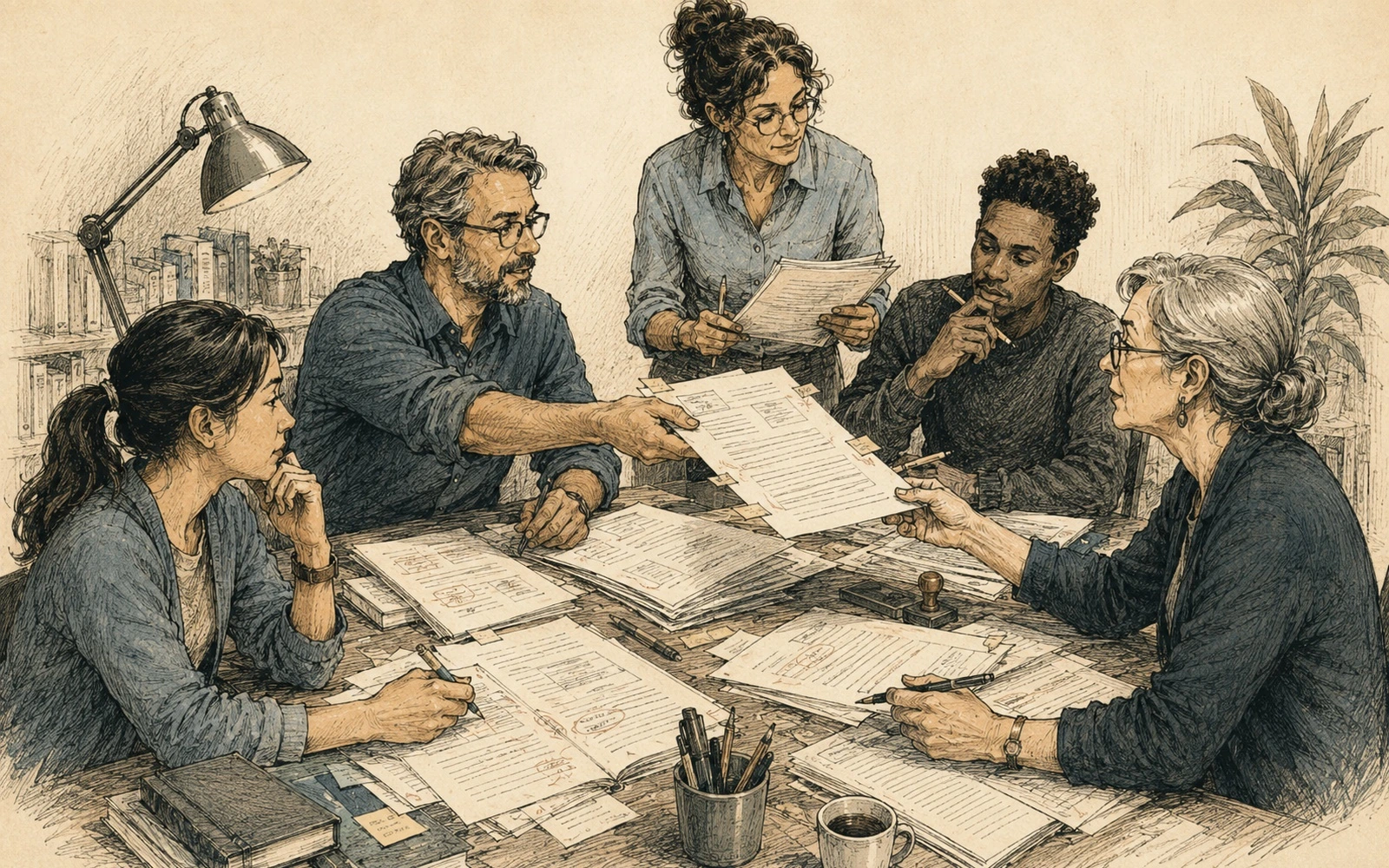
Separate technical authority from editorial authority so each review has a clear purpose. Give every critical area a primary owner and a fallback path; “the docs team” is not an owner when expertise sits elsewhere.
Check the result
Design ownership for absence with team roles and backup paths instead of one-person knowledge. Use orphaned pages, overdue reviews and repeated emergency fixes as signals that the ownership model is incomplete.
Keep it maintainable
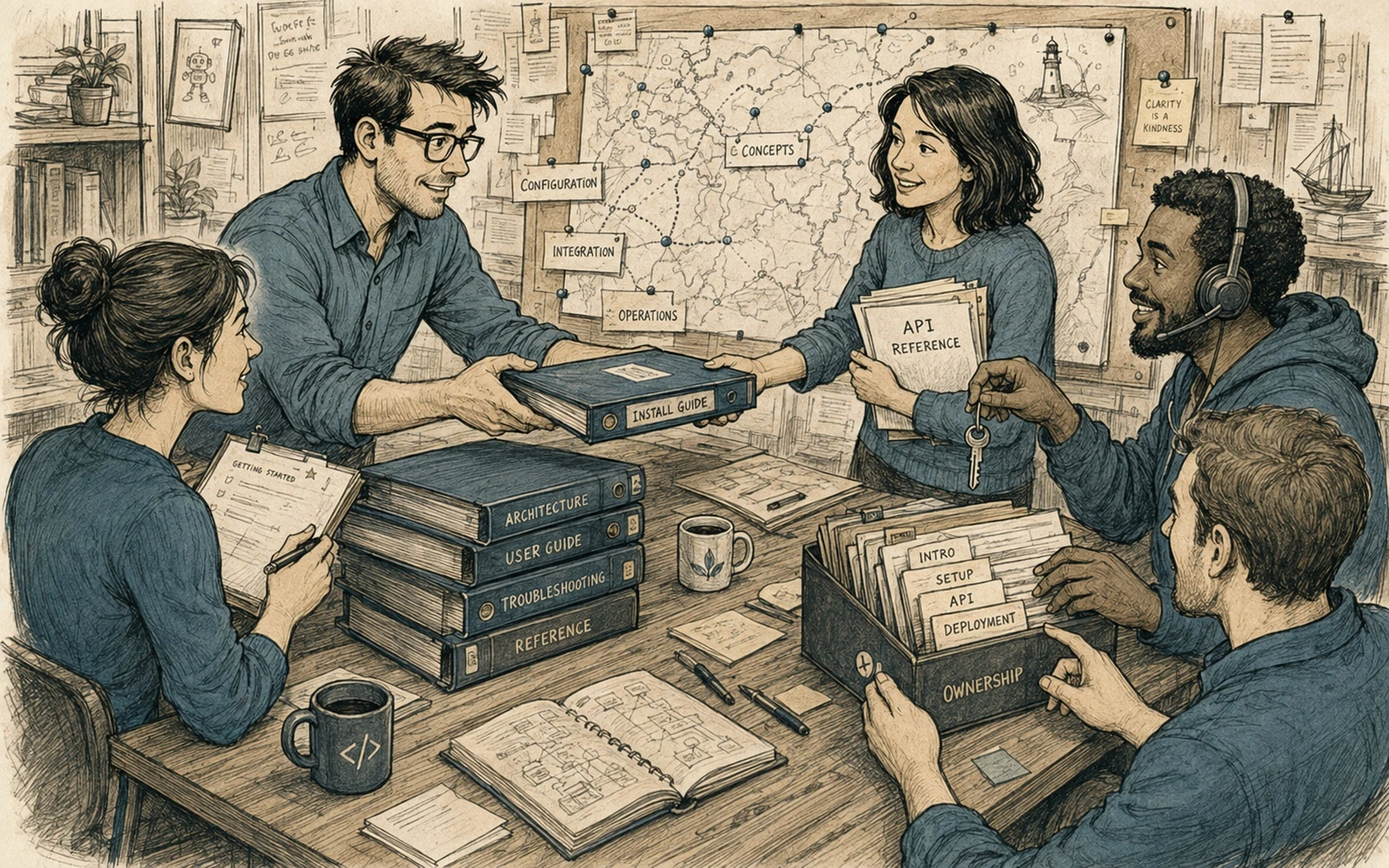
Keep ownership metadata close to content and simple enough to remain current. Keep the map close to the repository and publishing workflow so it changes with the content rather than becoming a forgotten spreadsheet.
Applied example
To make the ideas in “A documentation ownership map without bureaucracy” operational, take one piece of documentation that is actually changing this week: a procedure, release page, onboarding step, troubleshooting article or ownership record. Make a working copy and write down four things before editing it: who uses it, what event makes it change, who can verify the facts, and what the reader should be able to do when finished. That small inventory exposes hidden assumptions faster than a general “improve the docs” task.
Run one realistic change through the workflow from start to finish. Do not redesign the whole system. Change one fact, one step or one responsibility and observe where the process slows down or loses information. A useful review asks:
- Can the reader identify the expected outcome without asking the author?
- Is there a clear owner for the next update?
- Can a reviewer verify the changed fact from the product or process itself?
- Does the page still make sense if an old screenshot, note or workaround is removed?
The point is to test the method under a real maintenance event. Documentation practices become trustworthy when they survive change, not when they look tidy in a static example.
Quick editorial checklist
- Define the problem. Ownership means authority and responsibility for a domain, not writing every sentence.
- Choose a useful model. Assign owners to stable product or knowledge domains rather than individual pages.
- Build the workflow. Separate technical authority from editorial authority so each review has a clear purpose.
- Check the result. Design ownership for absence with team roles and backup paths instead of one-person knowledge.