Generation और publishing अलग privileges हैं
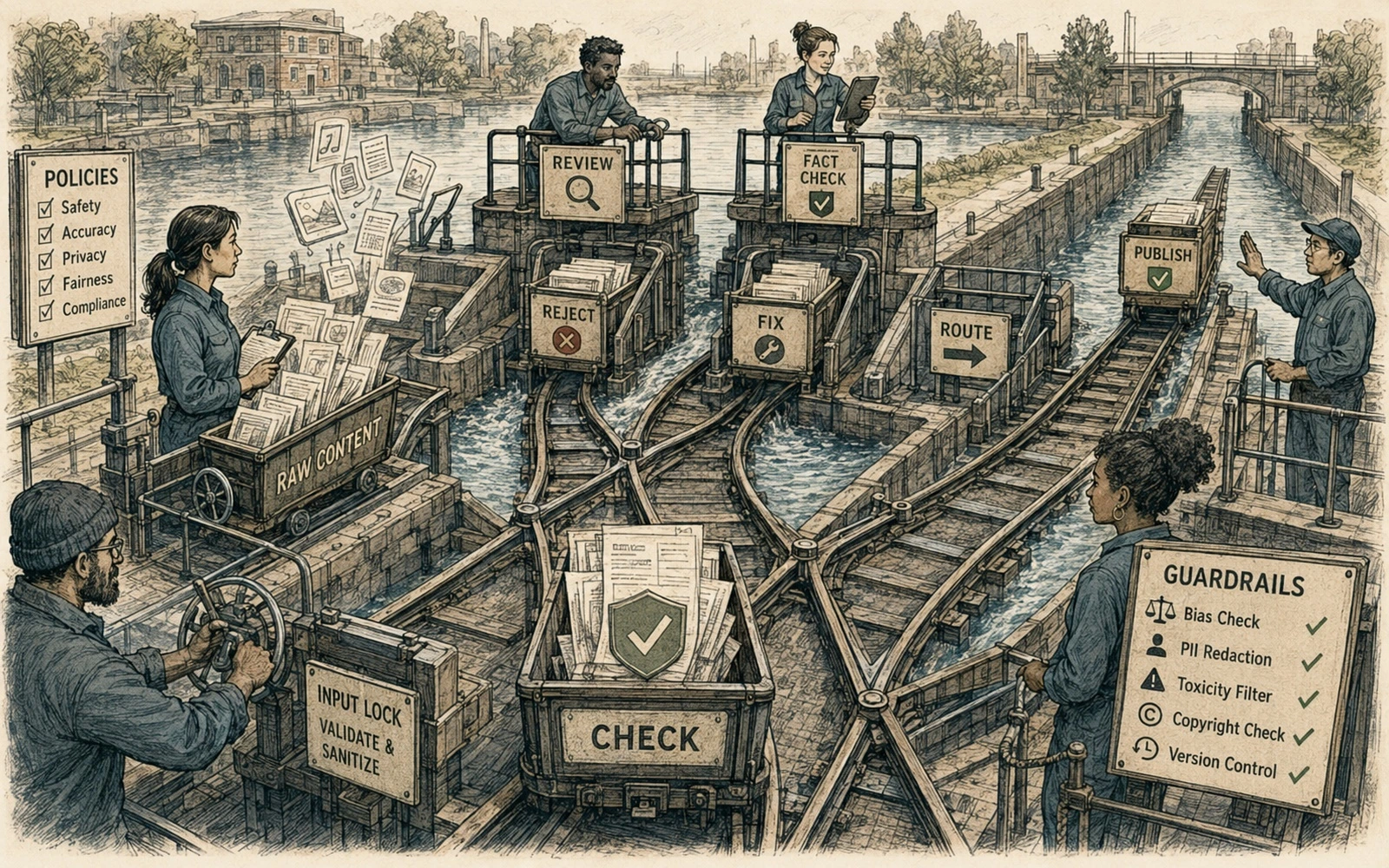
अच्छी architecture मानती है कि model कभी-कभी गलत होगा। उसे files, metadata और edits propose करने दें, लेकिन उसी step को silently publish न करने दें। Separate build और review boundary failures को visible और reversible बनाती है।
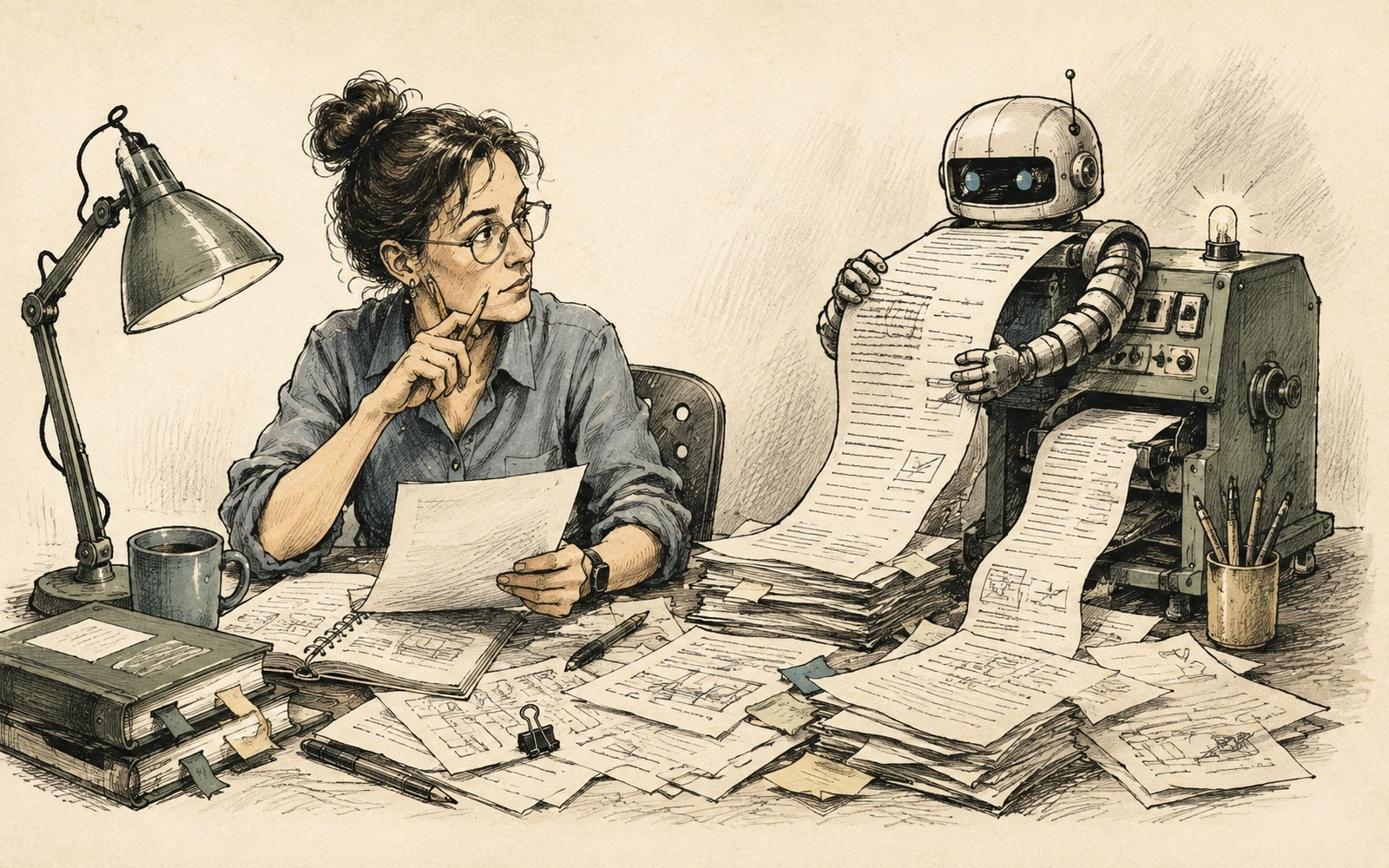
Batch जितना बड़ा होगा, यह boundary उतनी महत्वपूर्ण होगी।
Input set constrain करें
Unbounded context के बजाय named sources दें। Authoritative product facts, examples, historical discussion और user-generated content अलग रखें। Record करें कि किसी revision के लिए कौन-सी files या API responses इस्तेमाल हुईं।
यह reproducibility और review दोनों सुधारता है।
Structure deterministic तरीके से validate करें
Frontmatter के लिए schemas, tags और terminology के लिए controlled vocabularies, code blocks के लिए parsers use करें। Internal links, images, localization completeness और metadata model review से पहले check करें।
Deterministic checks fast fail होने चाहिए।
External text को untrusted input मानें
Issues, forums, web pages और customer messages में irrelevant या hostile instructions हो सकती हैं। उनसे information extract करें, पर उन्हें agent rules या publishing policy बदलने न दें।
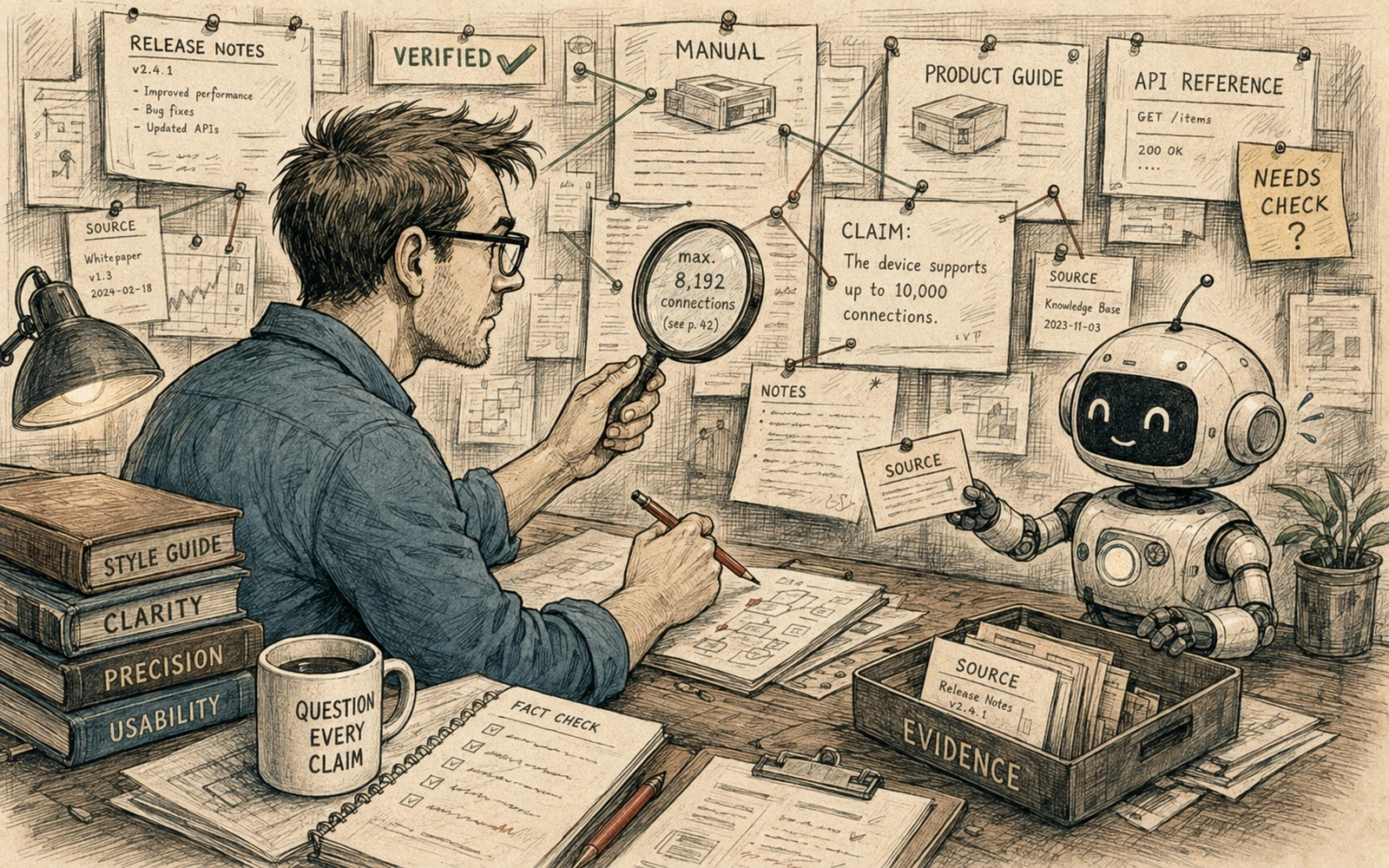
Risky claims के लिए evidence चाहिए
Security, limits, compatibility, billing, data handling और destructive procedures stronger review मांगते हैं, चाहे prose बहुत अच्छी हो।
Rollback बनाए रखें
हर automated change normal version-controlled revision हो, clear diff के साथ। Commit या traceable artifact के बिना published content mutate न करें।
Guardrails throughput बढ़ाने और accountability बनाए रखने को साथ संभव करते हैं।
व्यावहारिक उदाहरण
“Technical docs publish करने वाली LLM content pipeline के guardrails” को production workflow बनाने से पहले controlled sample पर जाँचें। दस छोटे documentation fragments लें जिनकी सही स्थिति आपको पहले से पता हो—कुछ सही, कुछ पुराने, कुछ ambiguous और कुछ जानबूझकर गलत। Instructions स्थिर रखें और सही decisions के साथ confident mistakes भी दर्ज करें।
Editor की तरह जाँचें:
- क्या model evidence और inference अलग करता है;
- क्या terminology और product constraints बची रहती हैं;
- क्या missing facts invent होते हैं या uncertainty छिपती है;
- क्या human reviewer देख सकता है कि क्या बदला और क्यों।
मुख्य प्रश्न fluency नहीं, बल्कि यह है कि workflow publication से पहले errors को visible बनाता है या नहीं। स्पष्ट boundaries, inputs और human review points ही भरोसा बनाते हैं।
त्वरित संपादकीय जाँच
- Generation और publishing अलग privileges हैं. अच्छी architecture मानती है कि model कभी-कभी गलत होगा। उसे files, metadata और edits propose करने दें, लेकिन उसी step को silently publish न करने दें। Separate build और review boundary failures को visible और reversible बनाती है।
- Input set constrain करें. Unbounded context के बजाय named sources दें। Authoritative product facts, examples, historical discussion और user-generated content अलग रखें। Record करें कि किसी revision के लिए कौन-सी files या API responses इस्तेमाल हुईं।
- Structure deterministic तरीके से validate करें. Frontmatter के लिए schemas, tags और terminology के लिए controlled vocabularies, code blocks के लिए parsers use करें। Internal links, images, localization completeness और metadata model review से पहले check करें।
- External text को untrusted input मानें. Issues, forums, web pages और customer messages में irrelevant या hostile instructions हो सकती हैं। उनसे information extract करें, पर उन्हें agent rules या publishing policy बदलने न दें।