Leadership एक system-design problem है
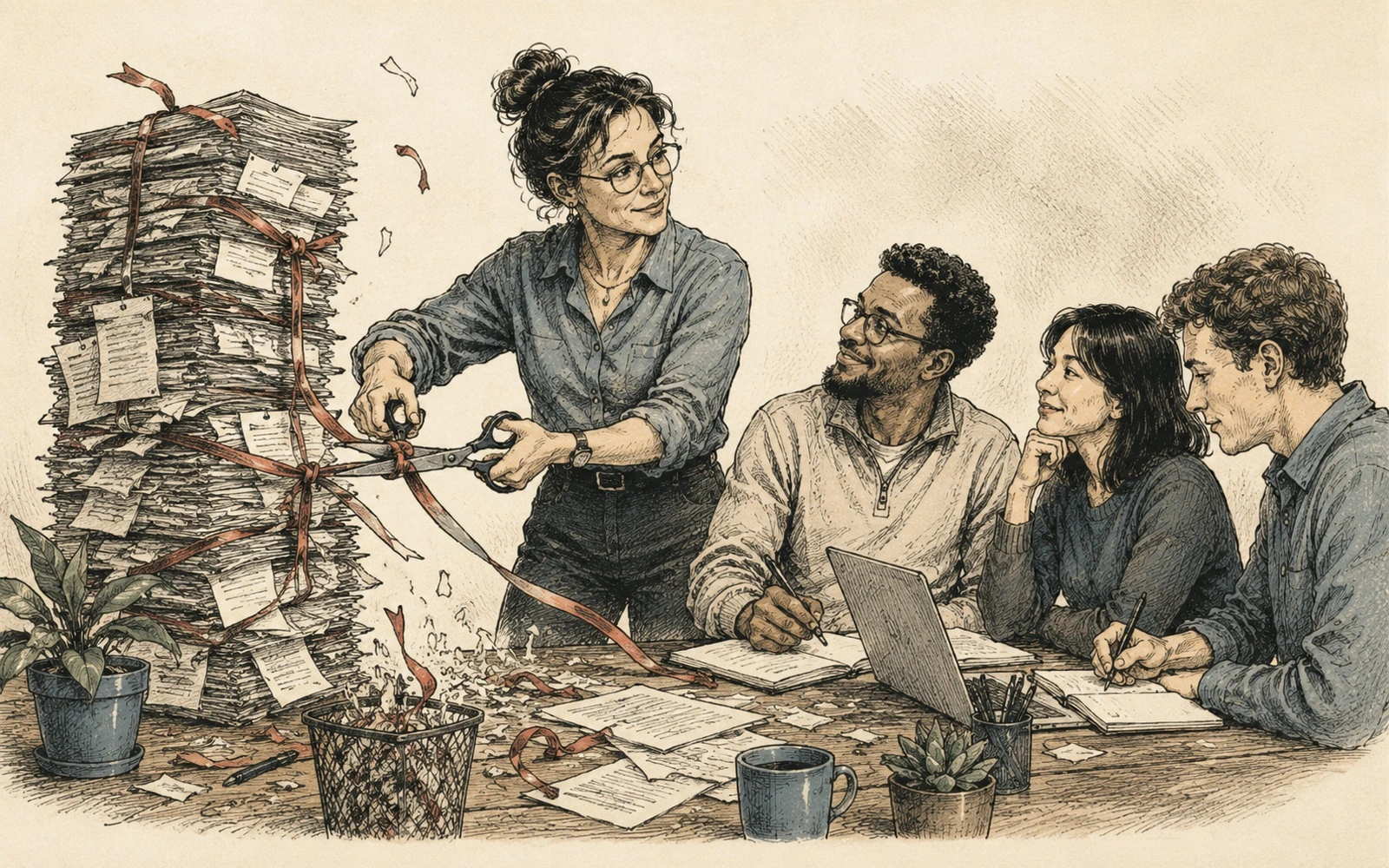
जब documentation कई teams में फैलती है, central control आकर्षक लगता है। अगर हर change एक senior editor से होकर जाए, तो queue बनती है, product ownership छिपती है और lead human merge conflict बन जाता है।
बेहतर काम है ऐसे rules बनाना जिनसे routine changes बिना central intervention आगे बढ़ें और risky changes तुरंत पहचाने जाएँ।
Ownership स्पष्ट करें
हर area के लिए technical owner और editorial path होना चाहिए। इसे repository rules, metadata या team agreement में लिखें। Writer को पता हो कि behavior कौन confirm करता है; engineer को पता हो कि explanation कौन maintain करता है।
Cross-product impact, legal/security risk, shared terminology और बड़े IA changes के लिए central review रखें।
Interfaces standardize करें, हर sentence नहीं
Content types, metadata, terminology rules, quality gates और reusable components define करें। ये contributors के बीच interfaces हैं। इससे consistency आती है, बिना हर page को एक जैसी आवाज़ देने के।
अगर rule important है तो बताइए कि वह कौन-सी problem रोकता है और जहाँ संभव हो उसे schema, template या linter में encode करें।
Escalation path बनाइए
अधिकांश documentation conflicts grammar के नहीं होते। सवाल होता है: क्या supported है, endpoint का owner कौन है, feature deprecated है या company कौन-सा promise कर सकती है। तय करें कि ऐसे सवाल कहाँ resolve होंगे और decision कहाँ record होगा।
Flow और risk मापें
Review time, stale content, failed examples, broken links, search failures और release mismatch देखें। Page count को success metric न बनाएं।
अच्छी leadership system को lead पर कम dependent बनाती है। Lead छुट्टी पर हो तब भी publishing चलना चाहिए।
व्यावहारिक उदाहरण
“बिना bureaucracy बनाए documentation leadership” को job-title की सूची नहीं, team exercise की तरह उपयोग करें। हाल की documentation task लें और देखें कि user need किसने पहचानी, technical facts किसने जुटाए, structure किसने बनाया, review किसने किया और अगली revision का owner कौन होगा।
दिखाई देने वाली क्षमताएँ लिखें:
- व्यक्ति बिना step-by-step supervision कौन-सी समस्या संभाल सकता है;
- किन experts के साथ काम और सार्थक असहमति कर सकता है;
- publication से पहले कौन-से quality risks देख सकता है;
- कौन-सा documentation process सुधार सकता है, केवल चला नहीं सकता।
अच्छा professional model अगली कठिन skill की दिशा देता है। केवल “junior”, “senior” या “good communicator” जैसे labels growth या hiring के लिए पर्याप्त नहीं हैं।
त्वरित संपादकीय जाँच
- Leadership एक system-design problem है. जब documentation कई teams में फैलती है, central control आकर्षक लगता है। अगर हर change एक senior editor से होकर जाए, तो queue बनती है, product ownership छिपती है और lead human merge conflict बन जाता है।
- Ownership स्पष्ट करें. हर area के लिए technical owner और editorial path होना चाहिए। इसे repository rules, metadata या team agreement में लिखें। Writer को पता हो कि behavior कौन confirm करता है; engineer को पता हो कि explanation कौन maintain करता है।
- Interfaces standardize करें, हर sentence नहीं. Content types, metadata, terminology rules, quality gates और reusable components define करें। ये contributors के बीच interfaces हैं। इससे consistency आती है, बिना हर page को एक जैसी आवाज़ देने के।
- Escalation path बनाइए. अधिकांश documentation conflicts grammar के नहीं होते। सवाल होता है: क्या supported है, endpoint का owner कौन है, feature deprecated है या company कौन-सा promise कर सकती है। तय करें कि ऐसे सवाल कहाँ resolve होंगे और decision कहाँ record होगा…